

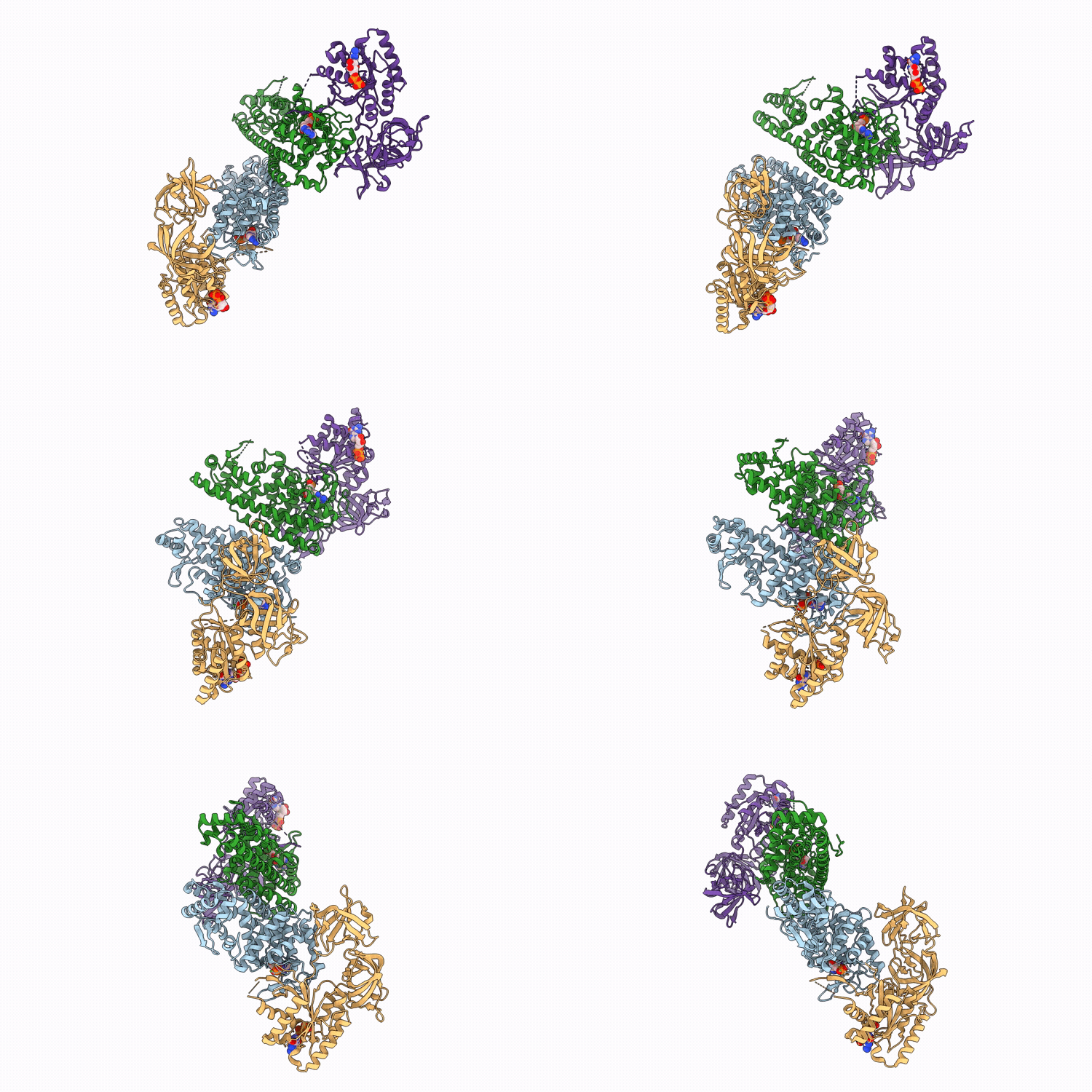
9TB0 image
Deposition Date 2025-11-19
Release Date 2026-08-12
Last Version Date 2026-09-30
Entry Detail
PDB ID:
9TB0
Keywords:
Title:
Complex structure of AMPylated EF-Tu-T62A bound to SoFic-H198A
Biological Source:
Method Details:
Experimental Method:
Resolution:
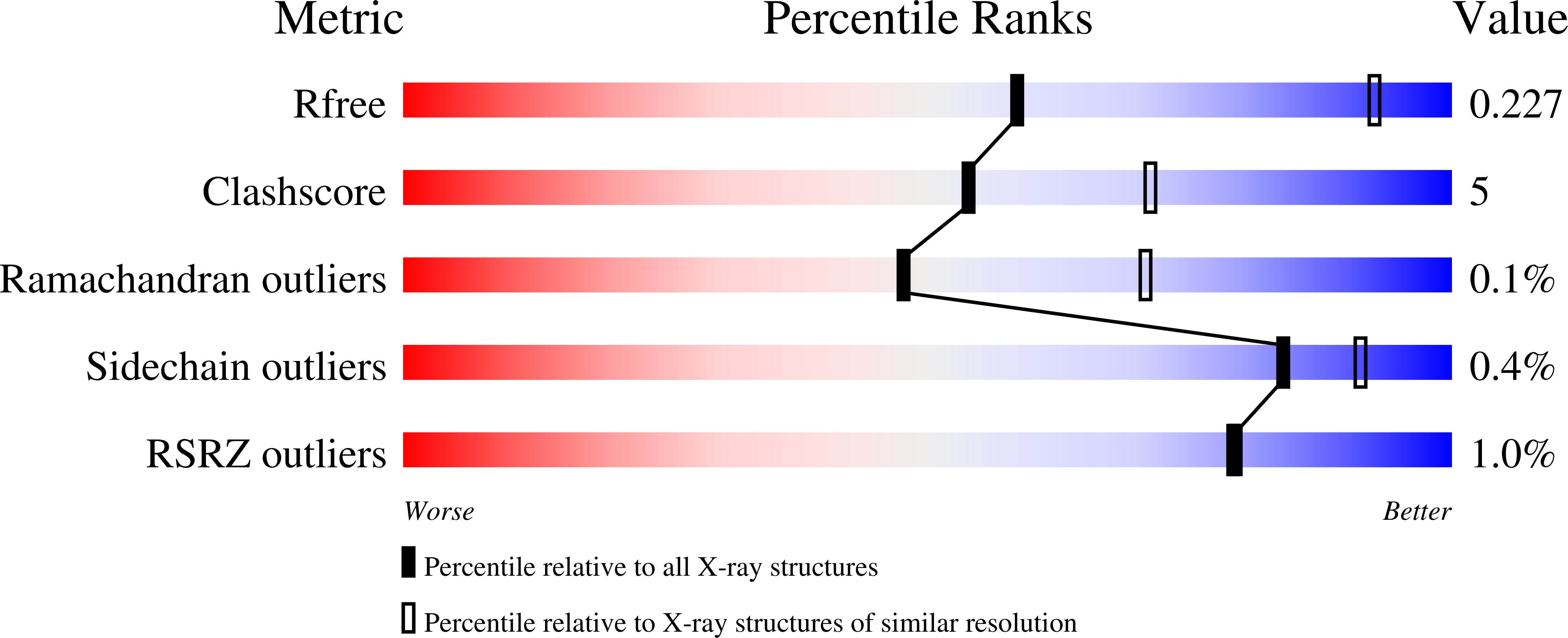
2.76 Å
R-Value Free:
0.22
R-Value Work:
0.19
R-Value Observed:
0.19
Space Group:
P 1
Macromolecular Entities
Polymer Type:polypeptide(L)
Molecule:Protein adenylyltransferase S
Gene (Uniprot):fic
Mutagens:H198A
Chain IDs:A, B
Chain Length:392
Number of Molecules:2
Biological Source:Shewanella oneidensis MR-1
Polymer Type:polypeptide(L)
Molecule:Elongation factor Tu 1
Gene (Uniprot):tufA
Mutagens:T62A
Chain IDs:C, D
Chain Length:396
Number of Molecules:2
Biological Source:Escherichia coli BL21(DE3)
Primary Citation
The Shewanella oneidensis Fic enzyme SoFic targets the switch-I region of EF-Tu for AMPylation.
Febs Lett. ? ? ? (2026)
PMID: 42757569 DOI: 10.1002/1873-3468.70457

Abstact

Fic enzymes mediate diverse post-translational modifications, including adenosine monophosphate (AMP) transfer and removal, referred to as AMPylation and deAMPylation, respectively. We identified the prokaryotic translation elongation factor Tu (EF-Tu) as an AMPylation target of the Fic enzyme SoFic. SoFic can constitutively reverse EF-Tu modification via deAMPylation whereas AMPylation depends on SoFic homodimerization. The complex crystal structure between SoFic and EF-Tu confirms a conserved target binding mode across evolutionarily distant Fic enzymes. AMPylation disrupts EF-Tu's regulatory switch-I region, causing translational inhibition. SoFic furthermore binds to its promoter DNA in vitro, suggesting a dual function as transcriptional and translational regulator in bacterial cells. Together, our structural and biochemical data provide valuable insights into the functional and regulatory diversity of Fic enzymes.

Legend

Protein

Chemical

Disease

Primary Citation of related structures
Feedback Form
Name
Email
Institute
Feedback