

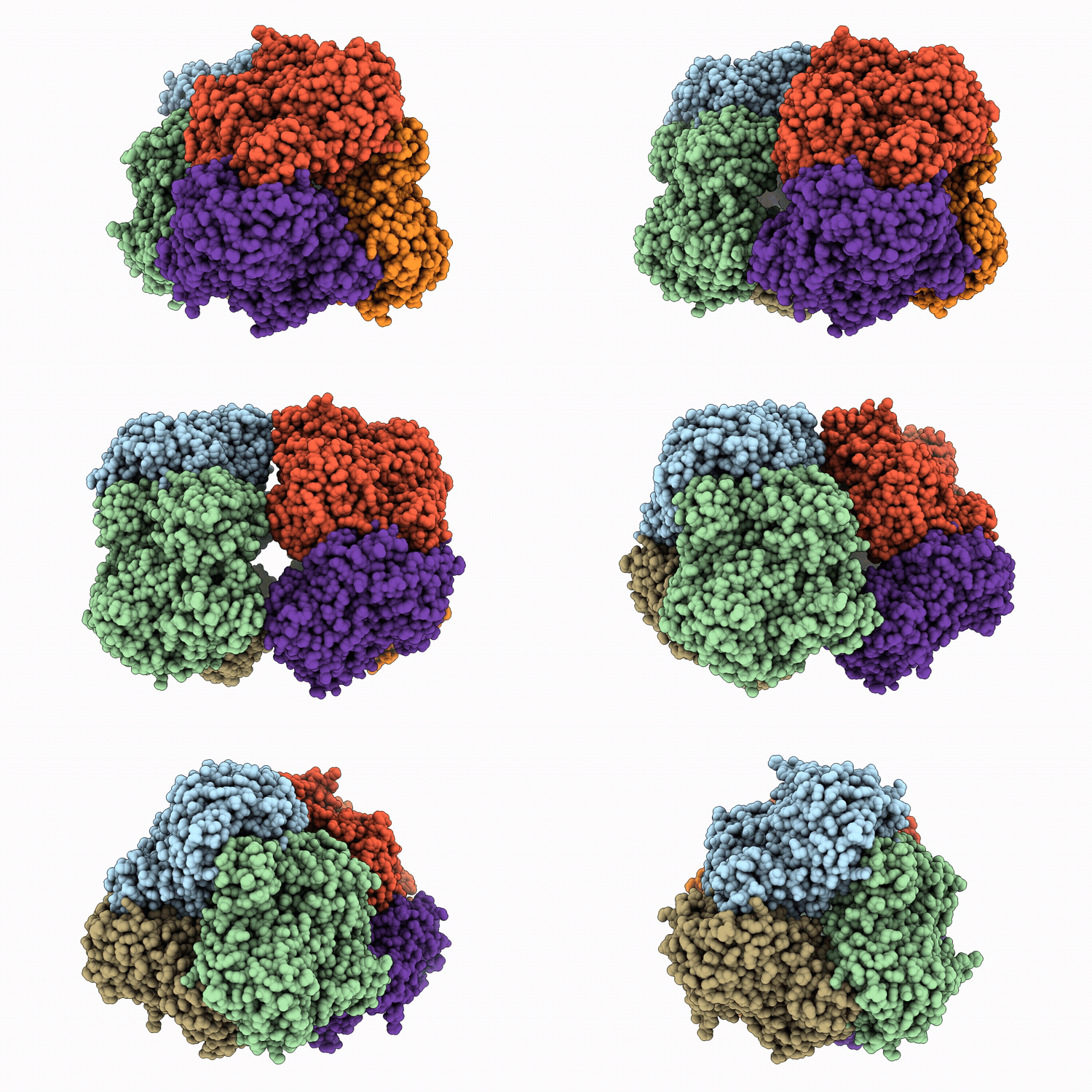
9TA3 image
Deposition Date 2025-11-18
Release Date 2026-04-29
Last Version Date 2026-05-06
Entry Detail
PDB ID:
9TA3
Keywords:
Title:
Cryo-EM structure of Heyndrickxia coagulans beta-galactosidase
Biological Source:
Source Organism(s):
Expression System(s):
Method Details:
Experimental Method:
Resolution:
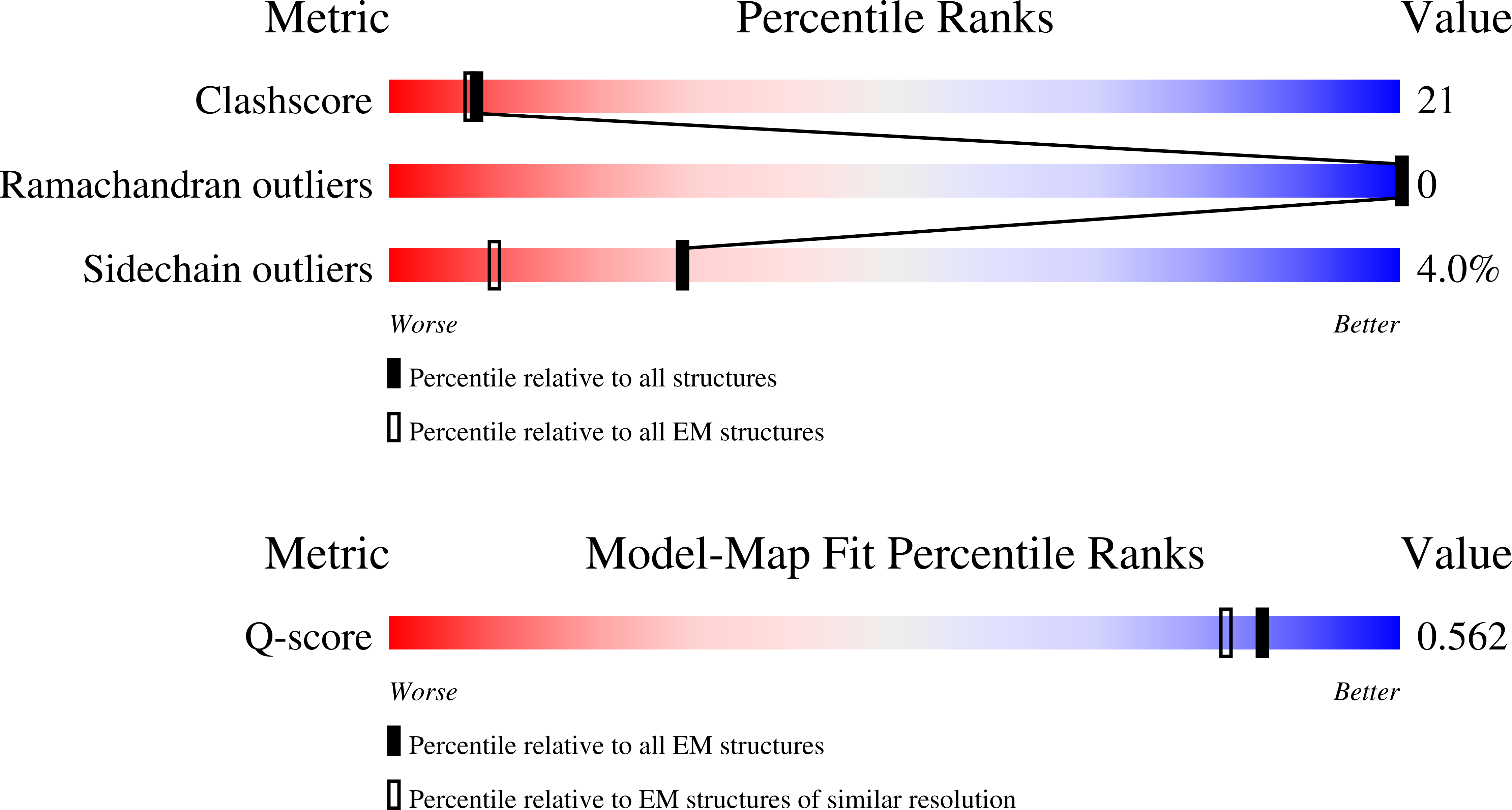
2.97 Å
Aggregation State:
PARTICLE
Reconstruction Method:
SINGLE PARTICLE
Macromolecular Entities
Structures with similar UniProt ID
Protein Blast
Polymer Type:polypeptide(L)
Molecule:Beta-galactosidase LacZ
Gene (Uniprot):lacZ
Chain IDs:A, B, C, D, E, F
Chain Length:671
Number of Molecules:6
Biological Source:Heyndrickxia coagulans
Primary Citation
CryoEM structural analysis of a thermophilic galactooligosaccharides-producer beta-galactosidase unravels an uncommon oligomeric structure.
Int.J.Biol.Macromol. 362 151980 151980 (2026)
PMID: 41985809 DOI: 10.1016/j.ijbiomac.2026.151980

Abstact

Thermostable beta-galactosidases represent promising biocatalysts for lactose hydrolysis and production of structurally defined galacto-oligosaccharides (GOS). Here we report the cryo-EM structure of the glycoside hydrolase family 42 (GH42) beta-galactosidase from Heyndrickxia coagulans MA-13 (HcGalB), determined at 2.97 A resolution. HcGalB adopts a canonical tripartite architecture and assembles into a barrel-like homo-hexamer composed of two staggered trimers that interact in an unusual top-to-top configuration. This quaternary arrangement contributes not only to structural stability but also to the modulation of substrate channeling and catalytic properties. Molecular docking revealed a surface groove shaped by conserved aromatic residues that might guide the substrate towards the catalytic pocket. Moreover, the structural data provide a mechanistic rationale for the efficient transgalactosylation activity of HcGalB, which predominantly generates beta (1 --> 3)-linked GOS, along with beta(1 --> 6) and beta(1 --> 4) linkages, as confirmed by 2D Nuclear Magnetic Resonance. Overall, these findings expand the structural landscape of GH42 enzymes and identify architecture-specific determinants that can be leveraged to optimize GH42 catalysts for industrial and functional food applications.

Legend

Protein

Chemical

Disease

Primary Citation of related structures
Feedback Form
Name
Email
Institute
Feedback