

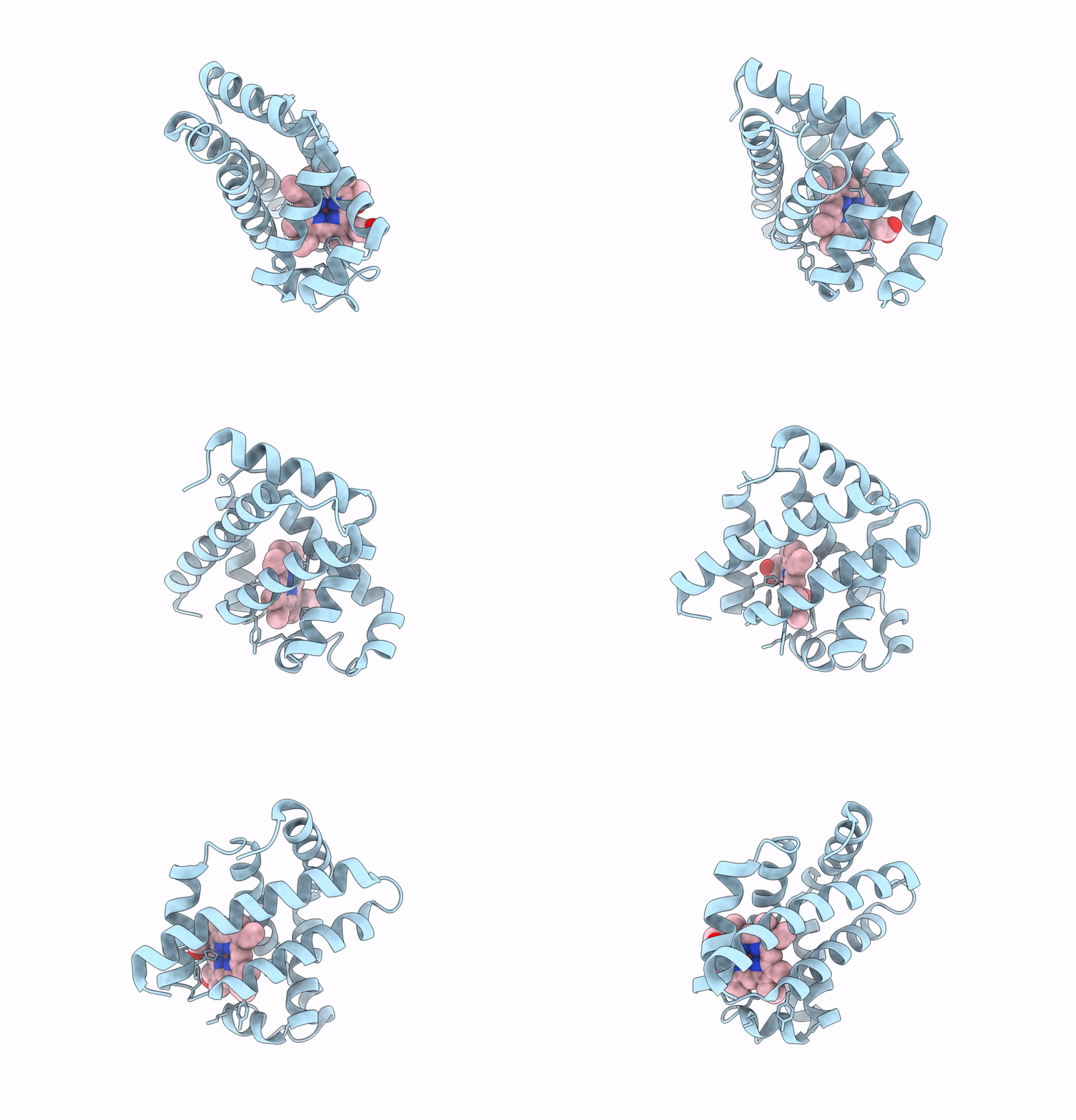
9T6W image
Deposition Date 2025-11-07
Release Date 2026-03-04
Last Version Date 2026-03-11
Entry Detail
PDB ID:
9T6W
Keywords:
Title:
Higher-dose (260.0 kGy) structure of horse-heart myoglobin at room temperature
Biological Source:
Source Organism(s):
Equus caballus (Taxon ID: 9796)
Expression System(s):
Method Details:
Experimental Method:
Resolution:
1.71 Å
R-Value Free:
0.19
R-Value Work:
0.17
Space Group:
P 21 21 21

Macromolecular Entities
Structures with similar UniProt ID
Protein Blast
Polymer Type:polypeptide(L)
Molecule:Myoglobin
Gene (Uniprot):MB
Chain IDs:A
Chain Length:154
Number of Molecules:1
Biological Source:Equus caballus
Ligand Molecules
Primary Citation
Coupled on-line in crystallo UV-Vis absorption spectroscopy and X-ray crystallography to compare specific radiation damage in metal-containing proteins at room versus cryogenic temperature.
Acta Crystallogr D Struct Biol 82 187 198 (2026)
PMID: 41641581 DOI: 10.1107/S2059798326000690

Abstact

Specific radiation damage (SRD) to proteins is a pertinent issue discovered during the development of cryo-crystallography at synchrotrons, often affecting the macromolecular active site and thus complicating the understanding of mechanistic insights from structural analysis. For proteins with a spectroscopic signature in the visible light spectrum, in crystallo UV-Vis absorption spectroscopy has regularly been used to estimate the dose scale of specific damage build-up and to develop diffraction data-collection strategies to mitigate its effects. Using a coupled spectroscopic and crystallographic approach, here we show that for two metal-containing proteins the structural response to X-ray-induced reduction of metals in their active site is markedly different at room temperature than at cryogenic temperature. This suggests that the use of controlled specific radiation damage to mimic and study a physiological redox transition in a metal-containing protein by X-ray crystallography should preferably be performed at room temperature rather than at cryogenic temperature.

Legend

Protein

Chemical

Disease

Primary Citation of related structures
Feedback Form
Name
Email
Institute
Feedback