

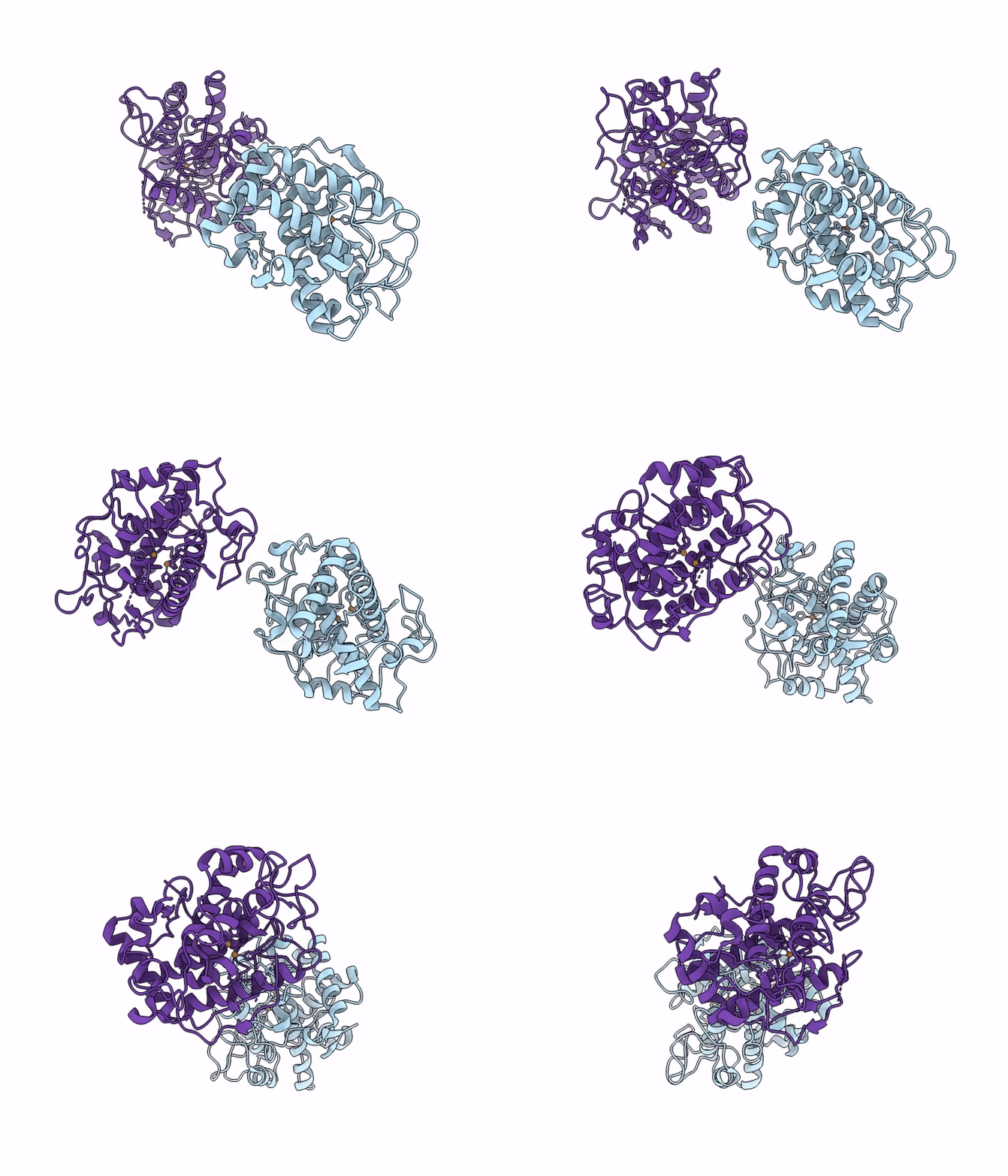
9T62 image
Deposition Date 2025-11-06
Release Date 2026-02-11
Last Version Date 2026-05-13
Entry Detail
PDB ID:
9T62
Keywords:
Title:
Crystal structure of ortho-aminophenol oxidase SmNspF from Streptomyces murayamaensis
Biological Source:
Source Organism(s):
Expression System(s):
Method Details:
Experimental Method:
Resolution:
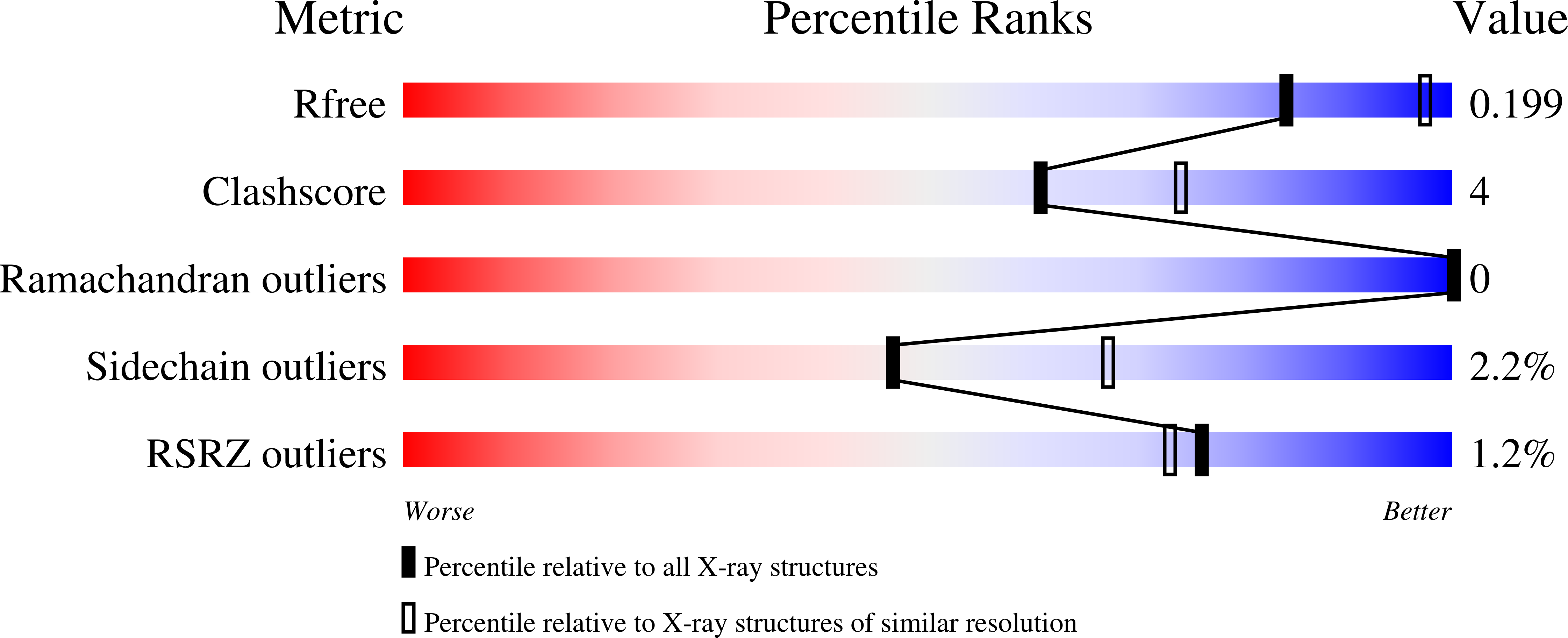
2.40 Å
R-Value Free:
0.23
R-Value Work:
0.18
Space Group:
P 3
Macromolecular Entities
Structures with similar UniProt ID
Protein Blast
Polymer Type:polypeptide(L)
Molecule:O-aminophenol oxidase
Gene (Uniprot):nspF
Chain IDs:A, B
Chain Length:307
Number of Molecules:2
Biological Source:Streptomyces murayamaensis
Primary Citation
Structural insights into ortho -aminophenol oxidases: kinetic and crystallographic characterization of Sm NspF and Sg GriF.
Inorg Chem Front 13 3786 3794 (2026)
PMID: 41836335 DOI: 10.1039/d5qi02495a

Abstact

Actinobacteria-derived o-aminophenol oxidases (AOs) represent a largely unexplored subclass of type-III copper enzymes with catalytic properties distinct from tyrosinases and catechol oxidases. The determination of the first crystal structure of an AO (SmNspF) displays unique loop insertions and important second-sphere amino acids in vicinity of the binuclear copper center. The substrate-guiding effect of the second activity controller (His(B2+1)) influences the binding affinity for carboxyl-containing substrates in the AOs SmNspF and SgGriF. Thus, kinetic investigations reveal both overlapping and distinct substrate preferences for SmNspF and SgGriF: while both enzymes oxidize monophenols, o-aminophenols, and o-diphenols, they do so at significantly different reaction rates. SmNspF preferentially oxidizes carboxylated substrates such as 3,4-dihydroxybenzoic acid and 3-amino-4-hydroxybenzoic acid, whereas SgGriF exhibits higher activity toward para-methylated analogs, including 4-methylcatechol and 2-amino-4-methylphenol. Remarkably, both enzymes display enzymatic activities beyond the known AO reactivity spectrum by oxidizing 2-aminoresorcinol and o-phenylenediamine, which underlies the high versatility of the binuclear copper center. Altogether, these findings provide a structural basis for AO's enzymatic activity and broaden the known catalytic spectrum, which enables the prediction of catalytic properties in type-III copper proteins based on their amino acid sequence.

Legend

Protein

Chemical

Disease

Primary Citation of related structures
Feedback Form
Name
Email
Institute
Feedback