

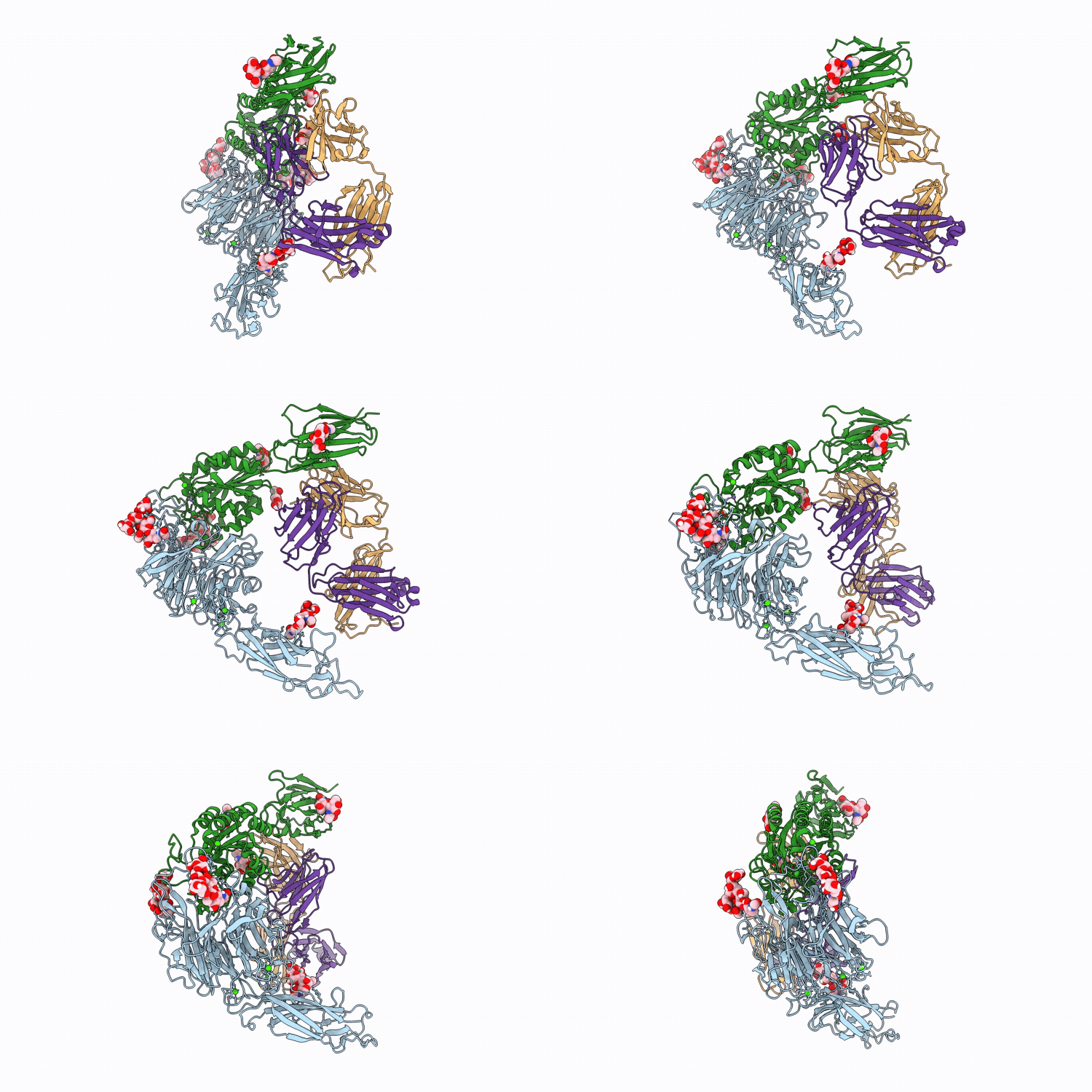
9T5Z image
Deposition Date 2025-11-06
Release Date 2026-03-25
Last Version Date 2026-07-01
Entry Detail
PDB ID:
9T5Z
Keywords:
Title:
Cryo-EM structure of alphaM/beta2:MEM148-Fab headpiece complex (without alphaM I-domain)
Biological Source:
Source Organism(s):
Homo sapiens (Taxon ID: 9606)
Mus musculus (Taxon ID: 10090)
Expression System(s):
Method Details:
Experimental Method:
Resolution:
3.10 Å
Aggregation State:
PARTICLE
Reconstruction Method:
SINGLE PARTICLE
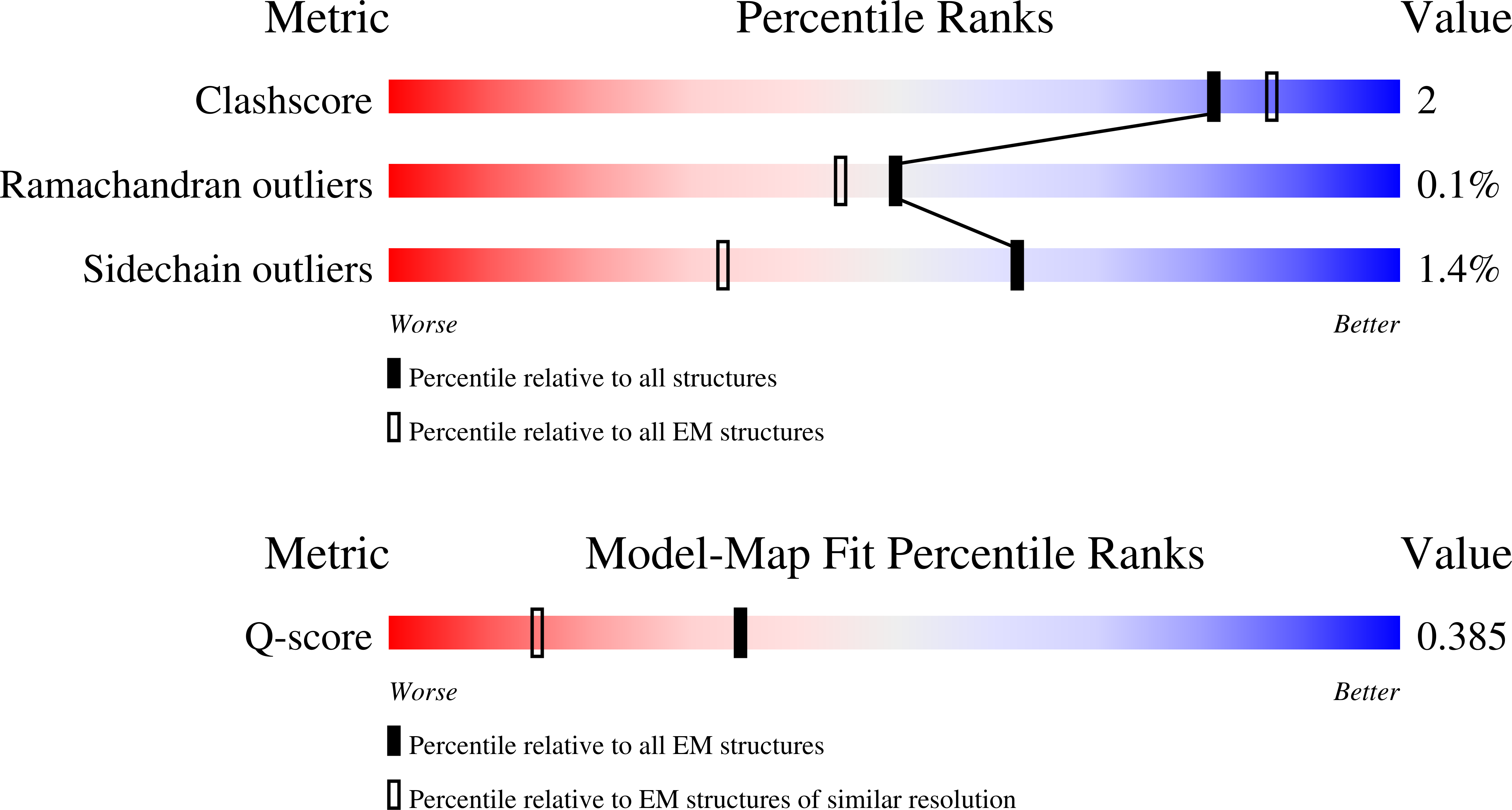
Macromolecular Entities
Polymer Type:polypeptide(L)
Molecule:Integrin alpha-M
Gene (Uniprot):ITGAM
Chain IDs:A
Chain Length:762
Number of Molecules:1
Biological Source:Homo sapiens
Polymer Type:polypeptide(L)
Molecule:Integrin beta-2
Gene (Uniprot):ITGB2
Chain IDs:B
Chain Length:469
Number of Molecules:1
Biological Source:Homo sapiens
Structural Superimposition Protein Blast
Polymer Type:polypeptide(L)
Molecule:Murine IgG1 MEM148 heavy chai
Chain IDs:C (auth: H)
Chain Length:218
Number of Molecules:1
Biological Source:Mus musculus
Structural Superimposition Protein Blast
Polymer Type:polypeptide(L)
Molecule:Anti-colorectal carcinoma lig
Chain IDs:D (auth: L)
Chain Length:214
Number of Molecules:1
Biological Source:Mus musculus
Primary Citation
Three cryo-EM structures of complement C3d-bound alpha M beta 2 reveal an unexpected layer of dynamics for alpha I-containing integrin receptors.
Sci Adv 12 eaea7241 eaea7241 (2026)
PMID: 42102216 DOI: 10.1126/sciadv.aea7241

Abstact

Integrins are heterodimeric membrane proteins acting as mechanosensing receptors. Nine human alpha-subunits contain a ligand binding alphaI domain, but how ligands activate alphaI integrins are not understood. We present cryo-EM structures of the alphaI integrin alpha(M)beta(2) in complex with the C3d ligand. The ligand-bound alphaI domain appears to have two major opposite orientations relative to the beta(2) subunit. Ligand binding induces an ordered conformation of the alpha(M) internal ligand region that is tightly packed between the alpha(M) beta-propeller and the beta(2) betaI-domain. Recognition of the internal ligand induces an open betaI conformation practically identical to that of ligand-bound alphaI-less integrins confirming that ligand binding and signaling are coupled by a universal mechanism across all integrins. Integration of our findings with prior data allows us to propose a model for C3dg/iC3b-bound alpha(M)beta(2) in the phagocytotic cup and outline mechanistic models for external ligand-induced activation of alpha(M)beta(2).

Legend

Protein

Chemical

Disease

Primary Citation of related structures
Feedback Form
Name
Email
Institute
Feedback