

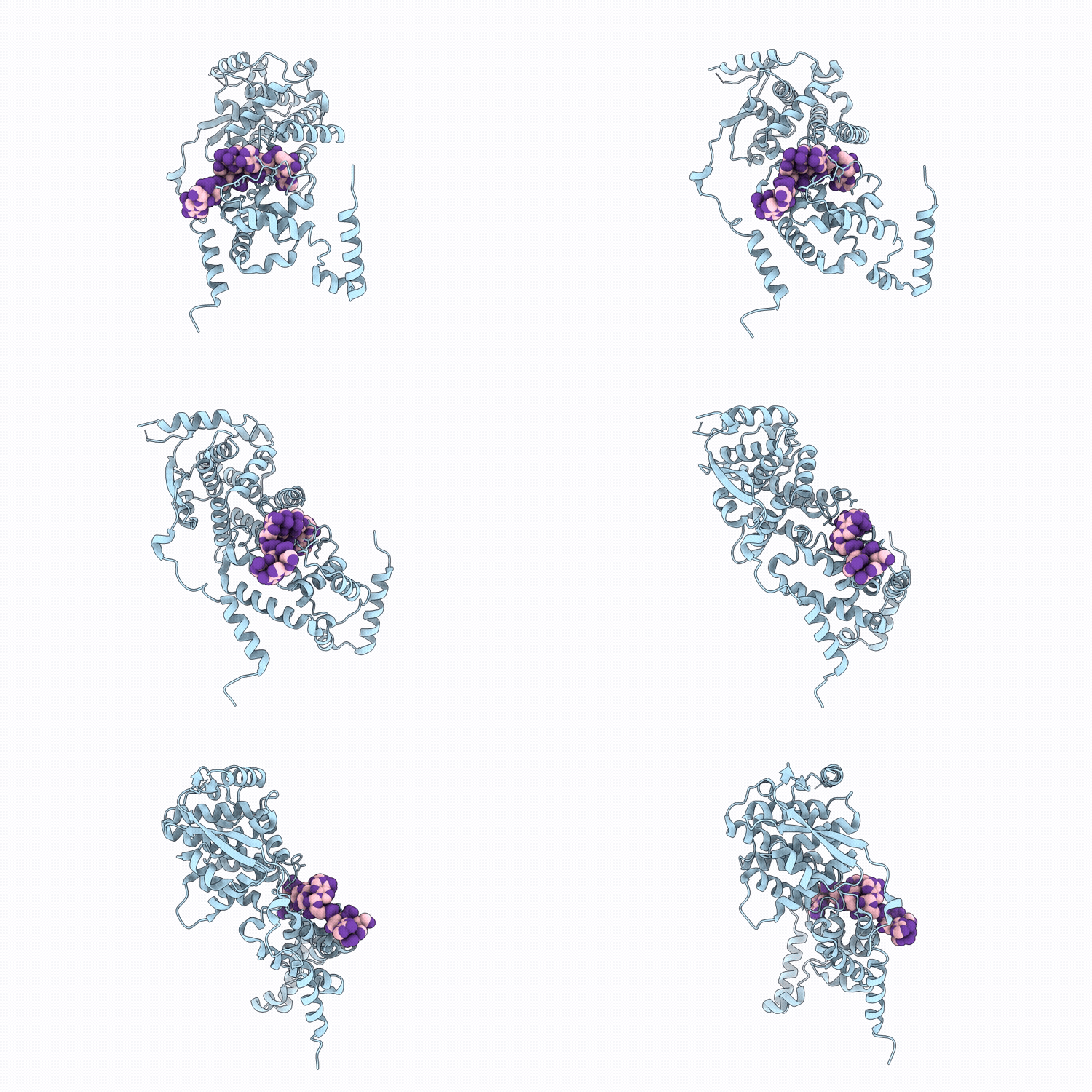
9T5L image
Deposition Date 2025-11-05
Release Date 2026-04-22
Last Version Date 2026-05-27
Entry Detail
PDB ID:
9T5L
Keywords:
Title:
Helical reconstruction of Langya henipavirus N-core nucleocapsid-like complex
Biological Source:
Source Organism(s):
Expression System(s):
Method Details:
Experimental Method:
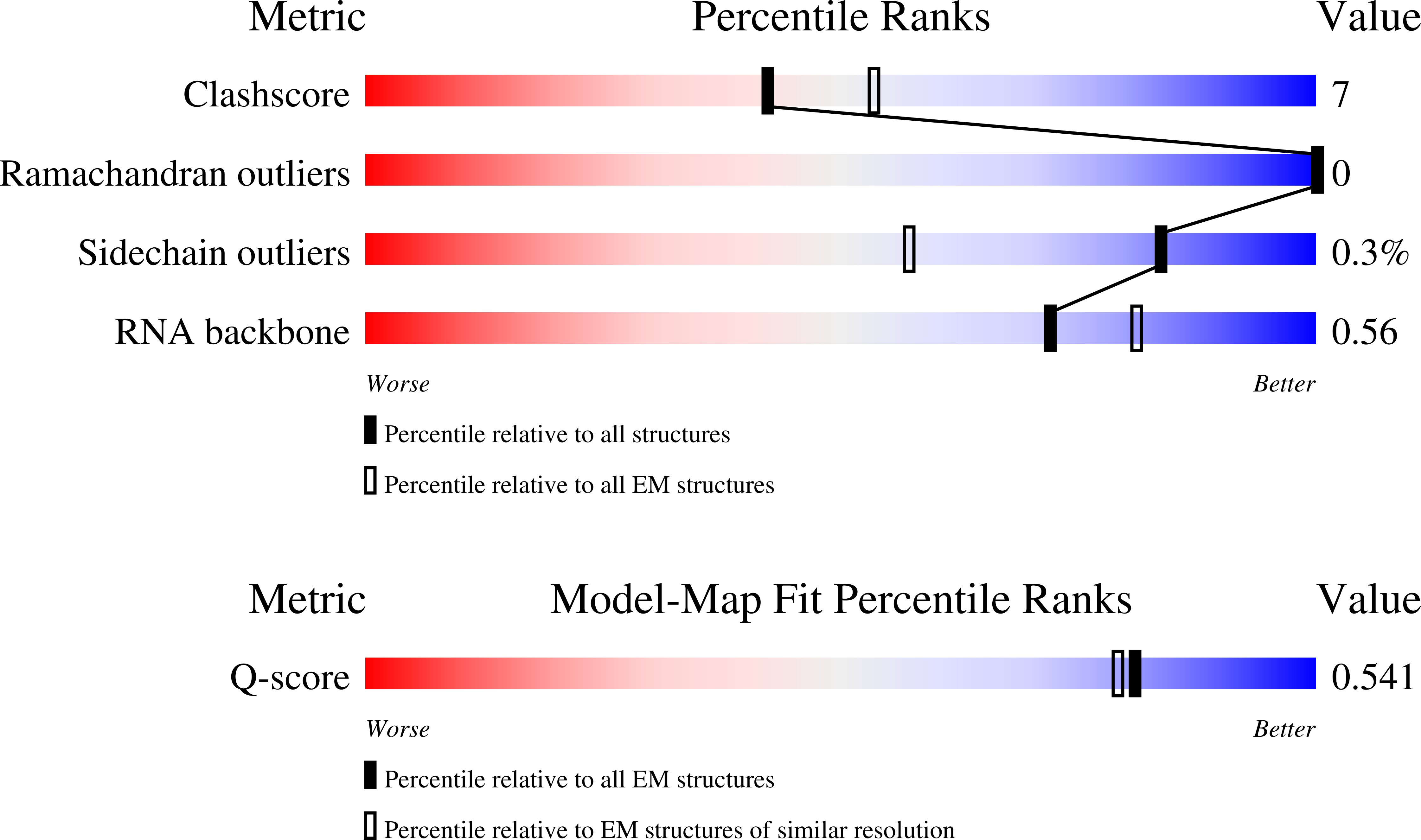
Resolution:
3.10 Å
Aggregation State:
FILAMENT
Reconstruction Method:
HELICAL
Macromolecular Entities
Structures with similar UniProt ID
Protein Blast
Polymer Type:polypeptide(L)
Molecule:Nucleocapsid
Gene (Uniprot):N
Chain IDs:A
Chain Length:453
Number of Molecules:1
Biological Source:Langya virus
Polymer Type:polyribonucleotide
Molecule:RNA (5'-R(*AP*AP*AP*AP*AP*A)-
Chain IDs:B
Chain Length:6
Number of Molecules:1
Biological Source:synthetic construct
Ligand Molecules
Primary Citation
Open and closed forms of assembled henipavirus nucleoprotein suggest structural basis of genome access.
Sci Adv 12 eaed8300 eaed8300 (2026)
PMID: 42127178 DOI: 10.1126/sciadv.aed8300

Abstact

Henipaviruses, such as Nipah virus, can cause deadly illness and constitute WHO blueprint priorities due to their pandemic potential. Their genomes are packaged within a nucleocapsid consisting of viral nucleoproteins (N). Now, it is unclear how the encapsidated genome is released from N to allow the viral polymerase to read its sequence. Here, we present the high-resolution cryo-EM structure of a helical N-RNA filament from Langya henipavirus (LayV), allowing us to identify vertical interactions crucial for assembly. We show that assembly efficiency is sequence-dependent and prefers 5'-genomic sequences. Further, we solve the structure of an RNA-free assembly of LayV-N. Structural comparison of the RNA-bound and RNA-free LayV-N shows a conformational opening and closing, even within the assembled state. Our data suggest that N within nucleocapsids may undergo local conformational changes, switching between closed and open states, to temporarily allow access to the encapsidated RNA without nucleocapsid disruption.

Legend

Protein

Chemical

Disease

Primary Citation of related structures
Feedback Form
Name
Email
Institute
Feedback