

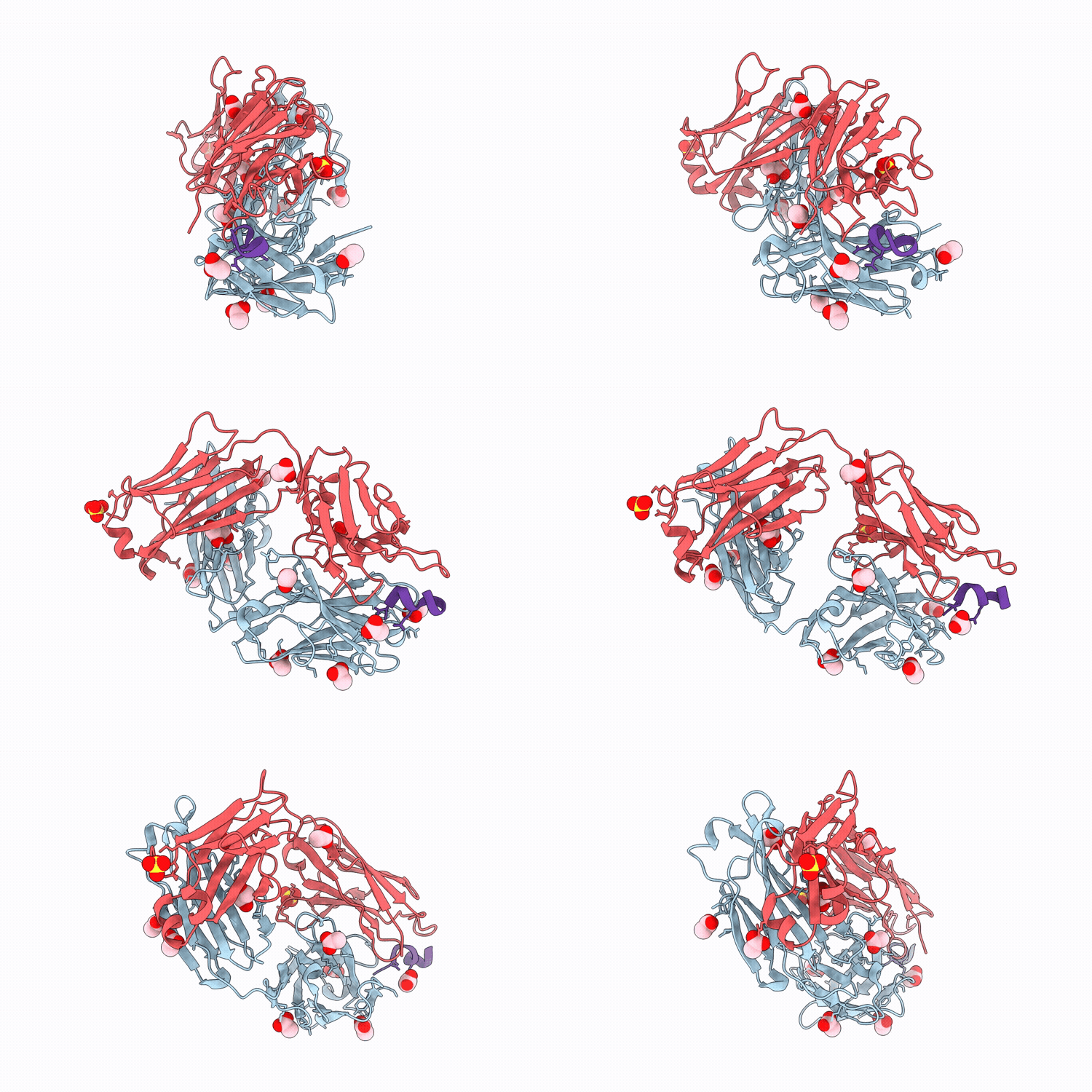
9T46 image
Deposition Date 2025-10-30
Release Date 2026-05-13
Last Version Date 2026-05-13
Entry Detail
PDB ID:
9T46
Keywords:
Title:
Crystal structure of the Fab 40G5c in complex with a CD3 epsilon peptide
Biological Source:
Source Organism(s):
Homo sapiens (Taxon ID: 9606)
Expression System(s):
Method Details:
Experimental Method:
Resolution:
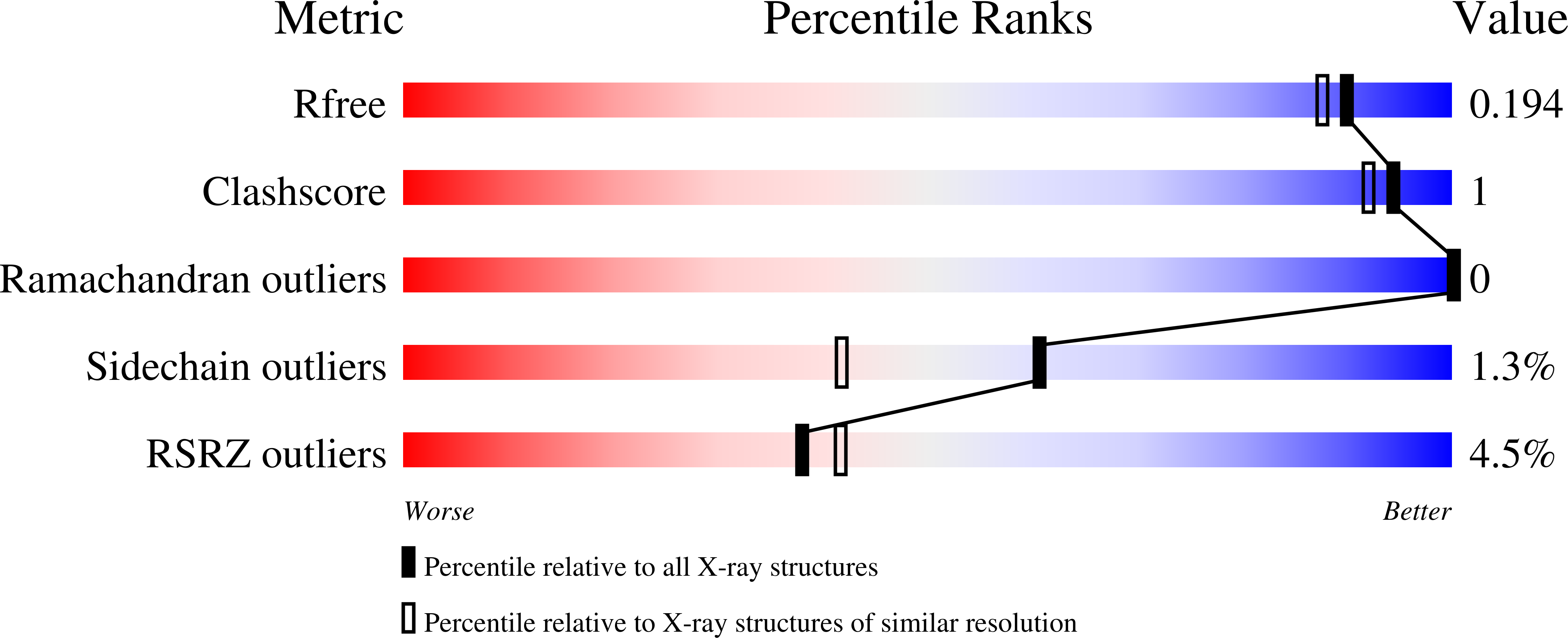
1.65 Å
R-Value Free:
0.22
R-Value Work:
0.18
R-Value Observed:
0.18
Space Group:
P 21 21 21
Macromolecular Entities
Protein Blast
Polymer Type:polypeptide(L)
Molecule:Immunoglobulin Fab fragment 4
Chain IDs:A (auth: H)
Chain Length:224
Number of Molecules:1
Biological Source:Homo sapiens
Protein Blast
Polymer Type:polypeptide(L)
Molecule:Immunoglobulin Fab fragment 4
Chain IDs:B (auth: L)
Chain Length:219
Number of Molecules:1
Biological Source:Homo sapiens
Structures with similar UniProt ID
Protein Blast
Polymer Type:polypeptide(L)
Molecule:T-cell surface glycoprotein C
Gene (Uniprot):CD3E
Chain IDs:C (auth: P)
Chain Length:10
Number of Molecules:1
Biological Source:Homo sapiens
Modified Residue
Compound ID Chain ID Parent Comp ID Details 2D Image
PCA C GLN modified residue
Primary Citation
Engineering of acidic pH-responsive anti-CD3 binding antibodies.
Mabs 18 2658902 2658902 (2026)
PMID: 42046367 DOI: 10.1080/19420862.2026.2658902

Abstact

The development of anti-CD3 antibody-based T cell engager therapeutics has improved the treatment of various malignancies, yet the challenge of achieving tumor-specific targeting while minimizing on-target off-tumor effects in normal tissues remains a substantial hurdle. One promising strategy to address this issue involves engineering antibodies with conditional pH-dependent binding affinities, capitalizing on the acidic microenvironment characteristics of tumors (pH ~ 6.5-6.8) compared to the neutral pH of healthy tissues (pH ~ 7.4). In this study, we focus on the pH-engineering of antibody binders against the human CD3 antigen, a critical component of T cell activation, to achieve preferential binding at acidic pH. Using molecular dynamics (MD) simulations on the reported CD3varepsilon antibody binder 40G5c, we shed light on possible molecular mechanisms of the pH-responsiveness of key mutations and their impact on the overall binder structure at physiological or acidic pH. Our study highlights how MD has emerged as a powerful tool to guide and explain intrinsic pH-dependent molecular mechanisms in antibody engineering. Lastly, we report that our engineered CD3 binders preferentially bind and activate T cells under acidic pH conditions and display favorable affinity and pH-window profiles.

Legend

Protein

Chemical

Disease

Primary Citation of related structures
Feedback Form
Name
Email
Institute
Feedback