

9T43 image
Deposition Date 2025-10-30
Release Date 2026-06-10
Last Version Date 2026-06-10
Entry Detail
PDB ID:
9T43
Keywords:
Title:
Human PRMT5:MEP50 in complex with AZD3470
Biological Source:
Source Organism(s):
Homo sapiens (Taxon ID: 9606)
Expression System(s):
Method Details:
Experimental Method:
Resolution:
2.18 Å
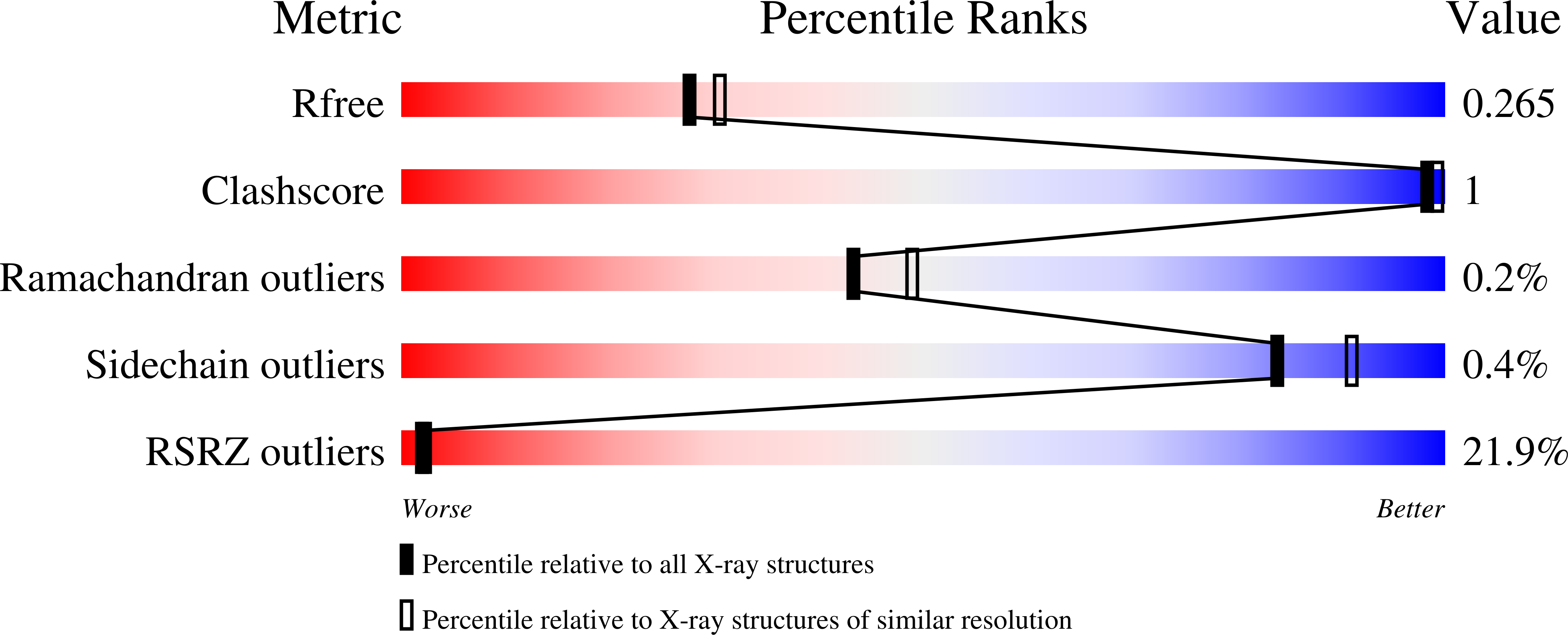
R-Value Free:
0.26
R-Value Work:
0.23
R-Value Observed:
0.23
Space Group:
I 2 2 2
Macromolecular Entities
Structures with similar UniProt ID
Protein Blast
Polymer Type:polypeptide(L)
Molecule:Protein arginine N-methyltran
Gene (Uniprot):PRMT5
Chain IDs:A
Chain Length:637
Number of Molecules:1
Biological Source:Homo sapiens
Structures with similar UniProt ID
Protein Blast
Polymer Type:polypeptide(L)
Molecule:Methylosome protein WDR77
Gene (Uniprot):WDR77
Chain IDs:B
Chain Length:342
Number of Molecules:1
Biological Source:Homo sapiens
Primary Citation
Use of Human Dose Prediction Metrics to Enable Discovery of AZD3470, an MTA-Cooperative PRMT5 Inhibitor in Clinical Evaluation.
J.Med.Chem. ? ? ? (2026)
PMID: 42172174 DOI: 10.1021/acs.jmedchem.6c00659

Abstact

Inhibition of the arginine methyltransferase protein arginine methyltransferase 5 (PRMT5) has emerged as a key target for cancer therapy. Leveraging the MTAP synthetic lethality mechanism, MTA-cooperative PRMT5 inhibitors are showing promising potential as precision cancer treatments with a high therapeutic index. Herein, we report our efforts to further optimize our previously reported in vivo tool compound 1 ("AZ-PRMT5i-1") toward a clinical candidate-quality profile, by addressing key shortcomings of this compound horizontal line limited aqueous solubility, low hERG receptor activity, and an unfavorable predicted human dose. Exploration of the terminal lactam substitution group and the central aromatic group of the isindolinone scaffold provided the key structure-activity relationship insights to meet these goals. The highest quality compounds in this series were identified by the use of a dose-to-human (D2H) automated model. These efforts resulted in the identification of 14, which shows the appropriate physicochemical properties, DMPK characteristics, and PRMT5-driven activity to be selected for progression into clinical studies.

Legend

Protein

Chemical

Disease

Primary Citation of related structures
Feedback Form
Name
Email
Institute
Feedback