

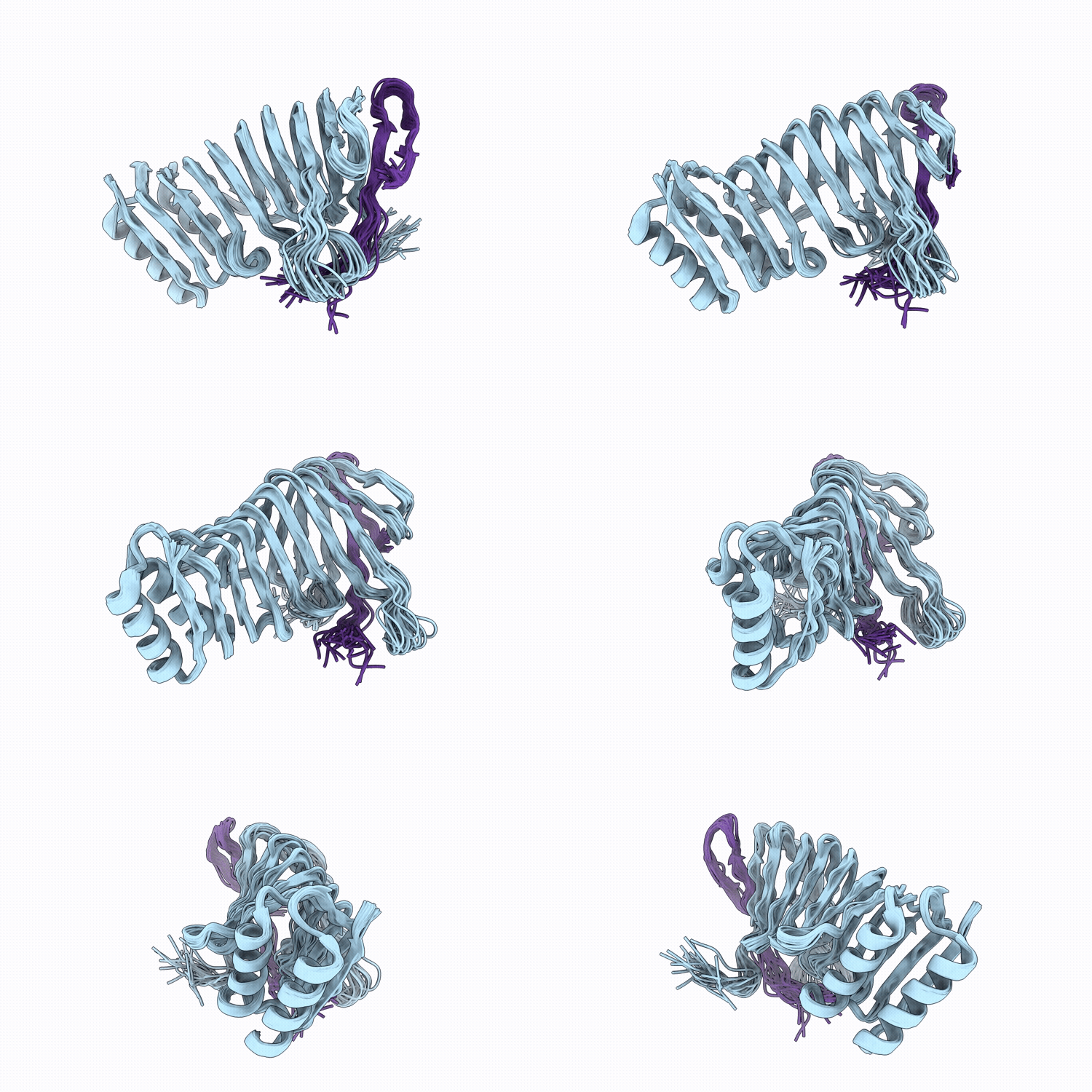
9T3O image
Deposition Date 2025-10-28
Release Date 2026-06-24
Last Version Date 2026-06-24
Entry Detail
PDB ID:
9T3O
Title:
Solution structure of thanatin in complex with LptDm
Biological Source:
Source Organism(s):
Expression System(s):
Method Details:
Experimental Method:
Conformers Calculated:
100
Conformers Submitted:
20
Selection Criteria:
target function
Macromolecular Entities
Structures with similar UniProt ID
Protein Blast
Polymer Type:polypeptide(L)
Molecule:LPS-assembly protein LptD
Gene (Uniprot):lptD
Chain IDs:A
Chain Length:181
Number of Molecules:1
Biological Source:Escherichia coli
Structures with similar UniProt ID
Protein Blast
Polymer Type:polypeptide(L)
Molecule:Thanatin
Chain IDs:B
Chain Length:21
Number of Molecules:1
Biological Source:Podisus maculiventris
Ligand Molecules
Primary Citation
Computational design of a soluble mimic of the outer membrane LPS transport protein LptD suitable for screening of antibiotics.
Protein Sci. 35 e70626 e70626 (2026)
PMID: 42144870 DOI: 10.1002/pro.70626

Abstact

Lipopolysaccharides (LPS) are the principal chemical component of the outer leaflet of Gram-negative bacteria and constitute the first barrier of defense against foreign molecules. Inhibition of LPS transport presents a novel concept for antibiotic discovery, and components of the transport bridge are targets of antimicrobial peptides. LptD, a beta-barrel outer membrane protein, the terminal module of the Lpt transport bridge, however, remains largely unexplored as a drug target as its biosynthesis is complicated and screens against membrane proteins are challenging. Herein, we report a computationally designed, soluble E. coli LptD periplasmic epitope mimic, LptDm. We describe an efficient in silico design pipeline that includes verification of interactions of LptD mimics with the cognate ligands LptA and thanatin using nuclear magnetic resonance (NMR) and size-exclusions chromatography (SEC) techniques. A small peptide library demonstrates that LptDm allows for selection of high-affinity binders against LptD, rendering LptD accessible to modern drug discovery approaches.

Legend

Protein

Chemical

Disease

Primary Citation of related structures
Feedback Form
Name
Email
Institute
Feedback