

9T3L image
Deposition Date 2025-10-28
Release Date 2026-04-08
Last Version Date 2026-04-08
Entry Detail
PDB ID:
9T3L
Title:
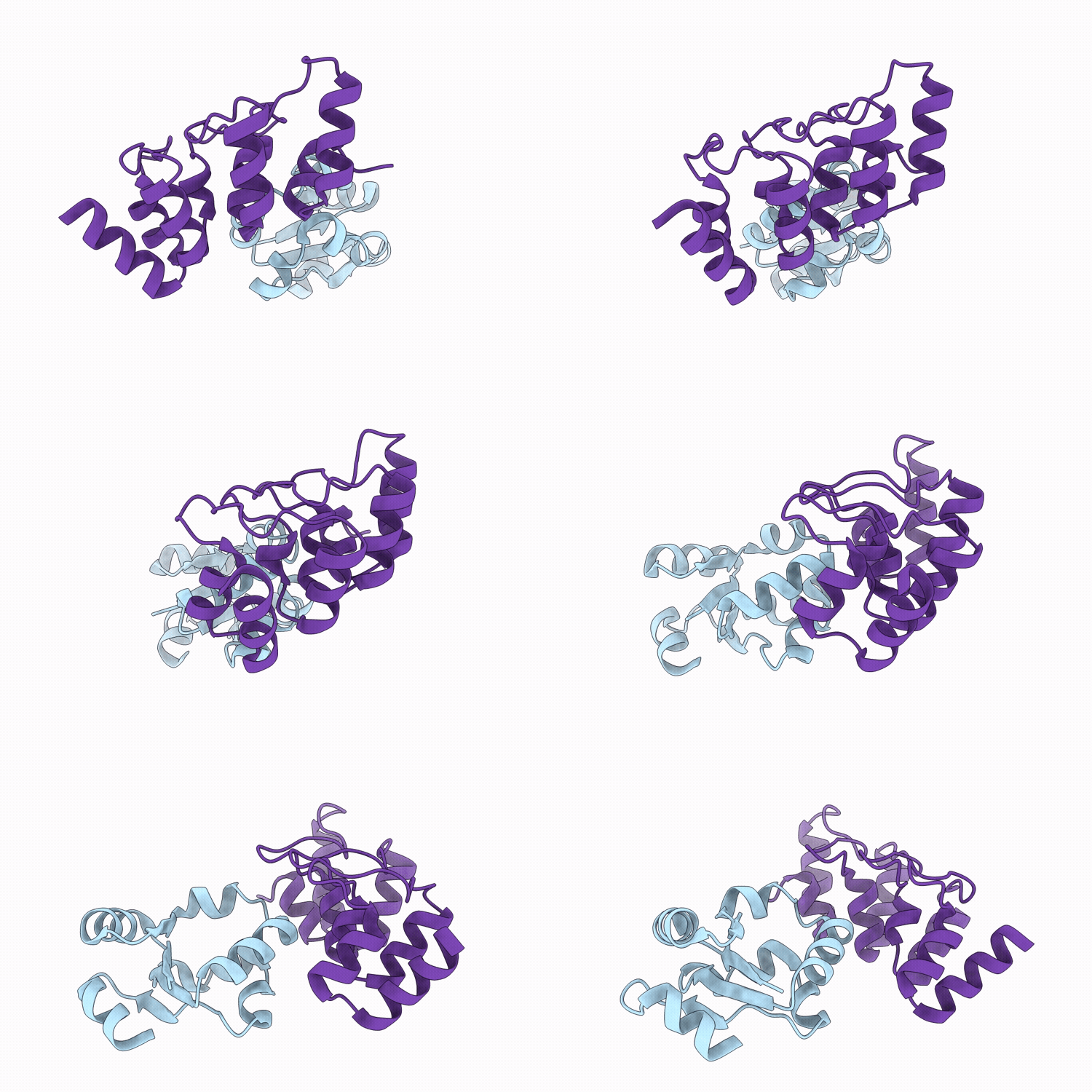
Crystal structure of the Acl1 ankyrin repeat domain in complex with the second Rpl1 domain
Biological Source:
Source Organism(s):
Expression System(s):
Method Details:
Experimental Method:
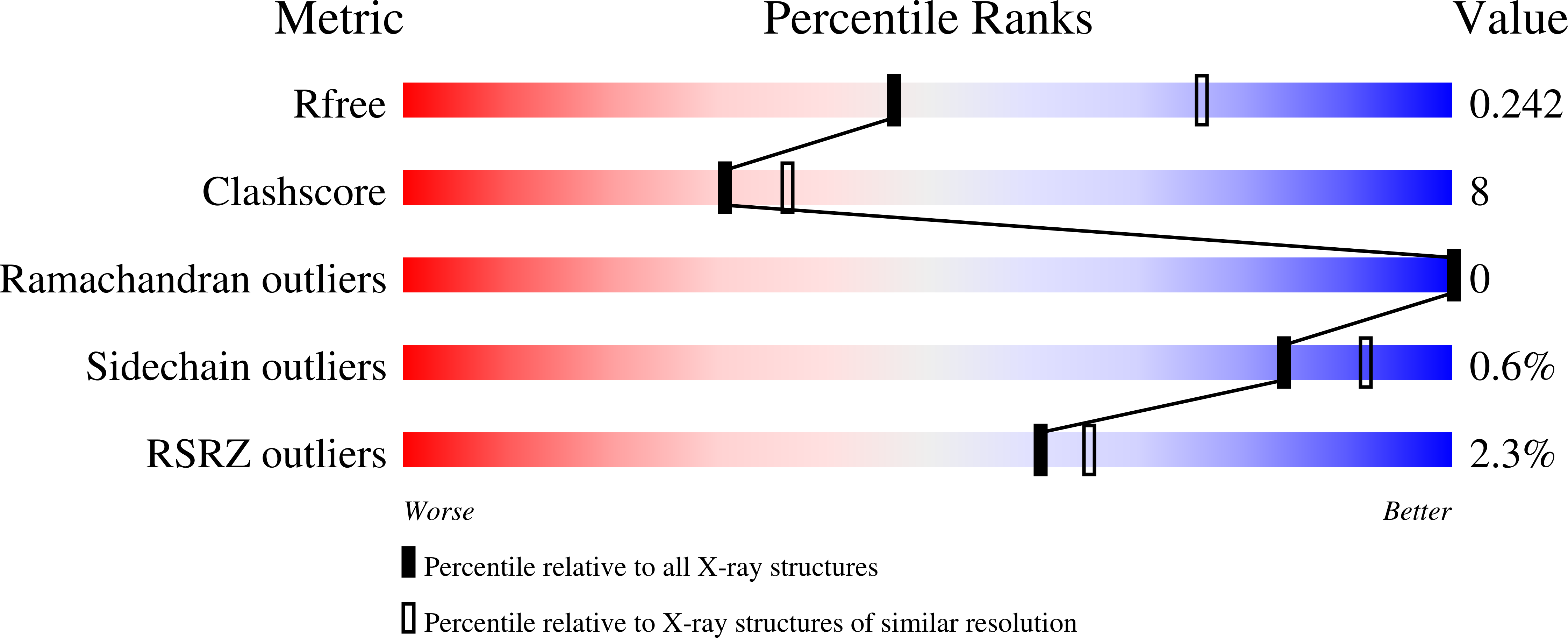
Resolution:
2.55 Å
R-Value Free:
0.24
R-Value Work:
0.19
R-Value Observed:
0.19
Space Group:
P 65 2 2
Macromolecular Entities
Structures with similar UniProt ID
Protein Blast
Polymer Type:polypeptide(L)
Molecule:Large ribosomal subunit prote
Gene (Uniprot):RPL1A
Chain IDs:A
Chain Length:104
Number of Molecules:1
Biological Source:Saccharomyces cerevisiae
Structures with similar UniProt ID
Protein Blast
Polymer Type:polypeptide(L)
Molecule:Ankyrin repeat-containing pro
Gene (Uniprot):YCR51W
Chain IDs:B
Chain Length:128
Number of Molecules:1
Biological Source:Saccharomyces cerevisiae
Primary Citation
Exploration of the proxiOME of large subunit ribosomal proteins reveals Acl1 and Bcl1 as cooperating dedicated chaperones of Rpl1.
Nucleic Acids Res. 54 ? ? (2026)
PMID: 41909949 DOI: 10.1093/nar/gkag264

Abstact

In eukaryotes, most newly synthesized ribosomal proteins (r-proteins) need to rapidly and safely get into the nucleus to reach their assembly site on pre-ribosomal particles. However, only for few r-proteins tailored support mechanisms involving so-called dedicated chaperones (DCs) could so far be revealed. Here, with the primary aim of identifying novel DCs, we performed TurboID-based proximity labelling with all 46 large subunit r-proteins of Saccharomyces cerevisiae, which unveiled the fungi-specific Acl1 and the conserved Bcl1 as candidate DCs of Rpl1. We show that the functionally cooperating Acl1 and Bcl1 both directly interact with Rpl1, form a trimeric Acl1-Rpl1-Bcl1 complex, and enable the nuclear import of Rpl1. Moreover, our crystal structure of the minimal Acl1-Rpl1 complex reveals how Acl1's ankyrin repeat domain shields a positively charged ribosomal RNA-binding surface of Rpl1. Our proximity labelling approach also permitted to establish novel interactions between four r-proteins and distinct importins and to illuminate r-protein neighbourhoods on successive pre-60S particles. Additionally, reciprocal proximity labelling with the known DCs indicates that almost all appear to be transiently associated with pre-ribosomal particles. Our study provides for the first time comprehensive insight into the physical proximities of large subunit r-proteins along their entire life cycle.

Legend

Protein

Chemical

Disease

Primary Citation of related structures
Feedback Form
Name
Email
Institute
Feedback