

9T26 image
Deposition Date 2025-10-22
Release Date 2026-09-30
Last Version Date 2026-09-30
Entry Detail
PDB ID:
9T26
Keywords:
Title:
Plant HSL3/NUT receptor in complex with disulfide-stabilized CTNIP4/SCREW2 peptide
Biological Source:
Source Organism(s):
Expression System(s):
Method Details:
Experimental Method:
Resolution:
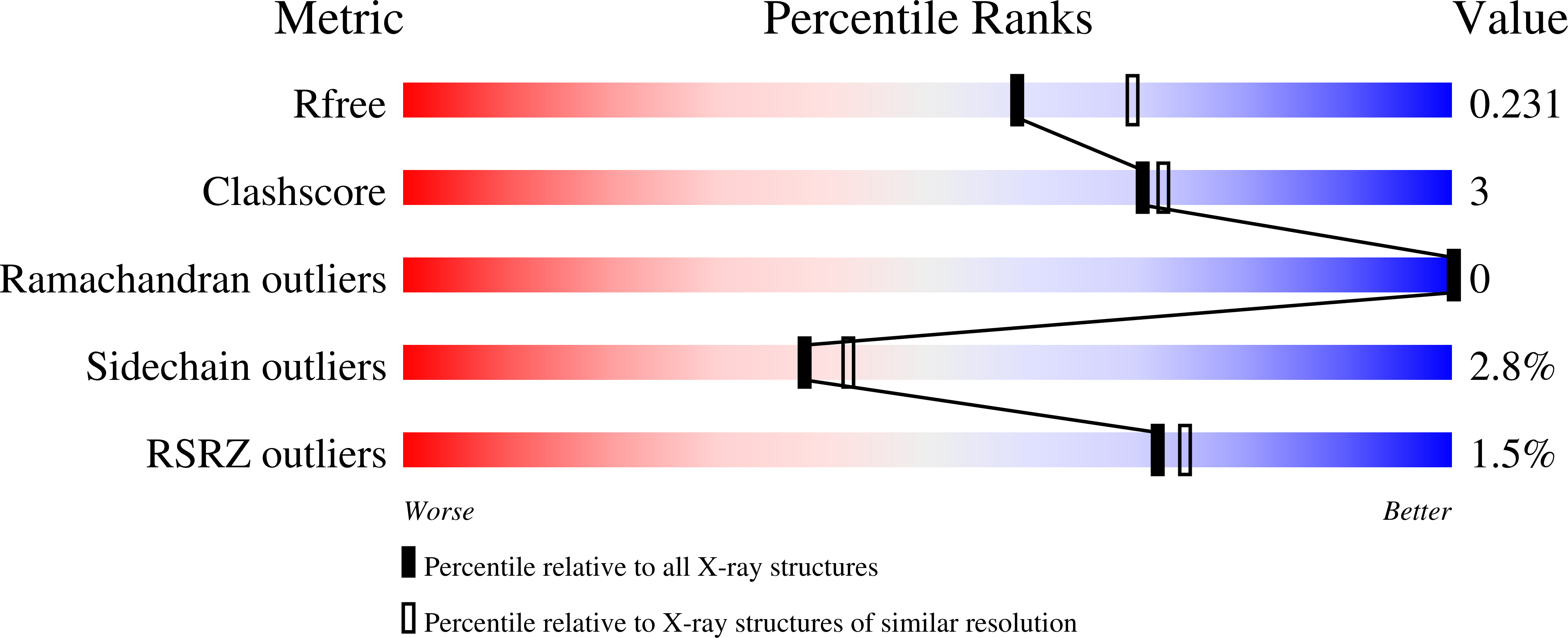
2.12 Å
R-Value Free:
0.23
R-Value Work:
0.18
Space Group:
C 2 2 21
Macromolecular Entities
Polymer Type:polypeptide(L)
Molecule:Kinase family with leucine-ri
Gene (Uniprot):T1N24.22
Chain IDs:A
Chain Length:0
Number of Molecules:1
Biological Source:Arabidopsis thaliana
Polymer Type:polypeptide(L)
Molecule:Transmembrane protein
Gene (Uniprot):At2g31345
Chain IDs:B
Chain Length:0
Number of Molecules:1
Biological Source:Arabidopsis thaliana
Ligand Molecules
Primary Citation
A disulfide bond sculpts the CTNIP4 phytocytokine fold for recognition by the receptor kinase HSL3.
Nat.Plants 12 1688 1697 (2026)
PMID: 42754655 DOI: 10.1038/s41477-026-02380-y

Abstact

Precise ligand recognition by closely related leucine-rich repeat receptor kinases (LRR-RKs) is essential for plants to coordinate immunity, development and environmental adaptation. Here we show how the LRR-RK HSL3/NUT specifically recognizes the folded, disulfide-stabilized CTNIP4/SCREW2 phytocytokine in Arabidopsis. Quantitative binding assays define a minimal CTNIP4 region required for high-affinity HSL3 interaction and signalling activation. A 2.12-A crystal structure of the HSL3-CTNIP4 complex reveals a unique C-terminal receptor pocket that accommodates the peptide's cyclic architecture through a combination of hydrophobic and polar contacts, a feature absent in the closely related HAE/HSL LRR-RKs. The cyclic CTNIP4 fold further establishes a largely hydrophobic interface that bridges HSL3 to the SERK co-receptor, forming a distinct activation surface. Together, these structural, biochemical and physiological insights uncover a previously unrecognized mechanism of CTNIP4 peptide perception and HSL3 receptor activation, highlighting how subtle architectural variations enable precise ligand selectivity among highly conserved plant receptor kinases.

Legend

Protein

Chemical

Disease

Primary Citation of related structures
Feedback Form
Name
Email
Institute
Feedback