

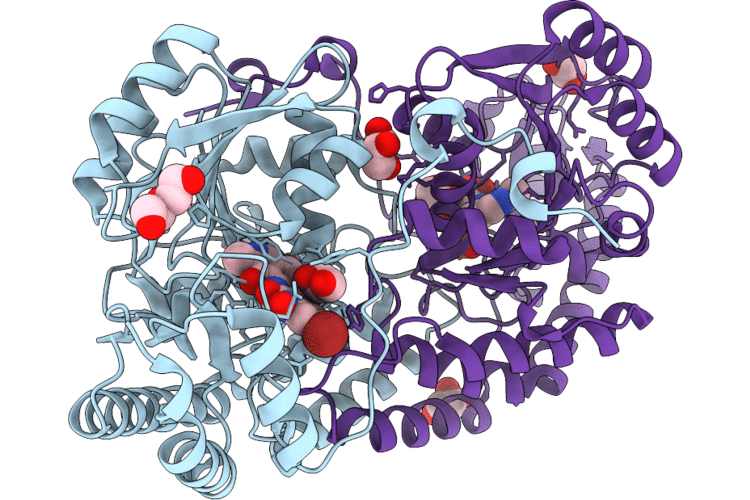
9T0W image
Deposition Date 2025-10-20
Release Date 2026-08-26
Last Version Date 2026-08-26
Entry Detail
PDB ID:
9T0W
Keywords:
Title:
Crystal structure of the Mycobacterium tuberculosis histidinol-phosphate aminotransferase HisC in complex with the adduct PLP-BVL3572S
Biological Source:
Source Organism(s):
Expression System(s):
Method Details:
Experimental Method:
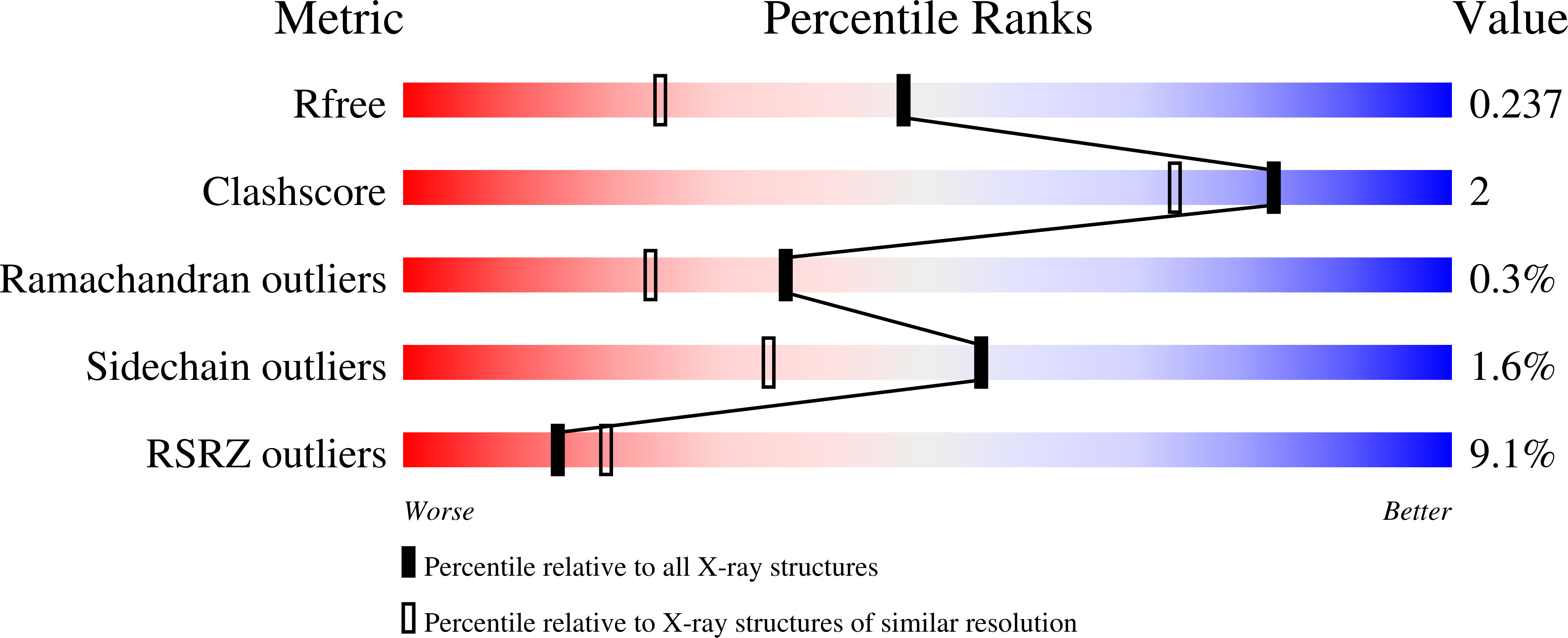
Resolution:
1.74 Å
R-Value Free:
0.23
R-Value Work:
0.19
Space Group:
P 21 21 21
Macromolecular Entities
Polymer Type:polypeptide(L)
Molecule:Histidinol-phosphate aminotra
Gene (Uniprot):hisC
Chain IDs:A, B
Chain Length:393
Number of Molecules:2
Biological Source:Mycobacterium tuberculosis H37Rv
Primary Citation
BVL3572S inhibits HisC and AlaA, exploiting vitamin B6 dependency to kill Mycobacterium tuberculosis.
Cell Chem Biol ? ? ? (2026)
PMID: 42580344 DOI: 10.1016/j.chembiol.2026.07.008

Abstact

Tuberculosis remains the leading cause of death from a single infectious agent, and rising multi-drug resistance in Mycobacterium tuberculosis (Mtb) underscores the urgent need for new antibiotics. Here, we characterize BVL3572S, a hydroxamic acid-containing compound that is bactericidal against Mtb. The primary targets of BVL3572S are the pyridoxal phosphate (PLP; active form of vitamin B6)-dependent aminotransferases HisC (Rv1600) and AlaA (Rv0337c; formerly AspC), simultaneously impacting L-histidine and L-alanine biosynthesis. X-ray crystallography revealed a covalent PLP-BVL3572S adduct within the HisC active site. The formation of the adduct followed by its release suggests a futile cycle that depletes PLP. Consistently, isotopic labeling revealed widespread perturbation of amino acid biosynthesis. CRISPRi and Tn-seq analyses additionally indicated disruptions in central metabolism, cell envelope integrity, and redox balance. BVL3572S displayed strong synergy with the antitubercular drug D-cycloserine. Collectively, our findings establish BVL3572S as a promising lead compound acting through a previously unexploited, multitarget mechanism.

Legend

Protein

Chemical

Disease

Primary Citation of related structures
Feedback Form
Name
Email
Institute
Feedback