Abstact
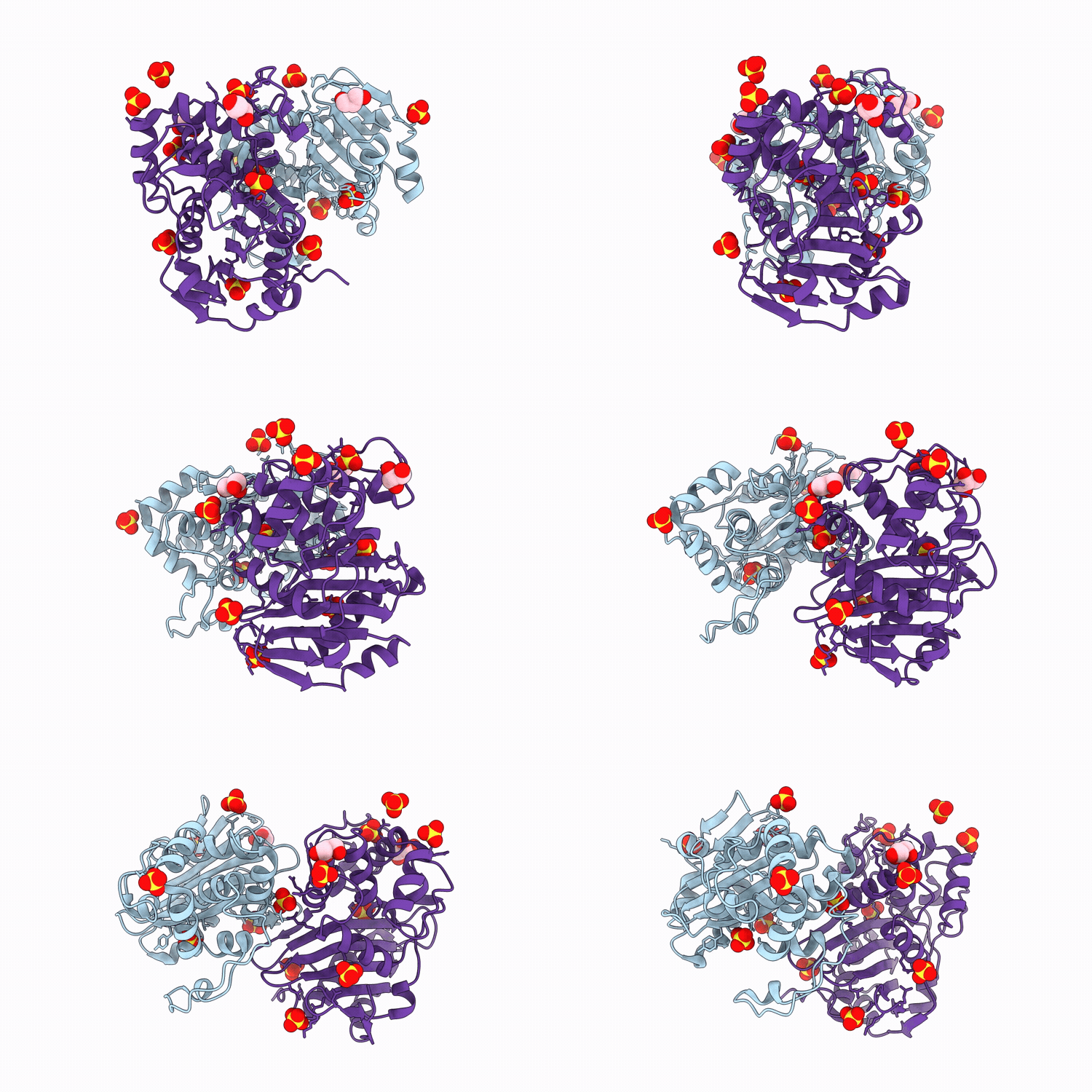
OXA-48-like carbapenemases have rapidly disseminated worldwide, becoming the most common carbapenemase in many countries, with more than 60 variants reported. Among them, OXA-244 (OXA-48-R214G) and OXA-484 (OXA-181-R214G) are increasingly reported, despite overall reduced hydrolytic activities for beta-lactams, including temocillin and carbapenems. R214, located in the beta5-beta6 loop, through the interaction with D159, is crucial for carbapenem hydrolysis by structuring the active site. R214G variants of OXA-48-likes were analyzed by beta-lactam susceptibility testing, steady-state kinetic analyses in the presence or absence of sodium hydrogen carbonate (NaHCO(3)), molecular modeling, X-ray crystallography, and protein stability assessments using differential scanning fluorimetry (DSF). The R214G substitution in OXA-48 and OXA-181 results in reduced minimal inhibitory concentrations (MICs) for all beta-lactams, except for piperacillin and piperacillin/tazobactam combination, for which MICs are increased. OXA-244 and OXA-484 displayed a better affinity for piperacillin with lower K(m) than for parental enzymes and thus resulted in a higher catalytic efficiency for piperacillin hydrolysis. These results were supported by docking observations, highlighting enhanced affinity when glycine is located at position 214. Overall, DSF indicated that the R214G substitution, while destabilizing the active site, enhances the global stability of the protein, especially for OXA-244. The addition of NaHCO(3) raised the activity and thermal stability of all enzymes, especially of OXA-48, which appeared more sensitive to the presence of NaHCO(3). Although OXA-48-like R214G is considered a loss-of-function variant, our findings indicate it exhibits increased hydrolytic activity toward piperacillin, which may result in an advantage under piperacillin-tazobactam exposure and thus could contribute to the selection of these globally expanding variants.