

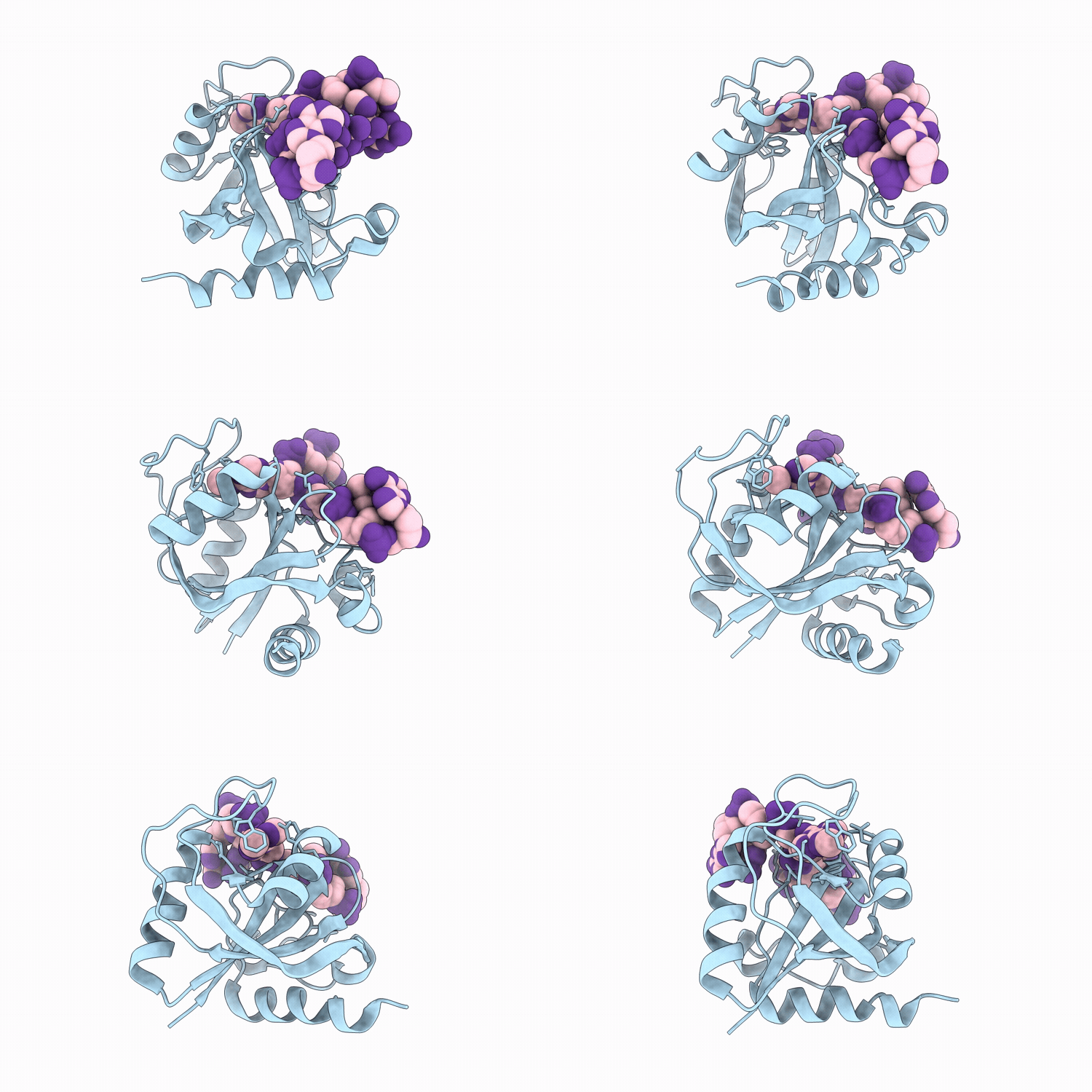
9SZP image
Deposition Date 2025-10-15
Release Date 2026-04-01
Last Version Date 2026-04-01
Entry Detail
PDB ID:
9SZP
Title:
Crystal structure of the human YTHDC2 YTH domain in complex with m6A DNA
Biological Source:
Source Organism(s):
Homo sapiens (Taxon ID: 9606)
DNA molecule (Taxon ID: 2853804)
Expression System(s):
Method Details:
Experimental Method:
Resolution:
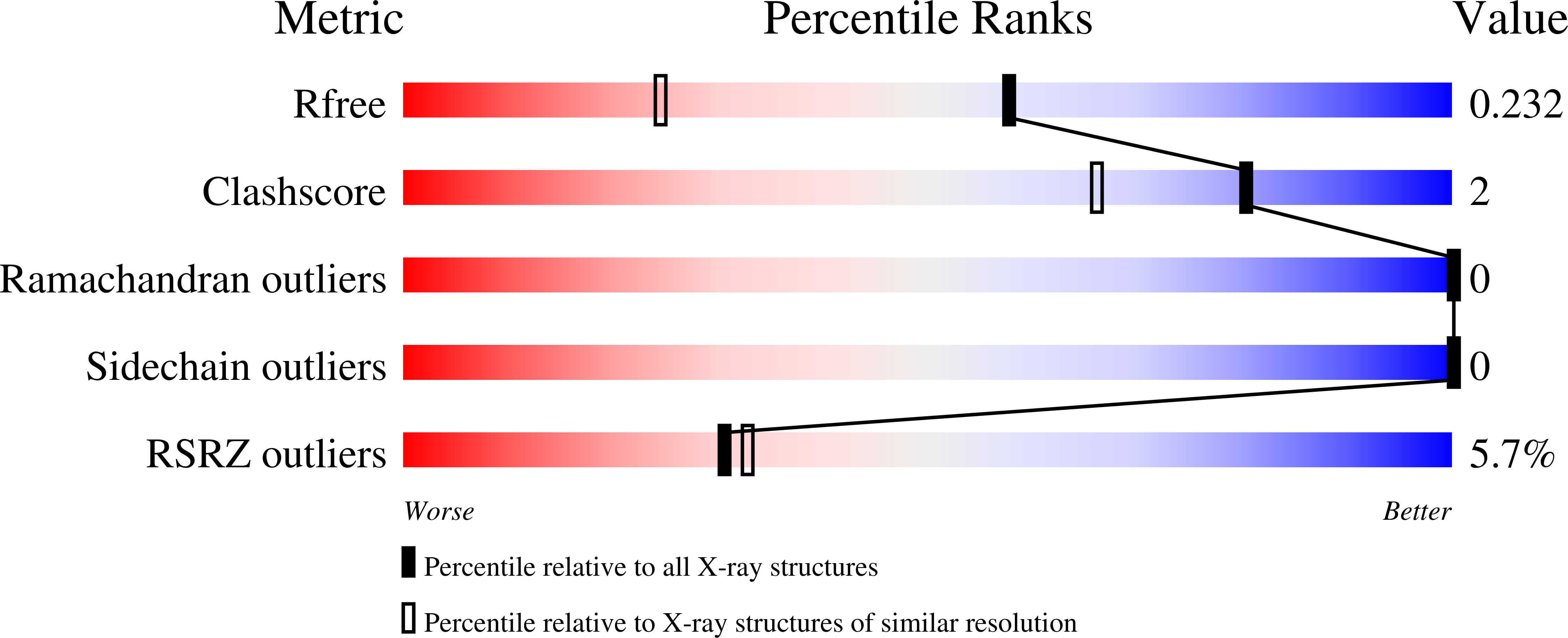
1.58 Å
R-Value Free:
0.23
R-Value Work:
0.19
R-Value Observed:
0.20
Space Group:
C 2 2 21
Macromolecular Entities
Structures with similar UniProt ID
Protein Blast
Polymer Type:polypeptide(L)
Molecule:3'-5' RNA helicase YTHDC2
Gene (Uniprot):YTHDC2
Chain IDs:A
Chain Length:161
Number of Molecules:1
Biological Source:Homo sapiens
Polymer Type:polydeoxyribonucleotide
Molecule:DNA (5'-D(*GP*GP*(6MA)P*CP*TP
Chain IDs:B
Chain Length:6
Number of Molecules:1
Biological Source:DNA molecule
Primary Citation
A DNA-Based Binding Assay for the m 6 A-RNA Reader Proteins.
Chembiochem 27 e202500897 e202500897 (2026)
PMID: 41863816 DOI: 10.1002/cbic.202500897

Abstact

N6-methyladenosine (m(6)A) is the most prevalent internal modification in eukaryotic messenger RNA. Dysregulation of m(6)A-RNA signaling has been implicated in a wide range of human diseases. The N6-methyladenosine modifications in DNA (6mA) is much rarer, and its role is still debated. Here, we report the first holo crystal structure of the m(6)A-RNA reader YTHDC2. The 1.6 A resolution structure of YTHDC2 bound to the single-strand (ss) hexanucleotide GG(6mA)CTA-DNA shows an essentially identical binding mode of (6mA)CT-DNA as (m(6)A)CU-RNA in the other four human reader proteins YTHDC1 and YTHDF1-3. Comparative analysis of the binding of fluorescent-labeled 6mA-ssDNA and m(6)A-RNA revealed that the five human m(6)A-RNA readers exhibit slightly stronger binding affinity for 6mA-modified DNA with a factor ranging from about 1.3 for YTHDC1 to 30 for YTHDC2. Given the similar affinity and the similar binding mode of 6mA-ssDNA and m(6)A-RNA, we set up to develop a fluorescence polarization (FP) binding assay that uses a fluorescent-labeled 6mA-containing ssDNA as probe. The DNA-based FP assay shows high stability and robustness, making it suitable for high-throughput screening applications. The assay provides a powerful and cost-efficient platform to accelerate the discovery of small-molecule modulators targeting m(6)A-RNA reader proteins.

Legend

Protein

Chemical

Disease

Primary Citation of related structures
Feedback Form
Name
Email
Institute
Feedback