

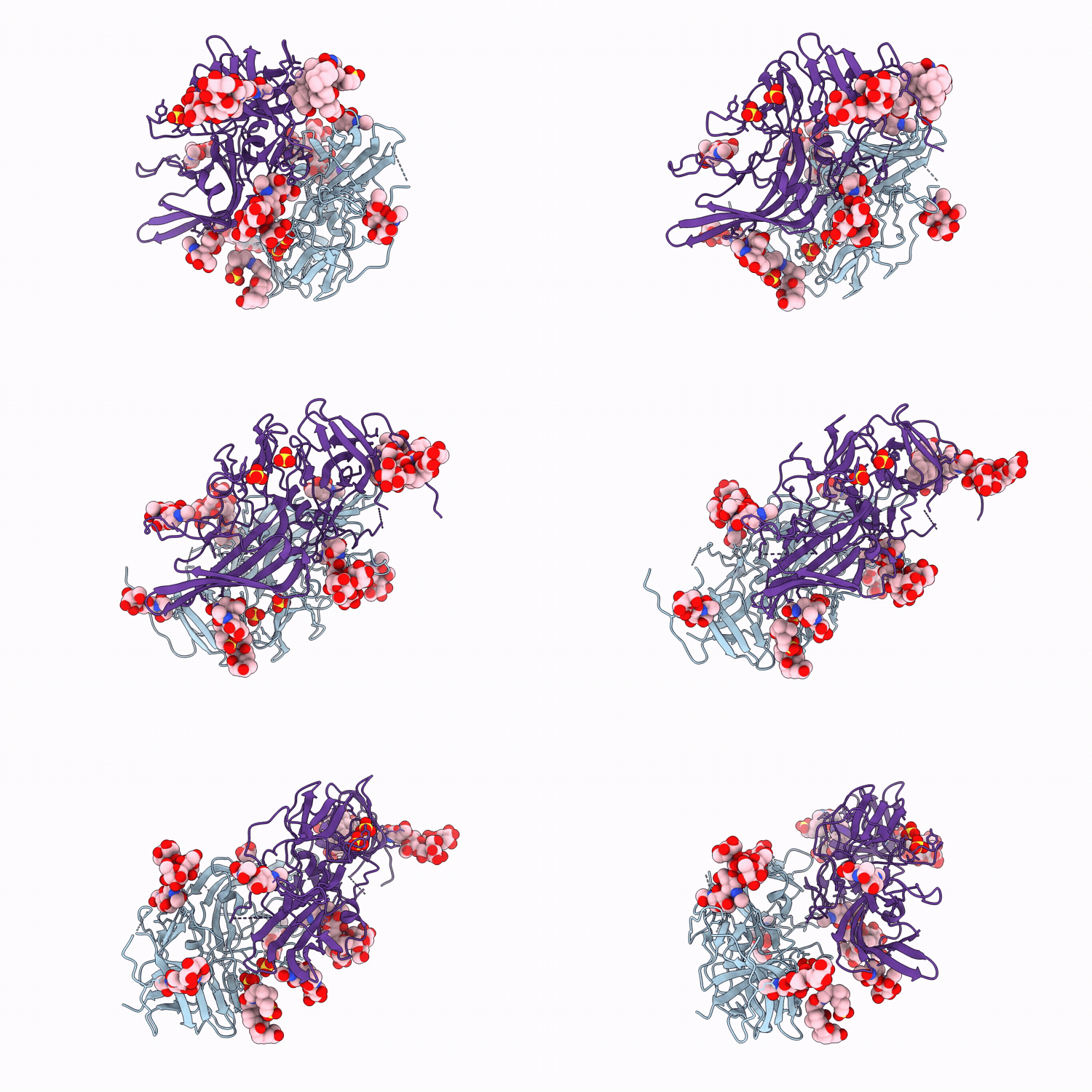
9SYA image
Deposition Date 2025-10-10
Release Date 2026-04-08
Last Version Date 2026-07-08
Entry Detail
PDB ID:
9SYA
Keywords:
Title:
Crystal structure of HERV-K envelope glycoprotein surface subunit with cholates and sulfates bound
Biological Source:
Source Organism(s):
Homo sapiens (Taxon ID: 9606)
Expression System(s):
Method Details:
Experimental Method:
Resolution:
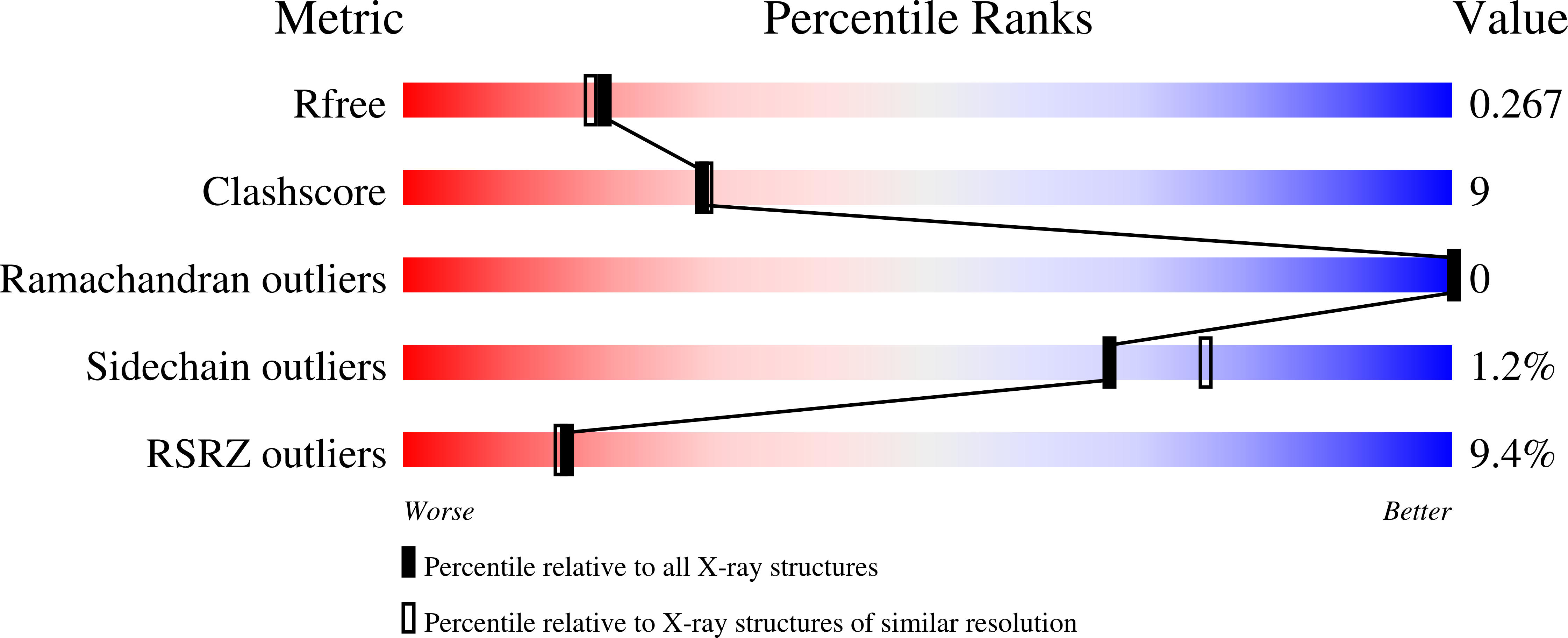
2.25 Å
R-Value Free:
0.26
R-Value Work:
0.21
R-Value Observed:
0.21
Space Group:
P 1
Macromolecular Entities
Polymer Type:polypeptide(L)
Molecule:Surface protein
Gene (Uniprot):ERVK-25
Mutagens:C141A, T167R, I185T
Chain IDs:A, B
Chain Length:343
Number of Molecules:2
Biological Source:Homo sapiens
Primary Citation
Crystal structure of HERV-K envelope glycoprotein surface subunit.
J.Virol. 100 e0019526 e0019526 (2026)
PMID: 42095673 DOI: 10.1128/jvi.00195-26

Abstact

The most recently acquired and transcriptionally active family of human endogenous retroviruses (HERVs) is HERV-K. Of the approximately 100 copies of HERV-K in our genome, many retain the potential to proliferate by retrotransposition, express viral proteins, and form functional virus particles. Aberrant expression of the HERV-K envelope glycoprotein (Env) has been associated with cancer and neurodegeneration. Autoantibodies against HERV-K Env have been found in patients with various autoimmune diseases. Here, we report the crystal structure of the Env surface subunit (SU) from HERV-K HML-2, determined at 2.25-A resolution. The overall fold is somewhat similar to Syncytin-2 SU and distantly related to HIV-1 gp120. The structure contains five disulfides, four N-linked glycans, and two sulfate ions bound to a basic surface groove. Two extended loops form a surface for potential interactions with cell-surface receptors or other cellular factors. The structure also contains three steroid molecules bound to hydrophobic surface patches. This crystal structure provides a platform for future studies to map autoantigenic epitopes, identify small molecules that interfere with HERV-K activity, and extend our mechanistic understanding of retroviruses.IMPORTANCEEight percent to 15% of the human genome consists of endogenous retroviruses and other virus-derived elements inherited from ancestral viral infections. Many endogenous retroviruses from the HERV-K family retain the ability to proliferate across the genome and produce virus-like particles. Aberrant expression of the HERV-K envelope glycoprotein is associated with cancer, neurodegeneration, and autoimmune disease. Here, we report the crystal structure of the HERV-K envelope glycoprotein surface subunit. The structure provides an atomic-level view of the molecular components in HERV-K most likely to trigger autoimmune responses and identifies potential binding sites for drug-like molecules and cell-surface polysaccharides.

Legend

Protein

Chemical

Disease

Primary Citation of related structures
Feedback Form
Name
Email
Institute
Feedback