

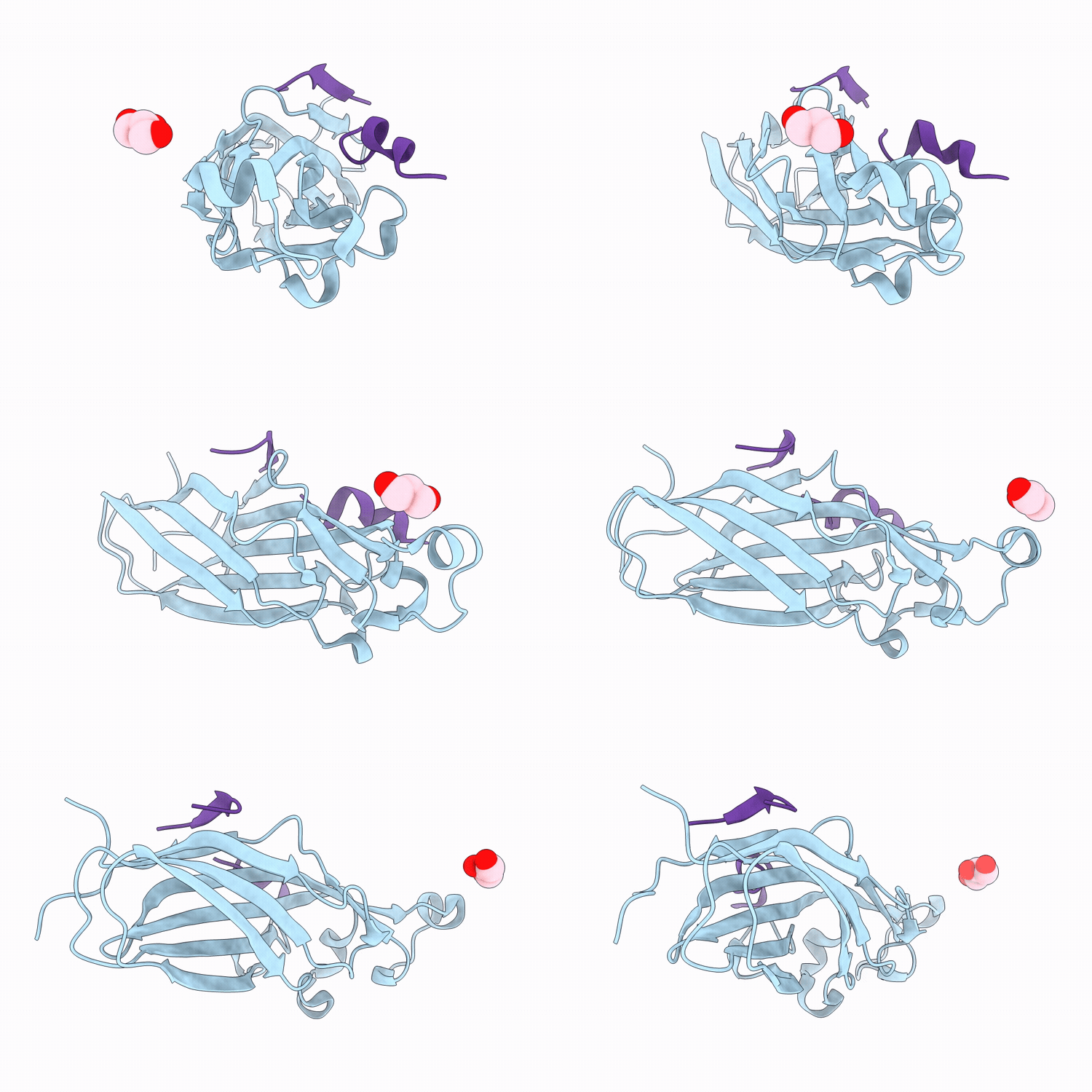
9SS3 image
Deposition Date 2025-09-25
Release Date 2026-09-02
Last Version Date 2026-10-14
Entry Detail
PDB ID:
9SS3
Keywords:
Title:
Crystal structure hASF1A 156-cr7
Biological Source:
Source Organism(s):
Homo sapiens (Taxon ID: 9606)
Expression System(s):
Method Details:
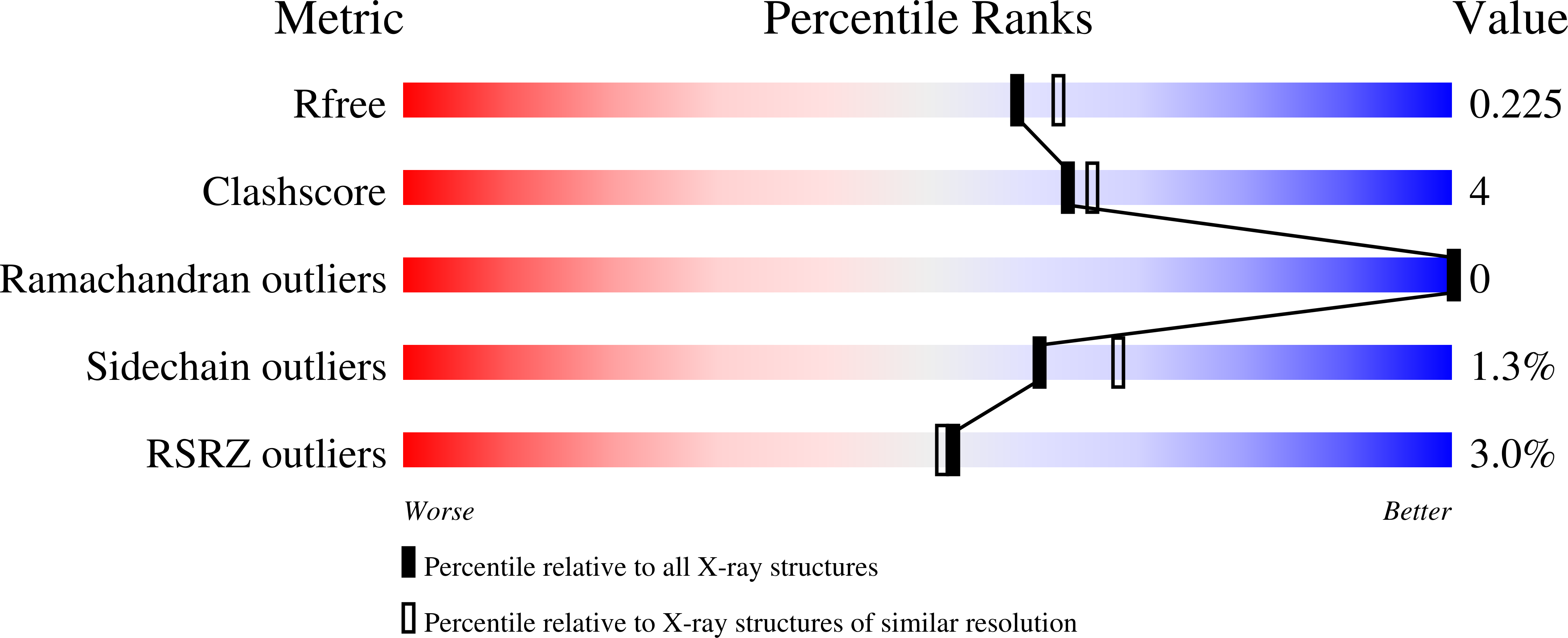
Experimental Method:
Resolution:
2.00 Å
R-Value Free:
0.23
R-Value Work:
0.18
R-Value Observed:
0.19
Space Group:
P 41 21 2
Macromolecular Entities
Polymer Type:polypeptide(L)
Molecule:Histone chaperone ASF1A
Gene (Uniprot):ASF1A
Chain IDs:A
Chain Length:157
Number of Molecules:1
Biological Source:Homo sapiens
Polymer Type:polypeptide(L)
Molecule:cr7
Chain IDs:B
Chain Length:20
Number of Molecules:1
Biological Source:Homo sapiens
Ligand Molecules
Primary Citation
Downsizing the Histone H3-H4 Quaternary Structure Into Foldamer Mimetics Yields High-Affinity and Cell-Permeable Ligands of ASF1.
Angew.Chem.Int.Ed.Engl. 65 e4112426 e4112426 (2026)
PMID: 42585141 DOI: 10.1002/anie.4112426

Abstact

Mimicking complex protein-protein interfaces with small, well-defined molecular scaffolds remains a major challenge in chemical biology. Here, we report a foldamer-based downsizing strategy that compresses the quaternary architecture of the histone H3-H4 dimer into compact peptide-oligourea hybrids acting as high-affinity ligands of the histone chaperone Anti-Silencing Function 1 (ASF1). Guided by multiple high-resolution co-crystal structures, we designed a series of foldamer mimetics that accurately reproduce both the H3 alpha-helix and the H4 beta-strand epitopes. Systematic optimization of linker geometry, beta-strand mimicry, formal charge, and selective backbone N-methylation yielded highly stable ligands with nanomolar affinities, enhanced proteolytic resistance, and robust cytosolic penetration. Notably, the optimized constructs and their N-methylated analogues recapitulate the binding mode of the native H3-H4 dimer on ASF1 with high fidelity and engage endogenous ASF1 in cell extracts, demonstrating effective intracellular target recognition. Together, these results show that peptide-oligourea foldamers can reproduce the structural features of a protein quaternary structure surface, combining high affinity, high stability and cell permeability.

Legend

Protein

Chemical

Disease

Primary Citation of related structures
Feedback Form
Name
Email
Institute
Feedback