

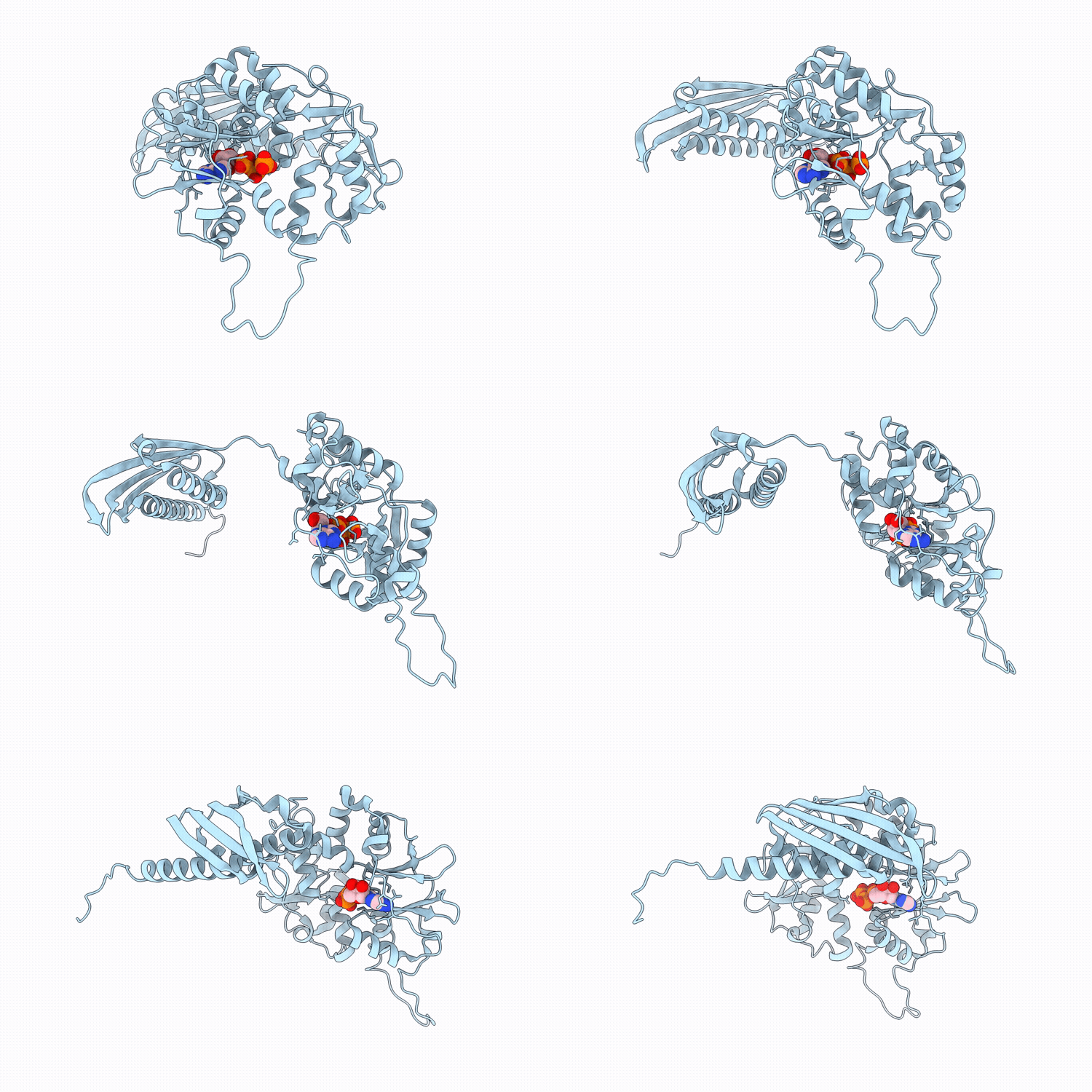
9SR9 image
Deposition Date 2025-09-24
Release Date 2026-08-12
Last Version Date 2026-08-12
Entry Detail
PDB ID:
9SR9
Keywords:
Title:
P. abyssi hibernation factor Hib bound to ATP (Hib-PTC conformation)
Biological Source:
Source Organism(s):
Expression System(s):
Method Details:
Experimental Method:
Resolution:
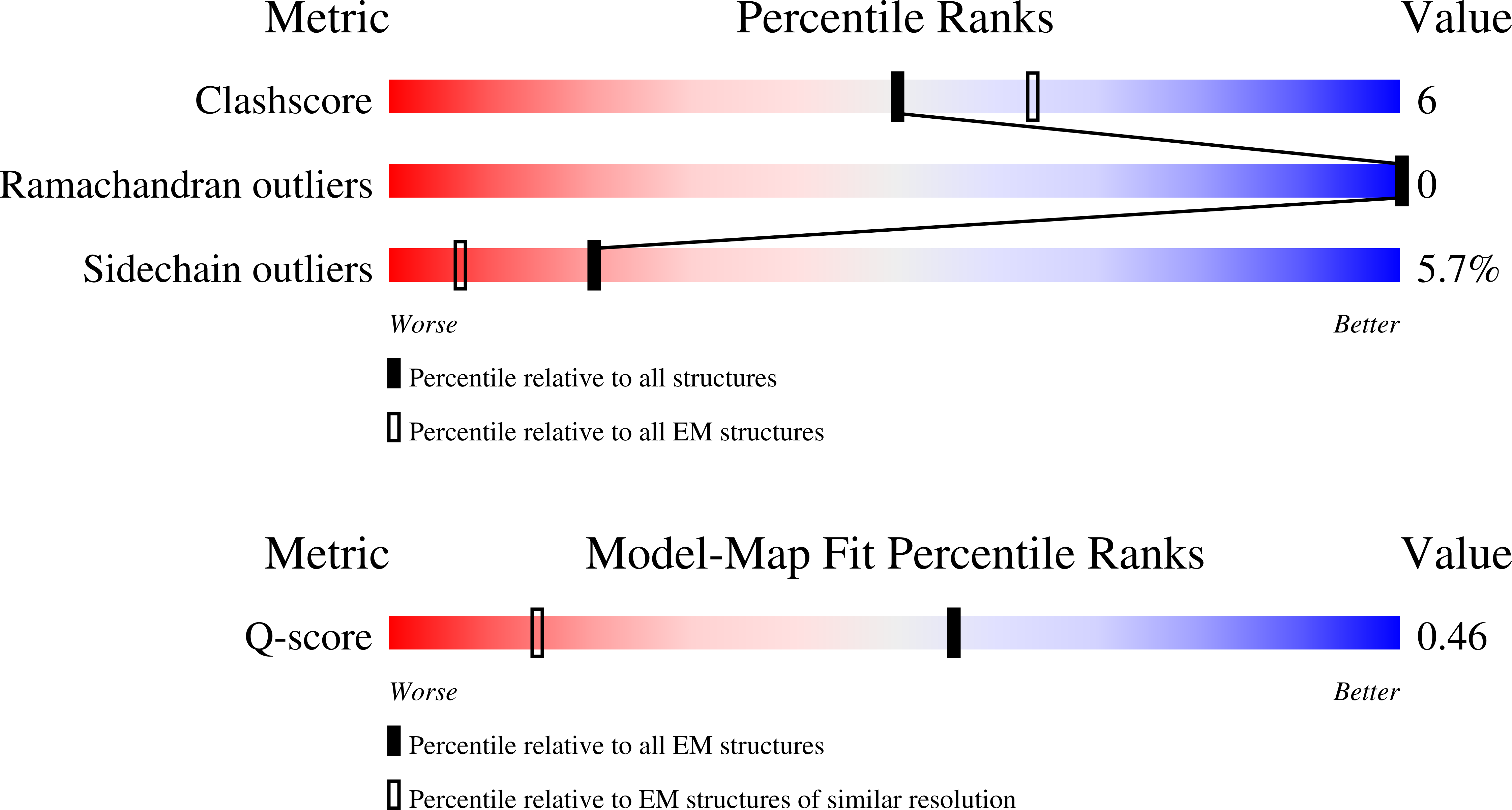
2.50 Å
Aggregation State:
PARTICLE
Reconstruction Method:
SINGLE PARTICLE
Macromolecular Entities
Polymer Type:polypeptide(L)
Molecule:Dehydrogenase
Chain IDs:A (auth: H)
Chain Length:392
Number of Molecules:1
Biological Source:Pyrococcus abyssi GE5
Ligand Molecules
Primary Citation

Abstact

Ribosome hibernation preserves translation machinery during stress, yet its mechanisms in Archaea remain poorly defined. Using cryo-EM analysis, we studied hibernation pathways in Pyrococcus abyssi stressed cells. We identified HibA, a previously unrecognized family of hibernation factors widespread in Archaea. HibA consists of a bacterial-like HPF/RaiA domain fused to a Cystathionine Beta Synthase module. Unexpectedly, HibA binds to the ribosome in three different conformations, occupying the A, P and E sites of tRNAs, as well as that of mRNA, enhancing its ability to protect the ribosome from degradation. Idle ribosomes also frequently accumulate the archaeal homolog of eukaryotic ribosome maturation protein SBDS (aSBDS), suggesting that stressed archaeal cells may engage parallel hibernation routes in which aSBDS can complement HibA. Deletion of hibA in Thermococcus barophilus delays recovery from stationary phase and reduces 70S ribosome pools, establishing its role in ribosome preservation. Taxonomic profiling shows that many archaeal lineages encode distinct repertoires of ribosome-associated protection factors, underscoring the modular and multi-layered nature of archaeal hibernation systems. In addition, a comprehensive phylogenetic analysis highlights the evolutionary relationships between prevalent ribosome hibernation factors across Bacteria and Archaea.

Legend

Protein

Chemical

Disease

Primary Citation of related structures
Feedback Form
Name
Email
Institute
Feedback