

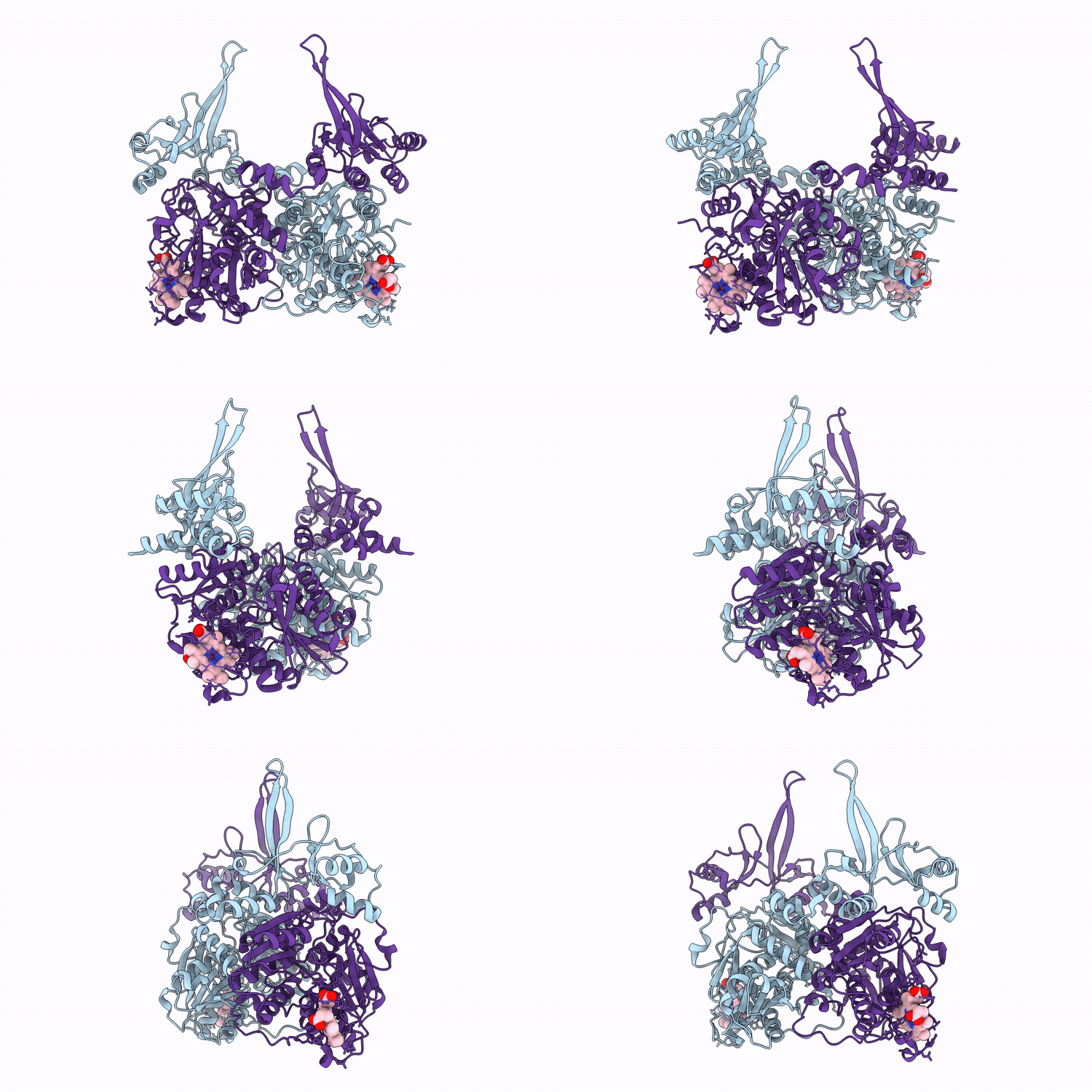
9SQ0 image
Deposition Date 2025-09-18
Release Date 2026-07-29
Last Version Date 2026-09-02
Entry Detail
PDB ID:
9SQ0
Title:
Structure of trans-basal conformer of wild-type human CBS alone (internal aldemine)- by single particle approach
Biological Source:
Source Organism(s):
Homo sapiens (Taxon ID: 9606)
Expression System(s):
Method Details:
Experimental Method:
Resolution:
2.74 Å
Aggregation State:
PARTICLE
Reconstruction Method:
SINGLE PARTICLE

Macromolecular Entities
Polymer Type:polypeptide(L)
Molecule:Cystathionine beta-synthase
Gene (Uniprot):CBS
Chain IDs:A, B
Chain Length:0
Number of Molecules:2
Biological Source:Homo sapiens
Modified Residue
Compound ID Chain ID Parent Comp ID Details 2D Image
LLP A LYS modified residue
Ligand Molecules
Primary Citation
Structural basis for a filamentous morpheein model of human cystathionine beta-synthase.
Nat Commun 17 ? ? (2026)
PMID: 42248820 DOI: 10.1038/s41467-026-73198-7

Abstact

Human cystathionine beta-synthase (CBS) is a vital enzyme that regulates sulfur amino acid metabolism, hydrogen sulfide production, and cellular redox balance. Using a multidisciplinary approach, we demonstrate that CBS functions as a filamentous morpheein, with its stability, turnover, and activity governed by dynamic quaternary structural transitions. Three distinct filamentous assemblies were resolved by cryo-EM and are mediated by the oligomerization loop (residues 516-525): (i) ligand-free trans-dimers that form trans-basal filaments with basal stability and activity, (ii) adenosylornithine-bound cis-dimers that assemble into stabilized cis-basal filaments and (iii) S-adenosylmethionine-bound allo-dimers, which, together with cis-dimers, form highly stable, allo-activated stacked filaments. These reversible filamentous assemblies redefine CBS biology by integrating oligomerization and allosteric regulation within a morpheein framework. These findings provide a transformative perspective on CBS function and open avenues for pharmacological targeting of dysregulated CBS in various diseases including homocystinuria, cancer, and Down syndrome.

Legend

Protein

Chemical

Disease

Primary Citation of related structures
Feedback Form
Name
Email
Institute
Feedback