

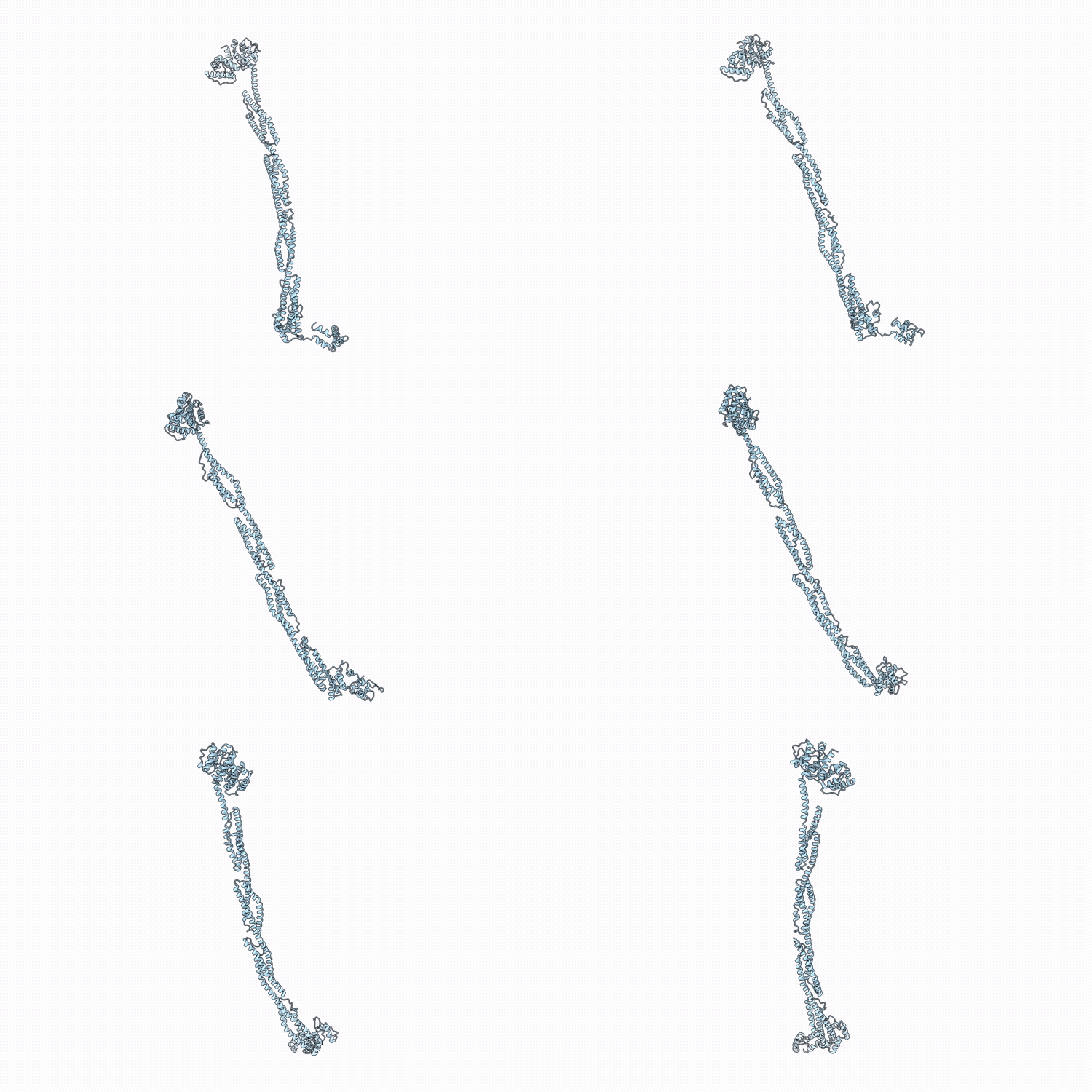
9SIR image
Deposition Date 2025-08-29
Release Date 2026-07-29
Last Version Date 2026-08-05
Entry Detail
PDB ID:
9SIR
Title:
THE CRYSTAL STRUCTURE OF HUMAN MUSCLE ALPHA-ACTININ-2 Mutant R327C
Biological Source:
Source Organism(s):
Homo sapiens (Taxon ID: 9606)
Expression System(s):
Method Details:
Experimental Method:
Resolution:
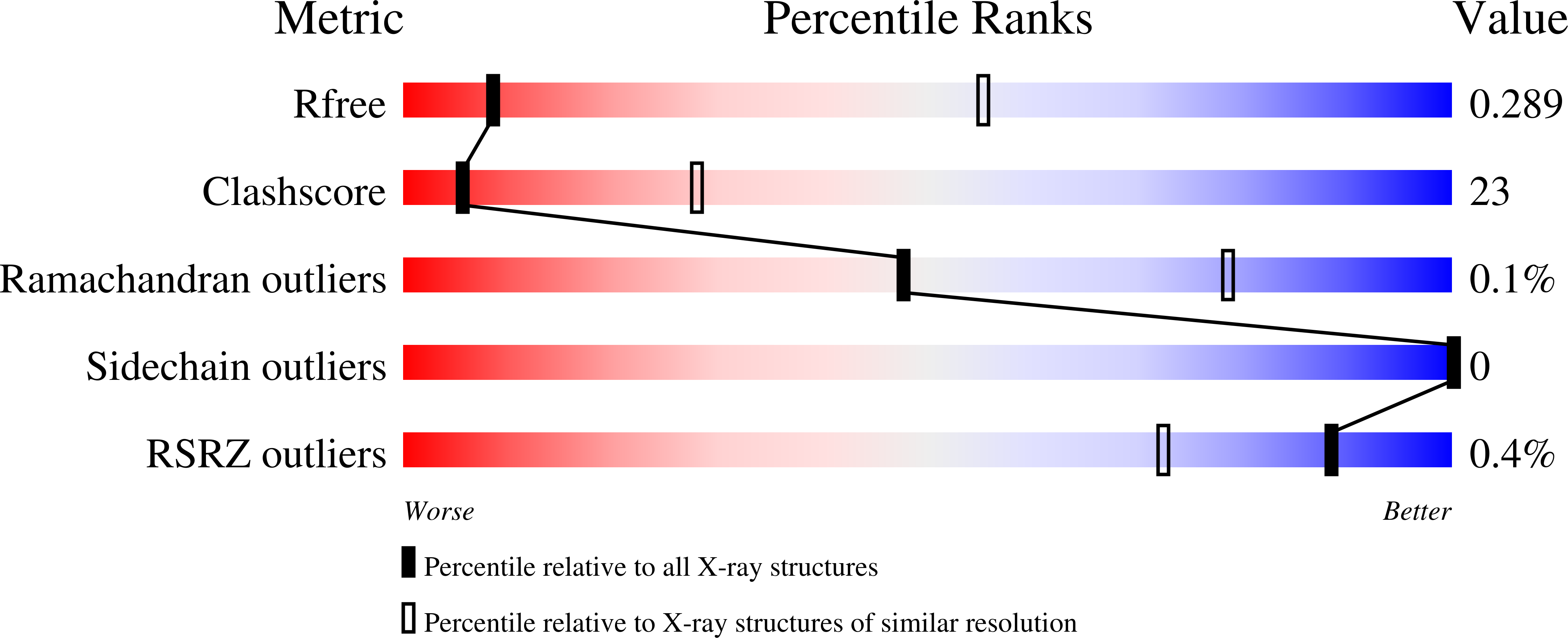
3.70 Å
R-Value Free:
0.29
R-Value Work:
0.24
R-Value Observed:
0.24
Space Group:
P 2 21 21
Macromolecular Entities
Polymer Type:polypeptide(L)
Molecule:Alpha-actinin-2
Gene (Uniprot):ACTN2
Mutagens:R327C
Chain IDs:A
Chain Length:0
Number of Molecules:1
Biological Source:Homo sapiens
Modified Residue
Compound ID Chain ID Parent Comp ID Details 2D Image
MLZ A LYS modified residue
Ligand Molecules
Primary Citation
Comprehensive biophysical and structural profiling of alpha-actinin-2 variants reveals mechanistic diversity in hypertrophic cardiomyopathy.
Nat Commun 17 ? ? (2026)
PMID: 42481460 DOI: 10.1038/s41467-026-75392-z

Abstact

Hypertrophic cardiomyopathy (HCM) is a genetic disease associated with sudden cardiac death. Variants in alpha-actinin-2 (ACTN2), a Z-disc protein that anchors actin thin filaments have been implicated in HCM, yet their structural consequences remain poorly defined. Here, we characterise seventeen HCM-associated ACTN2 variants spanning multiple domains using an integrated and tiered workflow combining high-throughput assays, structural modelling and biophysical approaches. All variants display reduced solubility, with actin-binding domain (ABD) substitutions showing pronounced thermal instability by differential scanning fluorimetry. Modelling of nine variants predicts diverse pathogenic mechanisms including compromised actin-binding, impaired ABD regulatory conformations, disrupted dimerisation interfaces, and perturbed domain architecture. Crystal structures of two rod-domain variants reveal intact dimerisation despite modelling predictions. Actin-binding assays for ABD variants confirm altered actin engagement suggesting that binding dynamics may drive pathogenicity. Limited proteolysis indicates reduced structural stability across variants, while size-exclusion chromatography coupled with multi-angle light scattering or small-angle X-ray scattering (SEC-MALS/SAXS) shows a strong propensity for aggregation. Batch-mode SAXS further demonstrates early aggregation onset in selected ABD variants at elevated temperatures. Collectively, these findings establish that HCM-linked ACTN2 variants compromise protein integrity through multiple mechanisms, highlight the ABD as a hotspot of vulnerability and provide a potential framework for interpreting cardiomyopathy-associated variants.

Legend

Protein

Chemical

Disease

Primary Citation of related structures
Feedback Form
Name
Email
Institute
Feedback