

9SCM image
Deposition Date 2025-08-11
Release Date 2026-06-10
Last Version Date 2026-06-17
Entry Detail
PDB ID:
9SCM
Keywords:
Title:
Crystal structure of Tc AChE with reactivator JDS364 Orthorhombic
Biological Source:
Source Organism(s):
Method Details:
Experimental Method:
Resolution:
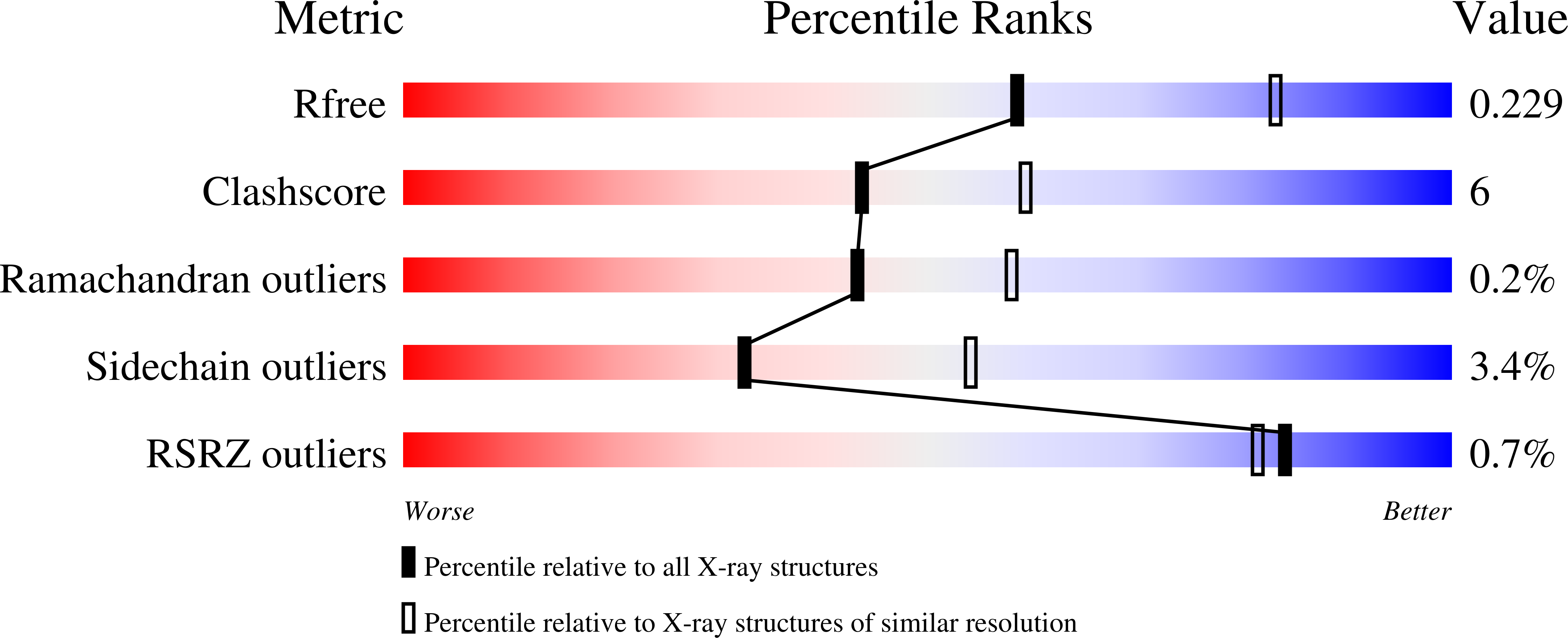
2.40 Å
R-Value Free:
0.22
R-Value Work:
0.19
R-Value Observed:
0.19
Space Group:
P 21 21 21
Macromolecular Entities
Polymer Type:polypeptide(L)
Molecule:Acetylcholinesterase
Gene (Uniprot):ache
Chain IDs:A (auth: D0Z0), B
Chain Length:532
Number of Molecules:2
Biological Source:Tetronarce californica
Primary Citation
Design, synthesis and evaluation of an uncharged broad spectrum quinoline-oxime hybrid for the reactivation of nerve agent-inhibited human acetylcholinesterase.
Eur.J.Med.Chem. 316 119023 119023 (2026)
PMID: 42241775 DOI: 10.1016/j.ejmech.2026.119023

Abstact

Organophosphorus nerve agents exert their acute toxicity by irreversibly inhibiting acetylcholinesterase (AChE), yet currently deployed oxime reactivators exhibit limited efficacy in the central nervous system due to poor blood-brain barrier (BBB) penetration. Addressing this limitation remains a critical challenge in the treatment of nerve agent exposure. We report the design, synthesis, and evaluation of JDS364, an uncharged hybrid oxime reactivator combining a quinoline-based peripheral site ligand with a 3-hydroxypyridinealdoxime nucleophile. In vitro studies using human AChE inhibited by surrogates of G- and V-series nerve agents demonstrated that JDS364 possesses broad-spectrum reactivation activity, notably achieving a 300-fold increase in reactivation efficiency (k(r2)) over the clinical benchmark obidoxime against tabun-like inhibited hAChE. Evaluation in a human in vitro BBB co-culture model revealed that JDS364 exhibits high permeability, significantly outperforming clinically used quaternary oximes and exceeding the flux of earlier-generation uncharged hybrids. Ex vivo functional profiling studies in mice confirmed rapid systemic availability and significant protection against paraoxon challenge (Protective Index = 6.7 when combined with atropine), though a narrower therapeutic window was observed compared to clinical standards. X-ray crystallographic analysis of JDS364 bound to human AChE uncovered ligand-induced conformational plasticity, providing the first structural evidence of an opening of a "backdoor" via Tyr449 rearrangement in the 20 A deep active site gorge. This confirms the hypothesis of enzyme "breathing" motions and validates alternative diffusion pathways for reactivation. These findings establish JDS364 as a mechanistically significant, CNS-accessible lead that defines a new structural paradigm for the development of next-generation countermeasures.

Legend

Protein

Chemical

Disease

Primary Citation of related structures
Feedback Form
Name
Email
Institute
Feedback