

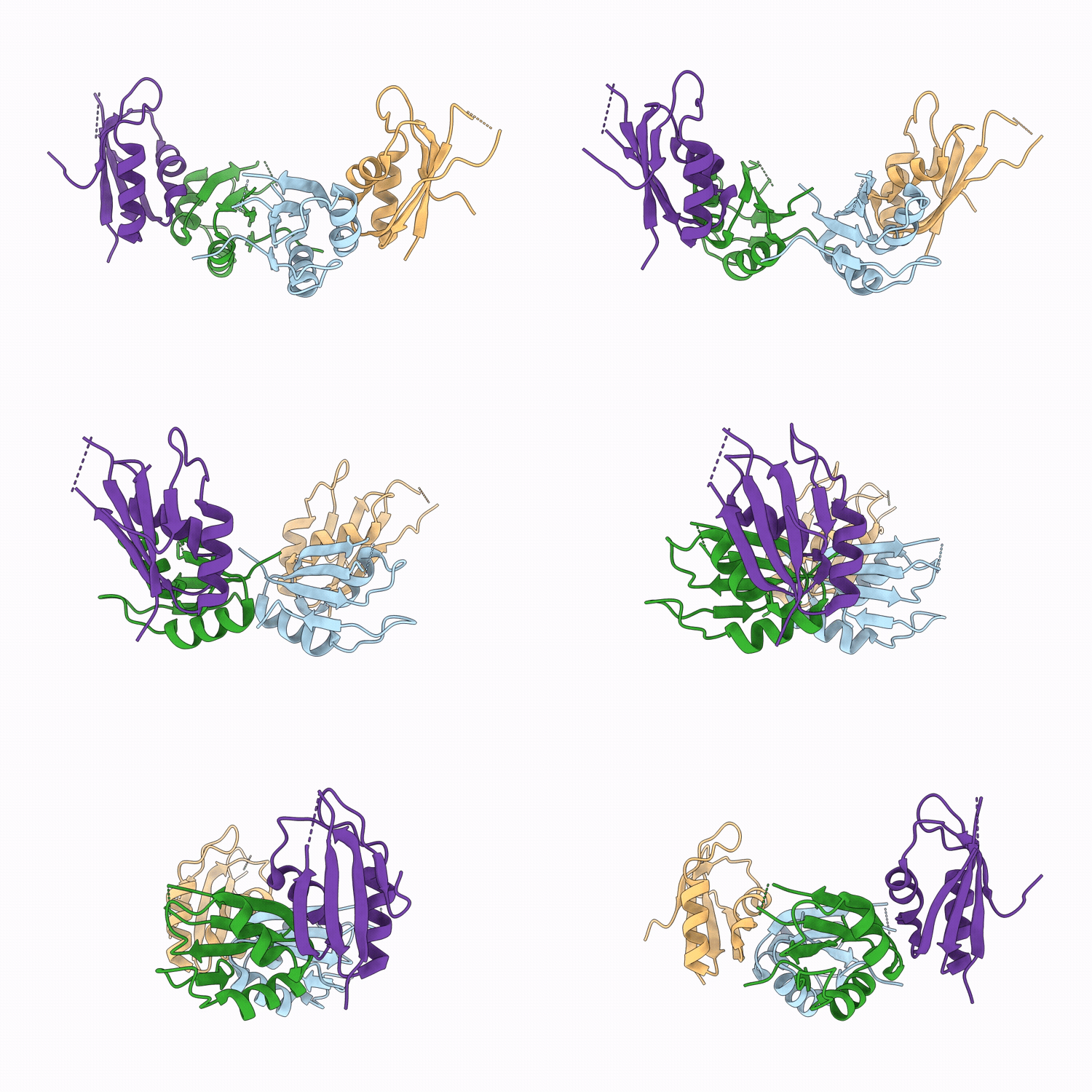
9SBF image
Deposition Date 2025-08-08
Release Date 2026-06-17
Last Version Date 2026-10-14
Entry Detail
PDB ID:
9SBF
Title:
Drosophila Elav, eSH3 fragment (RRM3) - hexagonal crystal form
Biological Source:
Source Organism(s):
Expression System(s):
Method Details:
Experimental Method:
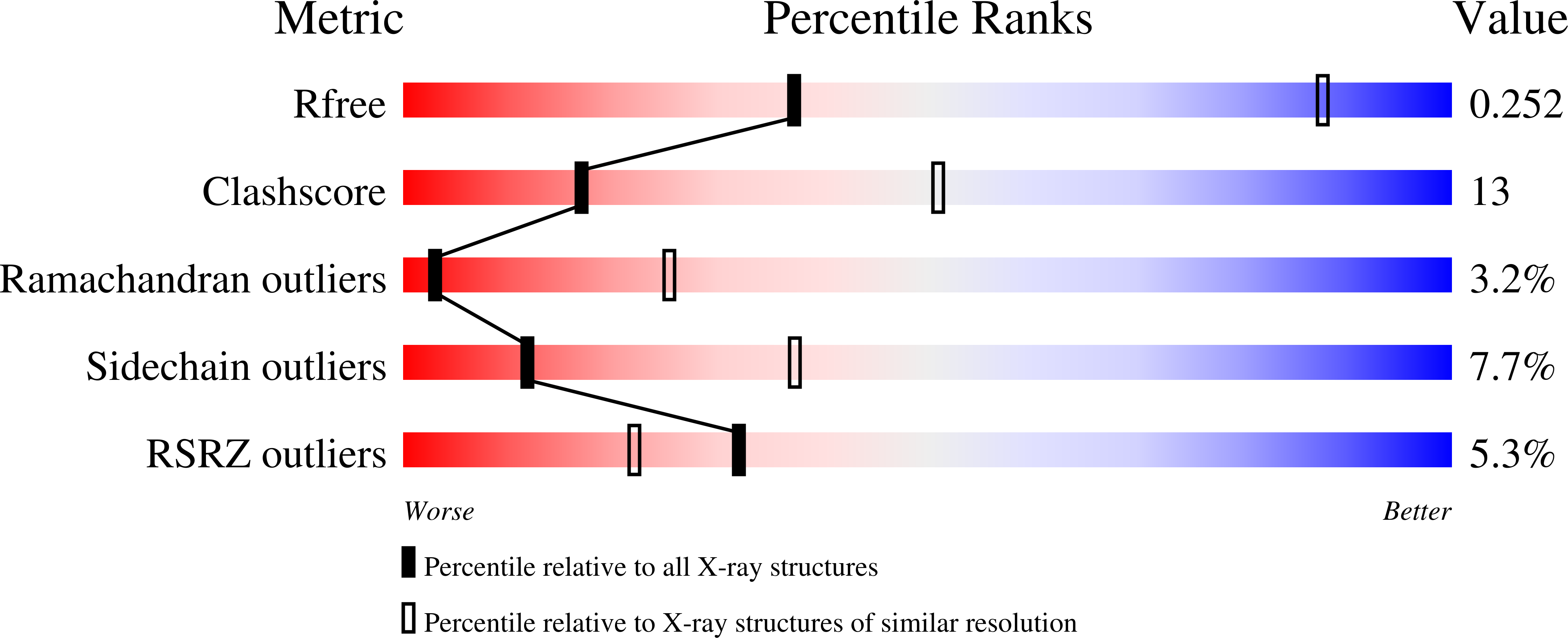
Resolution:
3.73 Å
R-Value Free:
0.25
R-Value Work:
0.23
Space Group:
P 61 2 2
Macromolecular Entities
Polymer Type:polypeptide(L)
Molecule:Protein elav
Gene (Uniprot):elav
Chain IDs:A, B, C, D
Chain Length:109
Number of Molecules:4
Biological Source:Drosophila melanogaster
Ligand Molecules
Primary Citation
Multimerization of ELAV in Drosophila is essential for directing neuronal alternative splicing and polyadenylation programs.
Genes Dev. 40 1669 1687 (2026)
PMID: 42580850 DOI: 10.1101/gad.353688.126

Abstact

ELAV/Hu RNA-binding proteins (RBPs) are key regulators of neuronal alternative splicing and polyadenylation programs across animals. How ELAV/Hu RBPs achieve gene-specific regulation by recognizing spaced U-rich motifs through multimerization, remains uncertain. We determined X-ray crystal structures of ELAV RNA recognition motif 3 (RRM3) to reveal that multimerization is mediated by two evolutionarily conserved interfaces in non-RNA-binding parts of the RRM to form a tetramer and RNA binding is not required for multimerization. Mutational probing of these two interfaces in Drosophila photoreceptor neurons shows that both interfaces contribute to ELAV function in development. Notably, multimerization defective Drosophila elav mutants are embryonic lethal. Genomic profiling demonstrates that multimerization is required to direct neuronal alternative splicing and polyadenylation programs of some, but not all ELAV target genes. Our study provides a structural basis for a mechanistic understanding how ELAV/Hu proteins can extract gene-specific regulation from a landscape of redundant sequence motifs.

Legend

Protein

Chemical

Disease

Primary Citation of related structures
Feedback Form
Name
Email
Institute
Feedback