

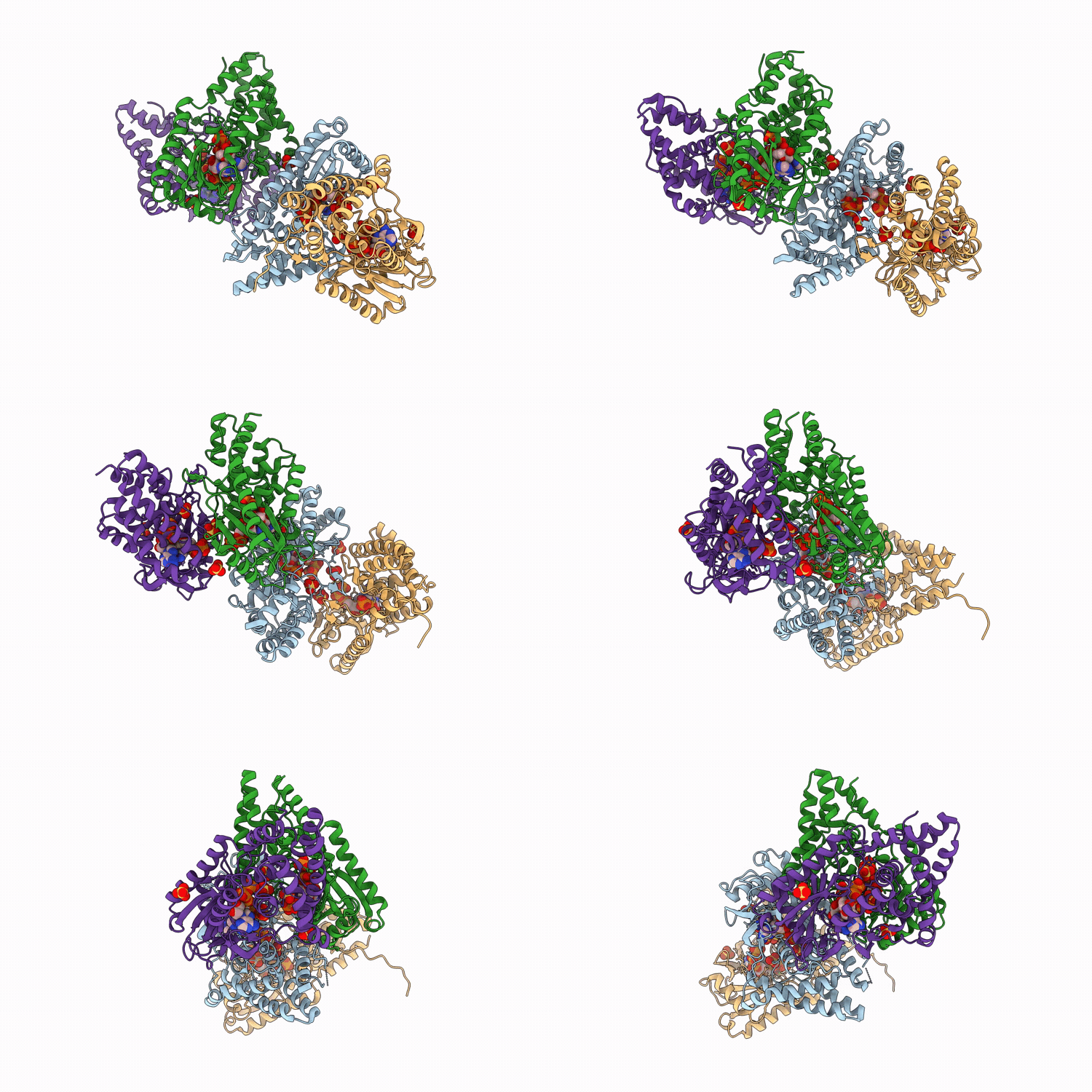
9SA4 image
Deposition Date 2025-08-07
Release Date 2026-08-05
Last Version Date 2026-08-12
Entry Detail
PDB ID:
9SA4
Title:
Inhibition by ATP regulates the activity of a CBASS antiphage nucleotide cyclase
Biological Source:
Source Organism(s):
Bacillus cereus (Taxon ID: 1396)
Expression System(s):
Method Details:
Experimental Method:
Resolution:
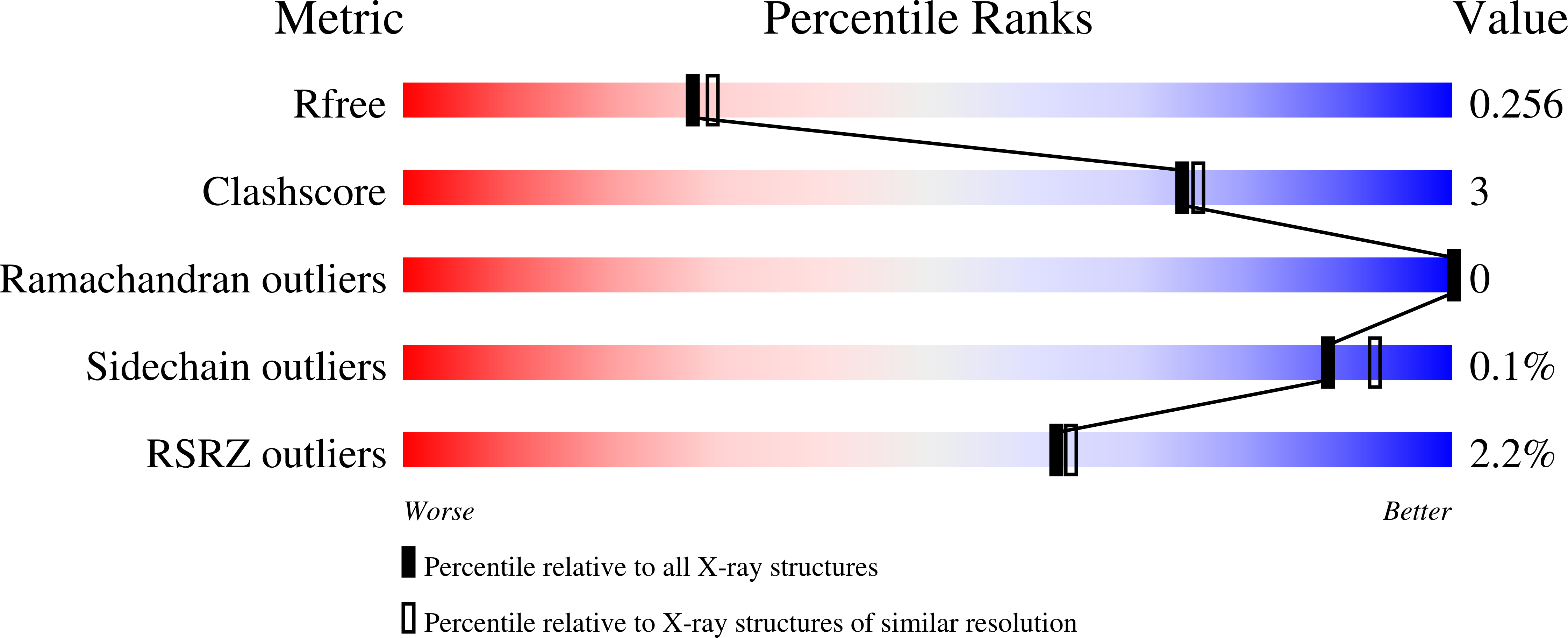
2.23 Å
R-Value Free:
0.25
R-Value Work:
0.20
R-Value Observed:
0.20
Space Group:
P 21 21 21
Macromolecular Entities
Polymer Type:polypeptide(L)
Molecule:CD-NTase
Chain IDs:A, B, C, D
Chain Length:340
Number of Molecules:4
Biological Source:Bacillus cereus
Primary Citation
Inhibition by ATP regulates the activity of a CBASS anti-phage nucleotide cyclase.
Biochem.J. 483 1617 1630 (2026)
PMID: 42496152 DOI: 10.1042/BCJ20260457

Abstact

The bacterial anti-phage immune system is complex, diverse, and in several important cases ancestral to that found in eukaryotes, including humans. One example is CBASS (cyclic oligonucleotide based anti-phage signalling system), a widespread bacterial defence that signals phage presence in the cell via cyclic nucleotide second messengers, activating ancillary effectors to combat infection. CBASS is homologous and ancestral to the eukaryotic cGAS/STING pathway for antiviral defence. The heart of the system is a nucleotide cyclase known as a cGAS/DncV-like nucleotidyltransferase, which is activated by phage infection. The mechanisms of activation of CBASS cyclases are diverse and in most cases not fully understood at a molecular level. Moreover, it is vital to keep these signal-generating enzymes fully inactive in the absence of phage infection to avoid auto-toxicity. Here, we report a structural and mechanistic study of a CBASS cyclase from Bacillus cereus. Using crystal structures of key reaction intermediates, coupled with kinetic analyses, we show that the substrate, ATP, plays a fundamental role in the inhibition of the non-activated form of the enzyme in vitro. We provide a molecular explanation for this regulation and explore the implications for the regulation of these important defence systems in bacterial immunity.

Legend

Protein

Chemical

Disease

Primary Citation of related structures
Feedback Form
Name
Email
Institute
Feedback