

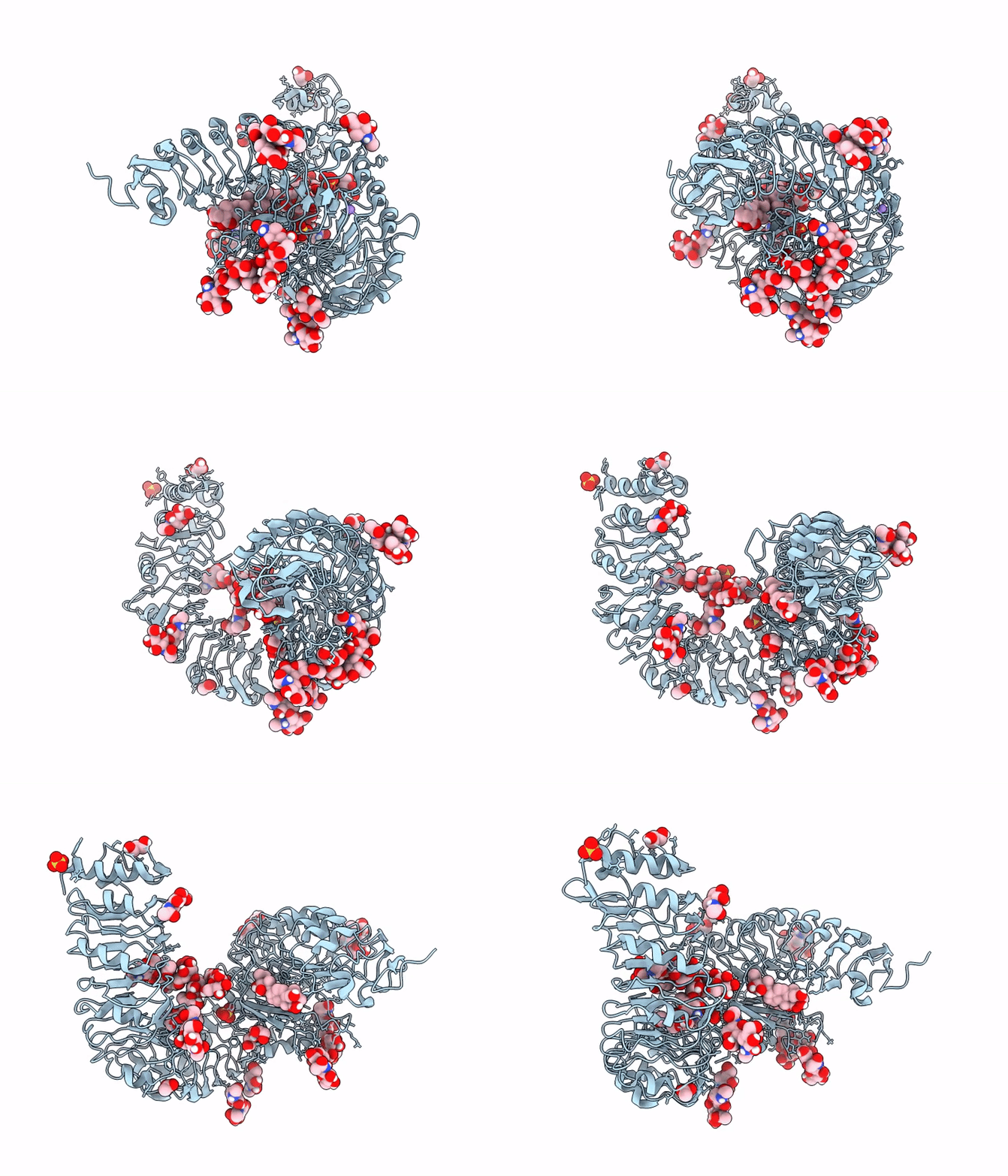
9S8Z image
Deposition Date 2025-08-05
Release Date 2025-09-10
Last Version Date 2026-08-26
Entry Detail
PDB ID:
9S8Z
Title:
Crystal structure of the BRI1 ectodomain from Arabidopsis thaliana in complex with 28-homobrassinolide.
Biological Source:
Source Organism(s):
Expression System(s):
Method Details:
Experimental Method:
Resolution:
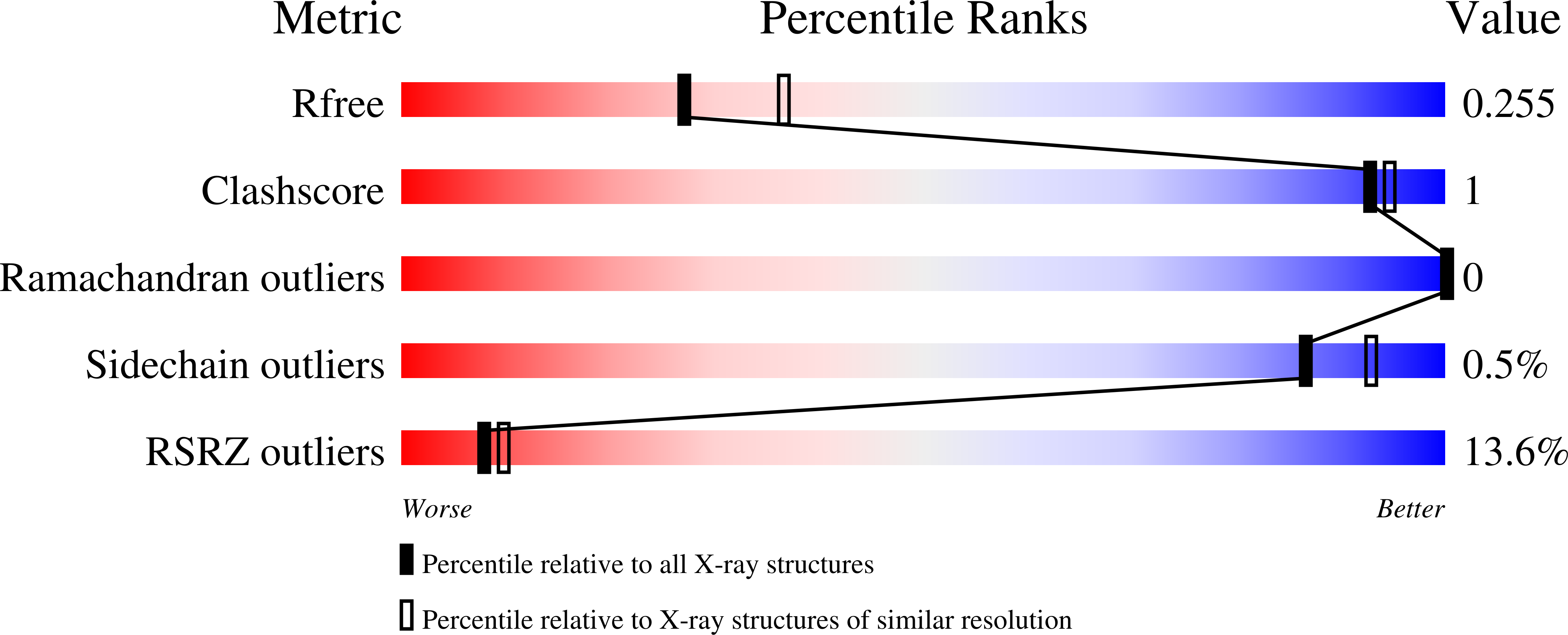
2.35 Å
R-Value Free:
0.25
R-Value Work:
0.22
R-Value Observed:
0.23
Space Group:
C 1 2 1
Macromolecular Entities
Polymer Type:polypeptide(L)
Molecule:Protein BRASSINOSTEROID INSEN
Gene (Uniprot):BRI1
Chain IDs:A
Chain Length:0
Number of Molecules:1
Biological Source:Arabidopsis thaliana
Primary Citation
A mechanistic framework for the recognition of chemically diverse brassinosteroids by BRI1-family receptor kinases.
Nat.Plants 12 1579 1595 (2026)
PMID: 42557407 DOI: 10.1038/s41477-026-02346-0

Abstact

Brassinosteroids (BRs) are chemically diverse plant steroid hormones produced via a branched biosynthetic pathway. The potent BR brassinolide is sensed by the membrane receptor kinase BRI1 and a SERK co-receptor, but the physiological functions of other abundant BRs remain to be characterized. Here we present quantitative binding kinetics for 4 Arabidopsis thaliana BR receptors and 15 BRs, which define the key chemical features required for high-affinity receptor binding, ligand positioning and co-receptor recognition. BRI1, BRL1 and BRL3 share overlapping ligand preferences, whereas BRL2 binds C(28) BRs with moderate affinity. Structural analyses of BR-bound BRI1 and BRL3 ectodomains combined with extensive in vitro and in vivo mutagenesis studies reveal a high structural plasticity of the hormone-binding pocket. Functional assays using structure-based BR agonists and antagonists uncover that BR receptor-co-receptor signalling complexes can recognize chemically diverse BRs, introducing an additional, intriguing layer of BR signalling regulation.

Legend

Protein

Chemical

Disease

Primary Citation of related structures
Feedback Form
Name
Email
Institute
Feedback