

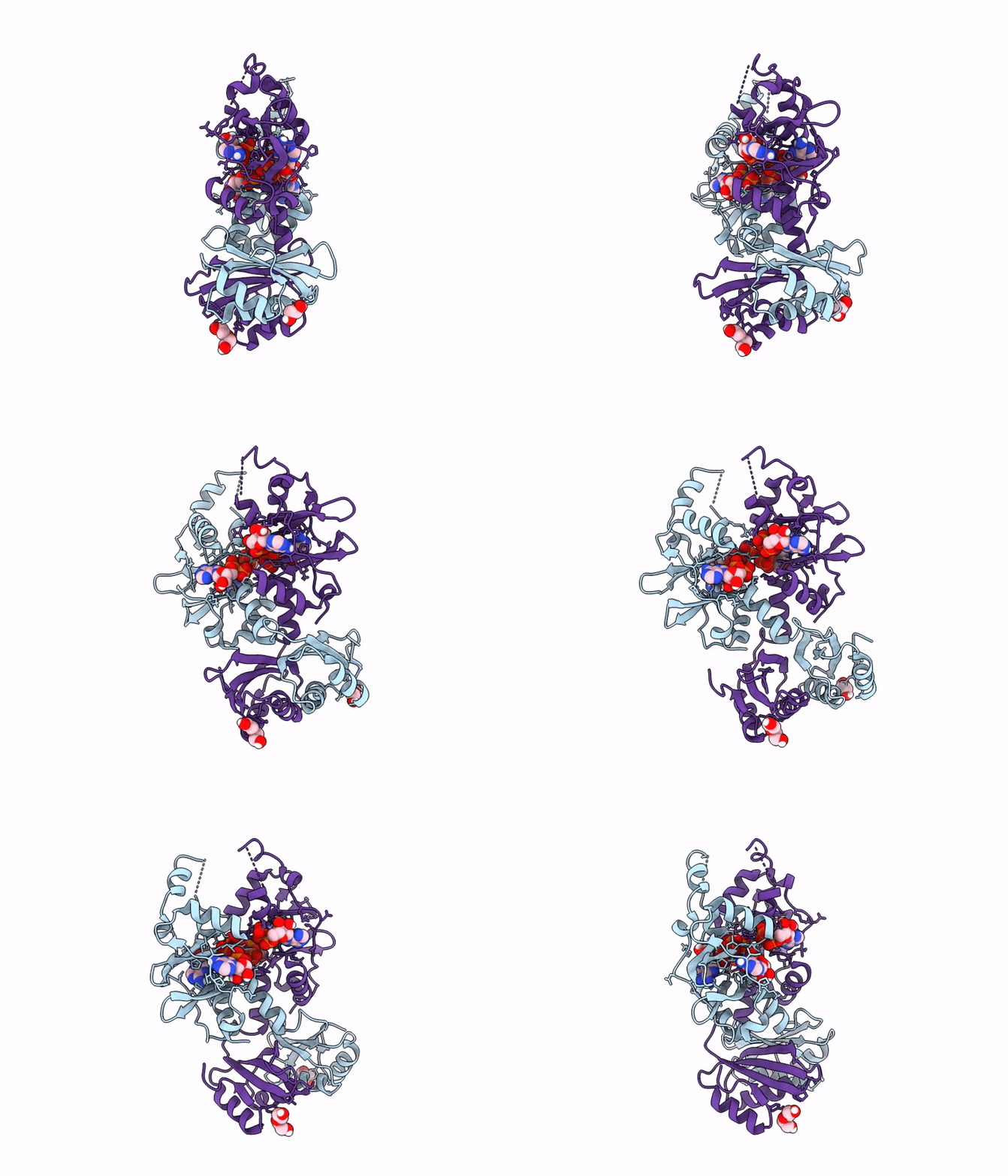
9S51 image
Deposition Date 2025-07-28
Release Date 2026-02-25
Last Version Date 2026-05-20
Entry Detail
PDB ID:
9S51
Title:
AcuB from Geobacillus stearothermophilus with ADP and ATP
Biological Source:
Source Organism(s):
Expression System(s):
Method Details:
Experimental Method:
Resolution:
2.53 Å
R-Value Free:
0.24
R-Value Work:
0.19
Space Group:
P 21 21 21

Macromolecular Entities
Protein Blast
Polymer Type:polypeptide(L)
Molecule:AcuB from Geobacillus stearot
Chain IDs:A, B
Chain Length:223
Number of Molecules:2
Biological Source:Bacillus subtilis subsp. subtilis str. 168
Primary Citation
AcuB senses cellular energy charge to coordinate acetyl-CoA synthesis in bacteria.
Nat Commun 17 ? ? (2026)
PMID: 42031755 DOI: 10.1038/s41467-026-71006-w

Abstact

Bacteria adjust their metabolism to the cellular energy state. AMP-forming acetyl-CoA-synthetase AcsA generates acetyl-CoA from acetate, ATP and CoA. In Bacilli, including Bacillus subtilis and Geobacillus stearothermophilus, AcsA is reversely transcribed upstream of the acu-operon encoding for the proteins AcuA, AcuB and AcuC. Lysine-acetyltransferase AcuA uses acetyl-CoA to acetylate and inactivate AcsA, while AcuC re-activates AcsA activity by deacetylation. How the counteracting activities of AcuA and AcuC are regulated is not understood. Here, we close this gap of knowledge and perform a structure-function analyzes on AcuB. These reveal AcuB forming a scissor-shaped dimer with each monomer consisting of an N-terminal Bateman domain binding to adenine nucleotides and a C-terminal ACT domain. Structural and biochemical studies as well as molecular dynamics simulations support that AMP bound AcuB binds and inhibits AcuC. Our data describe another layer of regulation of AcsA activity in Firmicutes coordinating acetate assimilation and dissimilation by the energy sensor AcuB.

Legend

Protein

Chemical

Disease

Primary Citation of related structures
Feedback Form
Name
Email
Institute
Feedback