

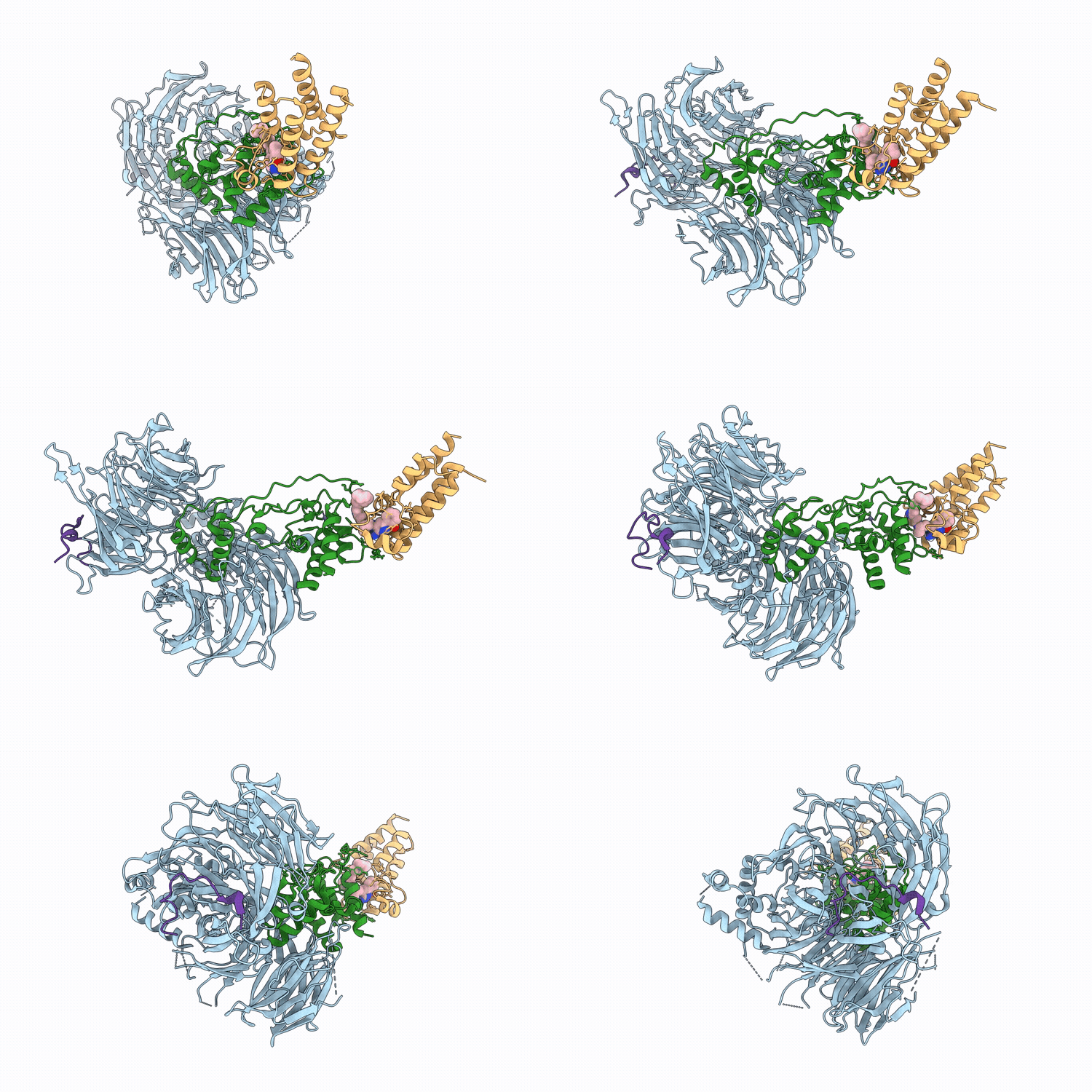
9S3R image
Deposition Date 2025-07-25
Release Date 2026-05-20
Last Version Date 2026-05-27
Entry Detail
PDB ID:
9S3R
Keywords:
Title:
Ternary complex structure of compound 1 bound to SMARCA2 bromodomain and DCAF16:DDB1deltaBPB
Biological Source:
Source Organism(s):
Homo sapiens (Taxon ID: 9606)
Method Details:
Experimental Method:
Resolution:
3.30 Å
Aggregation State:
PARTICLE
Reconstruction Method:
SINGLE PARTICLE
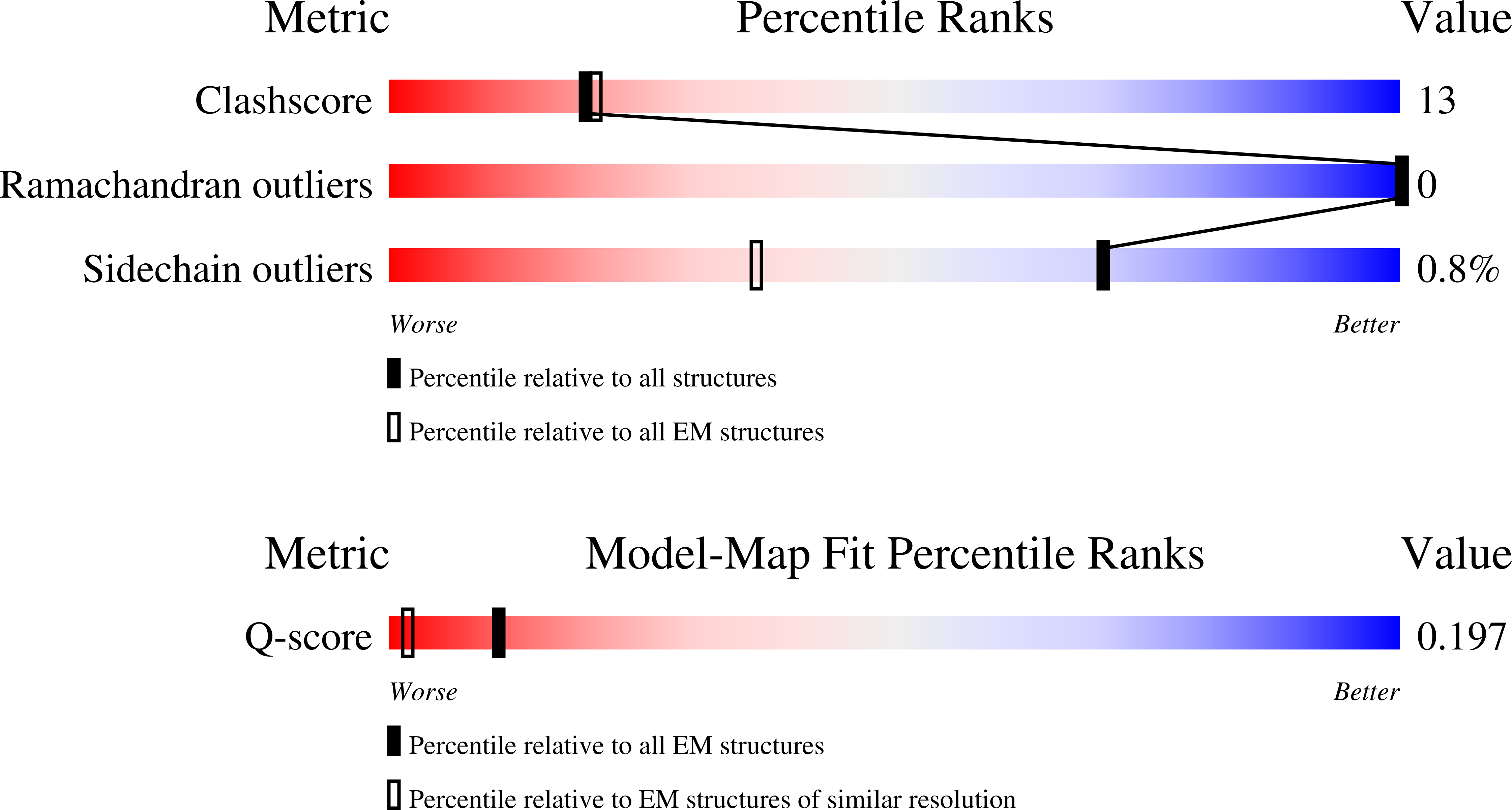
Macromolecular Entities
Structures with similar UniProt ID
Protein Blast
Polymer Type:polypeptide(L)
Molecule:DNA damage-binding protein 1
Gene (Uniprot):DDB1
Chain IDs:A
Chain Length:1140
Number of Molecules:1
Biological Source:Homo sapiens
Structures with similar UniProt ID
Protein Blast
Polymer Type:polypeptide(L)
Molecule:DDB1- and CUL4-associated fac
Gene (Uniprot):DCAF16
Chain IDs:B
Chain Length:218
Number of Molecules:1
Biological Source:Homo sapiens
Structures with similar UniProt ID
Protein Blast
Polymer Type:polypeptide(L)
Molecule:Probable global transcription
Gene (Uniprot):SMARCA2
Chain IDs:C
Chain Length:123
Number of Molecules:1
Biological Source:Homo sapiens
Structures with similar UniProt ID
Protein Blast
Polymer Type:polypeptide(L)
Molecule:DET1- and DDB1-associated pro
Gene (Uniprot):DDA1
Chain IDs:D
Chain Length:102
Number of Molecules:1
Biological Source:Homo sapiens
Primary Citation
Dual E3 ligase recruitment by monovalent degraders for tunable SMARCA 2/4 degradation.
Nat.Chem.Biol. ? ? ? (2026)
PMID: 42120501 DOI: 10.1038/s41589-026-02224-y

Abstact

Proteolysis-targeting chimeras (PROTACs) and molecular glue degraders (MGDs) target proteins for degradation by co-opting an E3 ligase. While heterotrivalent PROTACs that can recruit multiple E3 ligases have been described, all MGDs reported to date depend on a single E3. Using orthogonal genetic screening, biophysical and structural analyses, we show that a monovalent MGD can recruit CUL4(DCAF16) and CRL1(FBXO22) in parallel to degrade SMARCA2/4. Deep mutational scanning identifies C173 in DCAF16 as essential for degrader activity and intact protein mass spectrometry confirms covalent modification at this site. Elucidating the ternary complex structure reveals a unique binding mode and a distinct interface of neointeractions that underlie degrader specificity. We demonstrate that ligase dependency is chemically and genetically tunable. Minimal compound modifications shift preference from DCAF16 to FBXO22, while a single substitution boosts degrader dependency on DCAF16. These results establish a framework for designing tunable dual E3 ligase degraders to mitigate potential resistance mechanisms.

Legend

Protein

Chemical

Disease

Primary Citation of related structures
Feedback Form
Name
Email
Institute
Feedback