

9S2X image
Deposition Date 2025-07-23
Release Date 2026-05-13
Last Version Date 2026-05-13
Entry Detail
PDB ID:
9S2X
Title:
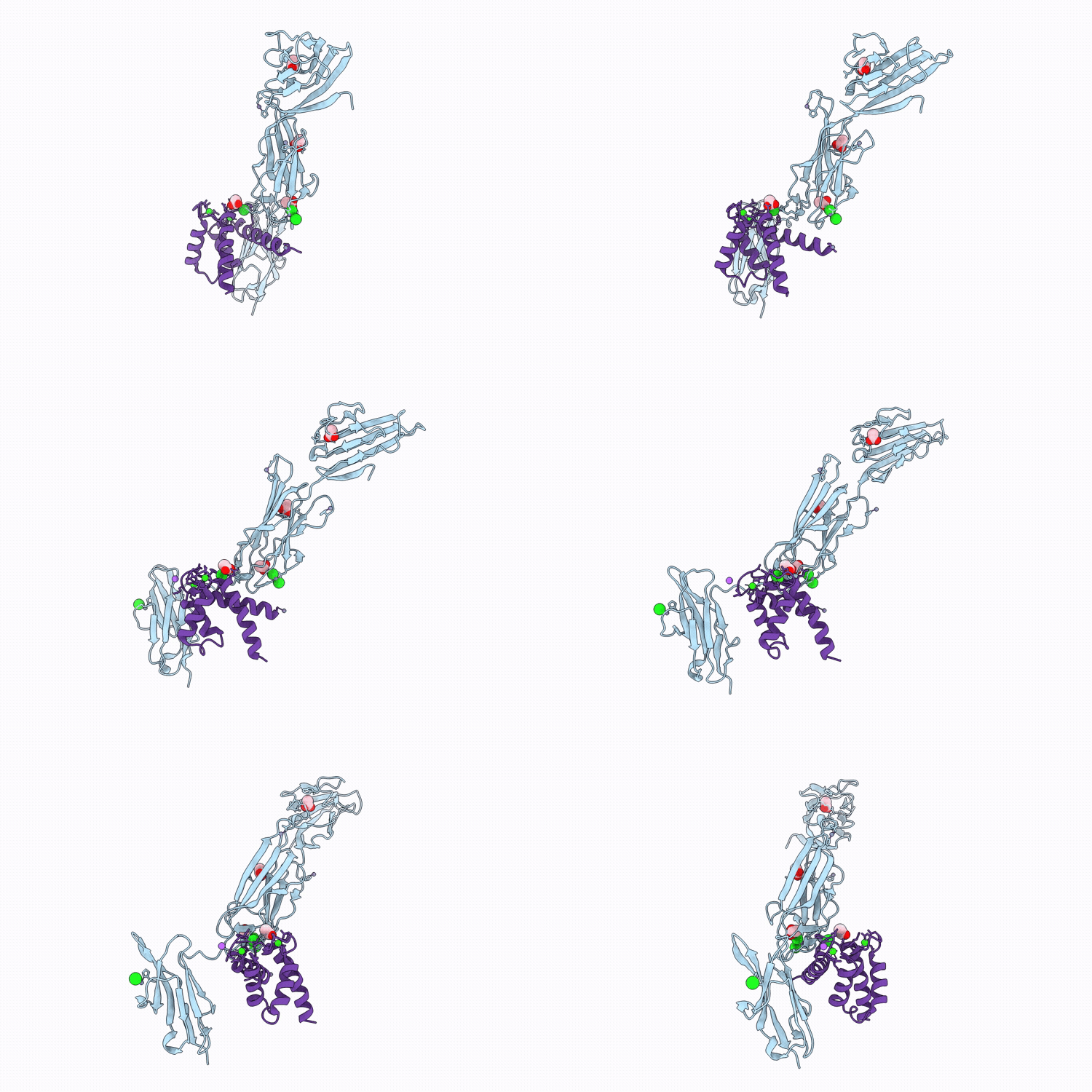
Crystal structure of the human RAGE ectodomain in complex with murine S100A6 mutant Y84C
Biological Source:
Source Organism(s):
Homo sapiens (Taxon ID: 9606)
Mus musculus (Taxon ID: 10090)
Method Details:
Experimental Method:
Resolution:
2.35 Å
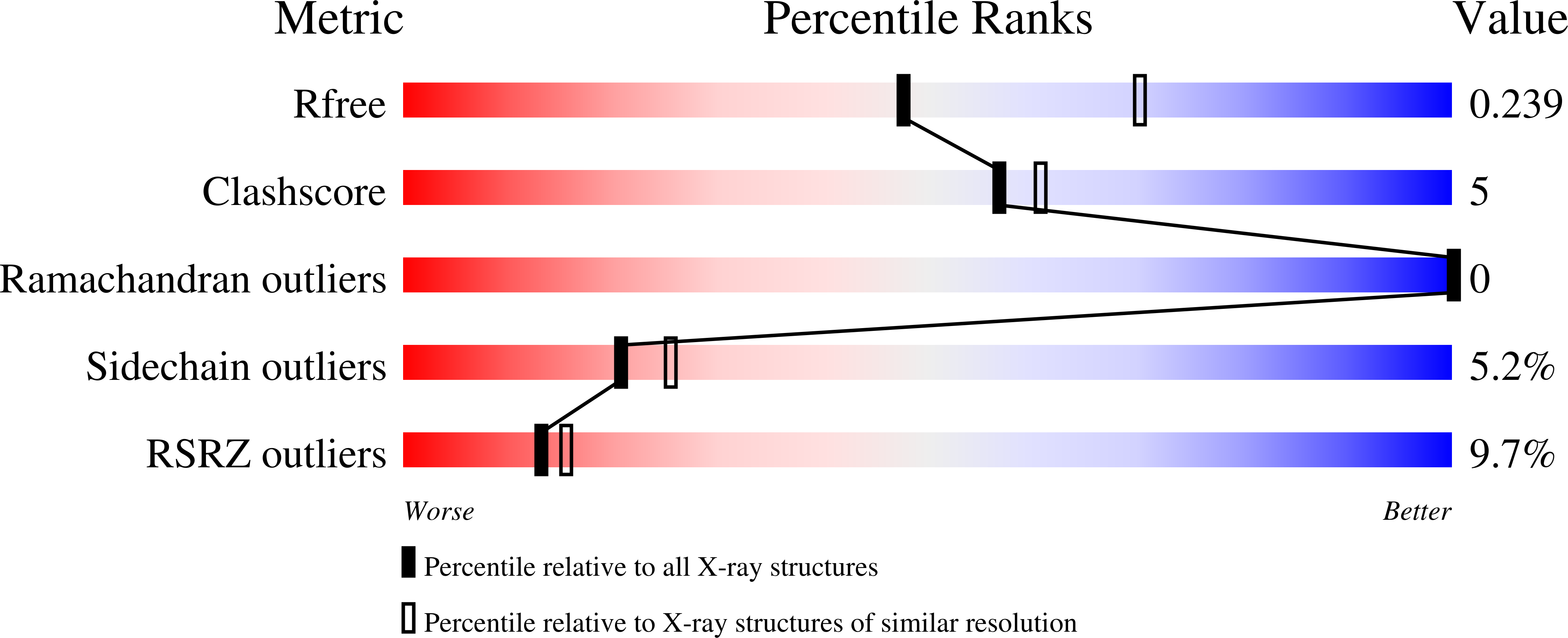
R-Value Free:
0.23
R-Value Work:
0.20
R-Value Observed:
0.20
Space Group:
I 2 2 2
Macromolecular Entities
Structures with similar UniProt ID
Protein Blast
Polymer Type:polypeptide(L)
Molecule:Advanced glycosylation end pr
Gene (Uniprot):AGER
Chain IDs:A
Chain Length:304
Number of Molecules:1
Biological Source:Homo sapiens
Structures with similar UniProt ID
Protein Blast
Polymer Type:polypeptide(L)
Molecule:Protein S100-A6
Gene (Uniprot):S100a6
Mutagens:Y84C
Chain IDs:B
Chain Length:91
Number of Molecules:1
Biological Source:Mus musculus
Primary Citation
A first structural model for covalent dimerization of S100 proteins.
Acta Crystallogr.,Sect.F 82 176 183 (2026)
PMID: 41978530 DOI: 10.1107/S2053230X26002992

Abstact

Extracellular S100 proteins act as alarmins and trigger pro-inflammatory signaling cascades by activating cognate cell-surface receptors such as the receptor for advanced glycation end-products (RAGE), thereby contributing to both normal and pathological inflammation depending on the physiological context. These ligand-receptor interactions occur in an oxidative environment that is known to induce post-translational modifications, notably on the cysteine residues present in S100 proteins, giving rise to disulfide-crosslinked S100 species. The fine molecular architecture of these S100 covalent assemblies and their impact on the interaction of S100 with RAGE remains poorly characterized, as most in vitro studies employ cysteine variants or reducing conditions. In this study, a thorough analysis of cysteine conservation within the whole S100 family shows an enriched presence of cysteines in the second half of helix H4, with a hotspot for cysteine occupancy at position 84. Following the introduction of a cysteine at this conserved position in S100A6, SDS-PAGE analysis under nonreducing conditions shows a noteworthy amount of covalent S100A6 Y84C dimer in solution, and the structural analysis of the resulting complex with the RAGE ectodomain reveals the formation of a covalent Cys84-Cys84 linkage between the two S100A6 protomers, thus stabilizing the dimeric conformation of RAGE-bound S100A6. Modeling of other S100 proteins that naturally bear a Cys84 in the RAGE-bound conformation suggests that this covalent S100 dimer architecture may be adopted by other members of the family previously reported to form disulfide-crosslinked species. Altogether, these findings provide a first possible model for S100 covalent homodimerization that is fully compatible with RAGE binding.

Legend

Protein

Chemical

Disease

Primary Citation of related structures
Feedback Form
Name
Email
Institute
Feedback