

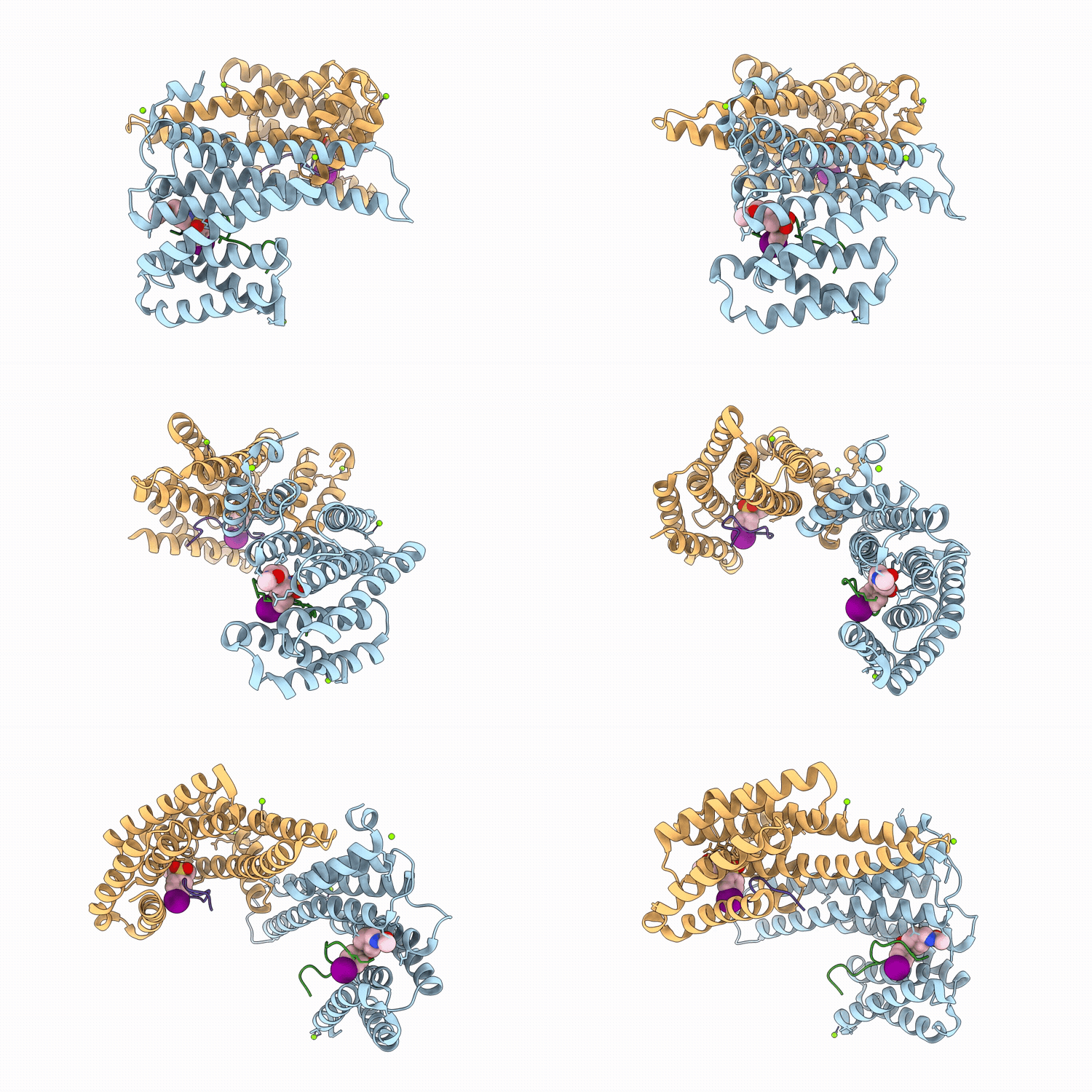
9S2M image
Deposition Date 2025-07-21
Release Date 2026-04-22
Last Version Date 2026-05-13
Entry Detail
PDB ID:
9S2M
Title:
Ternary structure of 14-3-3s, CRAF S257L NS mutant phosphopeptide (pS259), and compound 23 (1083848)
Biological Source:
Source Organism(s):
Homo sapiens (Taxon ID: 9606)
Expression System(s):
Method Details:
Experimental Method:
Resolution:
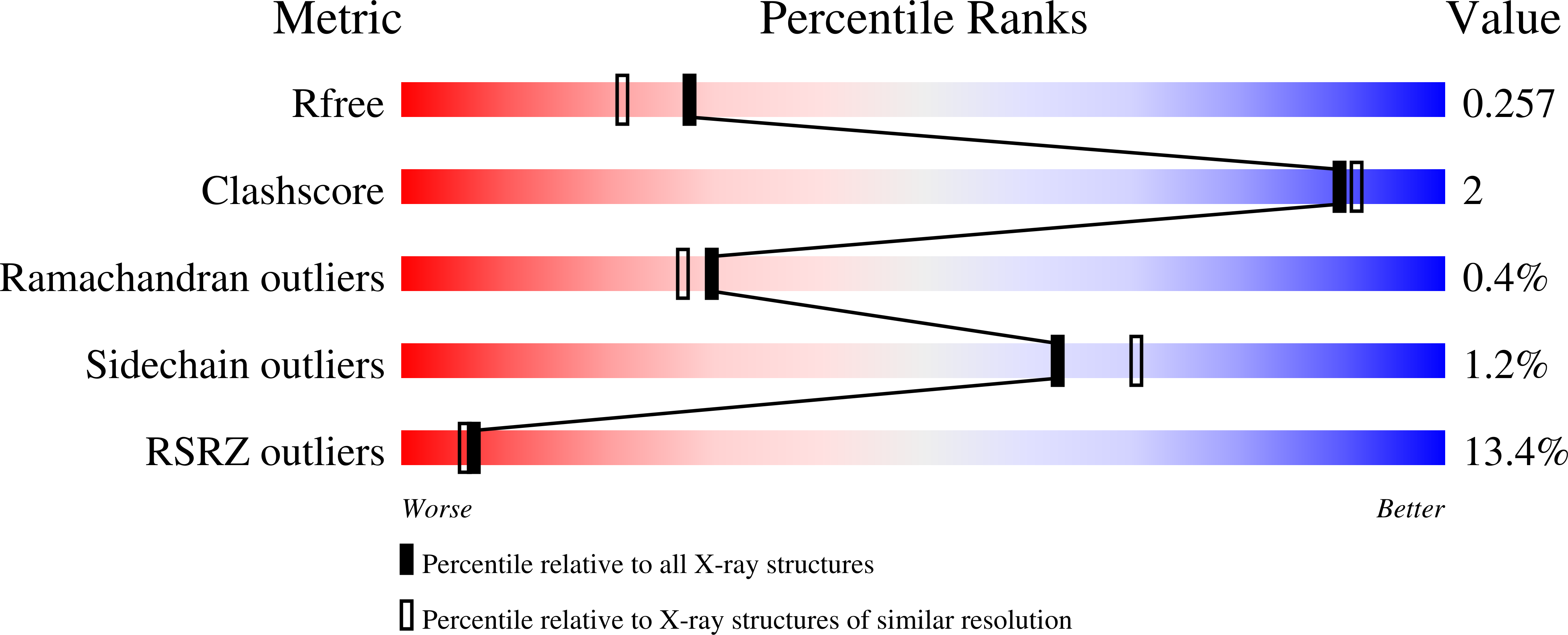
2.00 Å
R-Value Free:
0.22
R-Value Work:
0.19
R-Value Observed:
0.19
Space Group:
P 2 21 21
Macromolecular Entities
Structures with similar UniProt ID
Protein Blast
Polymer Type:polypeptide(L)
Molecule:14-3-3 protein sigma
Gene (Uniprot):SFN
Chain IDs:A (auth: B), C (auth: K)
Chain Length:236
Number of Molecules:2
Biological Source:Homo sapiens
Structures with similar UniProt ID
Protein Blast
Polymer Type:polypeptide(L)
Molecule:RAF proto-oncogene serine/thr
Gene (Uniprot):RAF1
Mutagens:S257L
Chain IDs:B (auth: H), D (auth: S)
Chain Length:11
Number of Molecules:2
Biological Source:Homo sapiens
Modified Residue
Compound ID Chain ID Parent Comp ID Details 2D Image
SEP B SER modified residue
Primary Citation
Restoring the 14-3-3/CRAF regulatory interaction in Noonan syndrome using molecular glues.
Proc.Natl.Acad.Sci.USA 123 e2602101123 e2602101123 (2026)
PMID: 42048443 DOI: 10.1073/pnas.2602101123

Abstact

Noonan syndrome (NS) is the most common RASopathy, a developmental disorder that derives from dysregulation of the mitogen-activated protein kinase (MAPK) pathway. NS results from modestly activating mutations in proteins throughout the pathway. Trametinib, a MEK inhibitor, has shown promising results for certain NS complications, but NS-specific therapeutic options are lacking. CRAF activity, which is governed by the adaptor protein 14-3-3, represents a key NS regulatory node that has not been exploited. When phosphorylated (p) at CRAF S259, the 14-3-3/CRAF-pS259 complex adopts an inactive conformation in which CRAF does not fully bind to RAS or to other RAFs. NS mutations in CRAF occur at residues surrounding S259 (CRAF(NS)). Here, we quantify how these mutations impair 14-3-3/CRAF, both through decreased phosphorylation (64 to 97%) and decreased binding affinity to 14-3-3 (three- to >100-fold decrease). We also explore the potential of restoring homeostasis in NS using molecular glues (MGs) to enhance the 14-3-3/CRAF inhibitory complex. We report that MGs protect phosphorylation of CRAF(WT)-pS259 in CRAF-effector NS mutant backgrounds. They also stabilize 14-3-3/CRAF(NS) interactions and increase the levels of S259 phosphorylation up to 2.8-fold, leading to decreased association of CRAF with NRAS and decreased formation of the active CRAF kinase dimers. Ultimately, inhibition of CRAF activation leads to decreased phosphorylation of the downstream target ERK, similarly to trametinib, in three different NS variants (activation of the phosphatase SHOC2, CRAF(S257L), and CRAF(V263A)). These results reveal a potential therapeutic strategy for NS and related RASopathies. They also demonstrate the scope and limitations of stabilizing mutation-weakened complexes with molecular glues.

Legend

Protein

Chemical

Disease

Primary Citation of related structures
Feedback Form
Name
Email
Institute
Feedback