

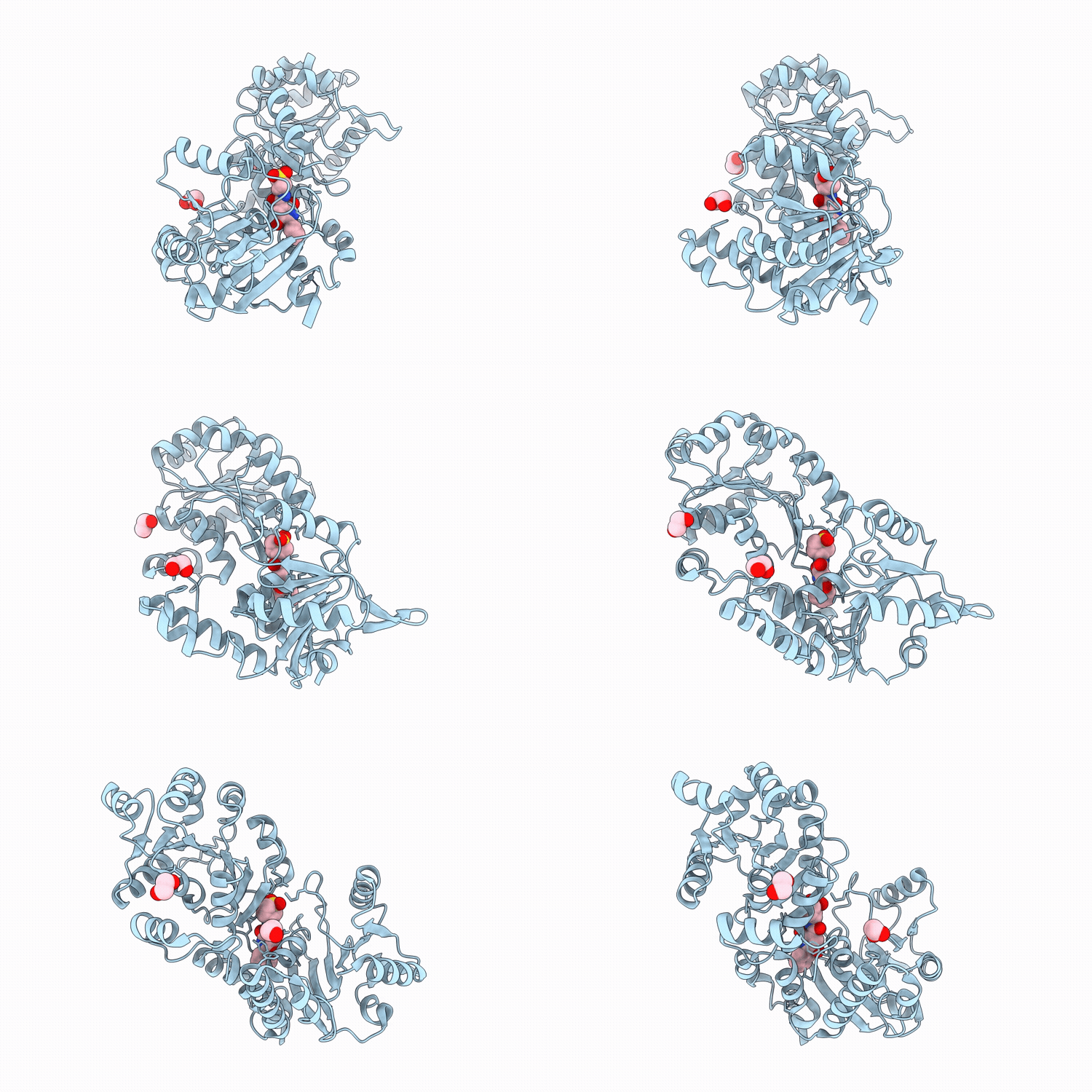
9S1B image
Deposition Date 2025-07-18
Release Date 2026-05-27
Last Version Date 2026-05-27
Entry Detail
PDB ID:
9S1B
Keywords:
Title:
WRN helicase in complex with covalent inhibitor GSK_WRN3
Biological Source:
Source Organism(s):
Homo sapiens (Taxon ID: 9606)
Expression System(s):
Method Details:
Experimental Method:
Resolution:
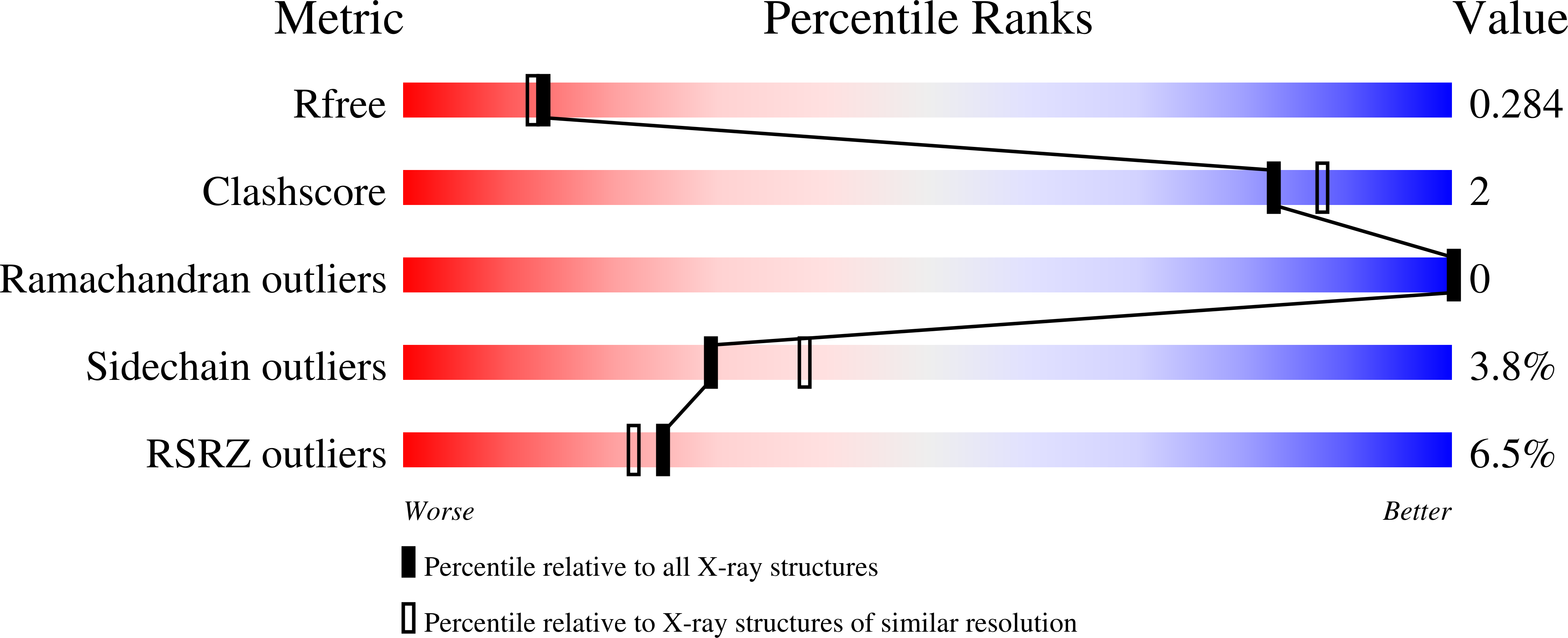
2.22 Å
R-Value Free:
0.29
R-Value Work:
0.24
R-Value Observed:
0.24
Space Group:
P 21 21 21
Macromolecular Entities
Structures with similar UniProt ID
Protein Blast
Polymer Type:polypeptide(L)
Molecule:Bifunctional 3'-5' exonucleas
Gene (Uniprot):WRN
Chain IDs:A
Chain Length:443
Number of Molecules:1
Biological Source:Homo sapiens
Primary Citation
Structural insights into WRN helicase reveal conformational states and opportunities for MSI-H cancer drug discovery.
Commun Biol 9 ? ? (2026)
PMID: 41606312 DOI: 10.1038/s42003-026-09584-0

Abstact

Werner syndrome helicase (WRN) is a RecQ-family DNA helicase essential for genome maintenance and is a synthetic lethal target in microsatellite instability-high (MSI-H) cancers. Despite its therapeutic promise, the conformational dynamics that enable WRN to unwind DNA, and how inhibitors disrupt this activity, remains poorly understood. Here, we present crystal structures of apo WRN and WRN bound to single-stranded DNA (ssDNA), capturing key conformations in the helicase catalytic cycle. These structures reveal how WRN engages DNA through conserved polar and aromatic interactions, and how domain rearrangements, including an ordering of the aromatic-rich loop (ARL), drive directional translocation. Biochemical and biophysical data demonstrate how nucleotide and inhibitor binding remodel these conformations and suggest that known clinical inhibitors (HRO761 and VVD-133214) function by locking WRN in inactive, 'off-DNA' states. Resistance emerged rapidly in vitro, through acquired point mutations as well as altered WRN expression. Together, our findings provide a structural framework for the WRN structural cycle and support the development of next-generation 'on-DNA' inhibitors to overcome resistance.

Legend

Protein

Chemical

Disease

Primary Citation of related structures
Feedback Form
Name
Email
Institute
Feedback