

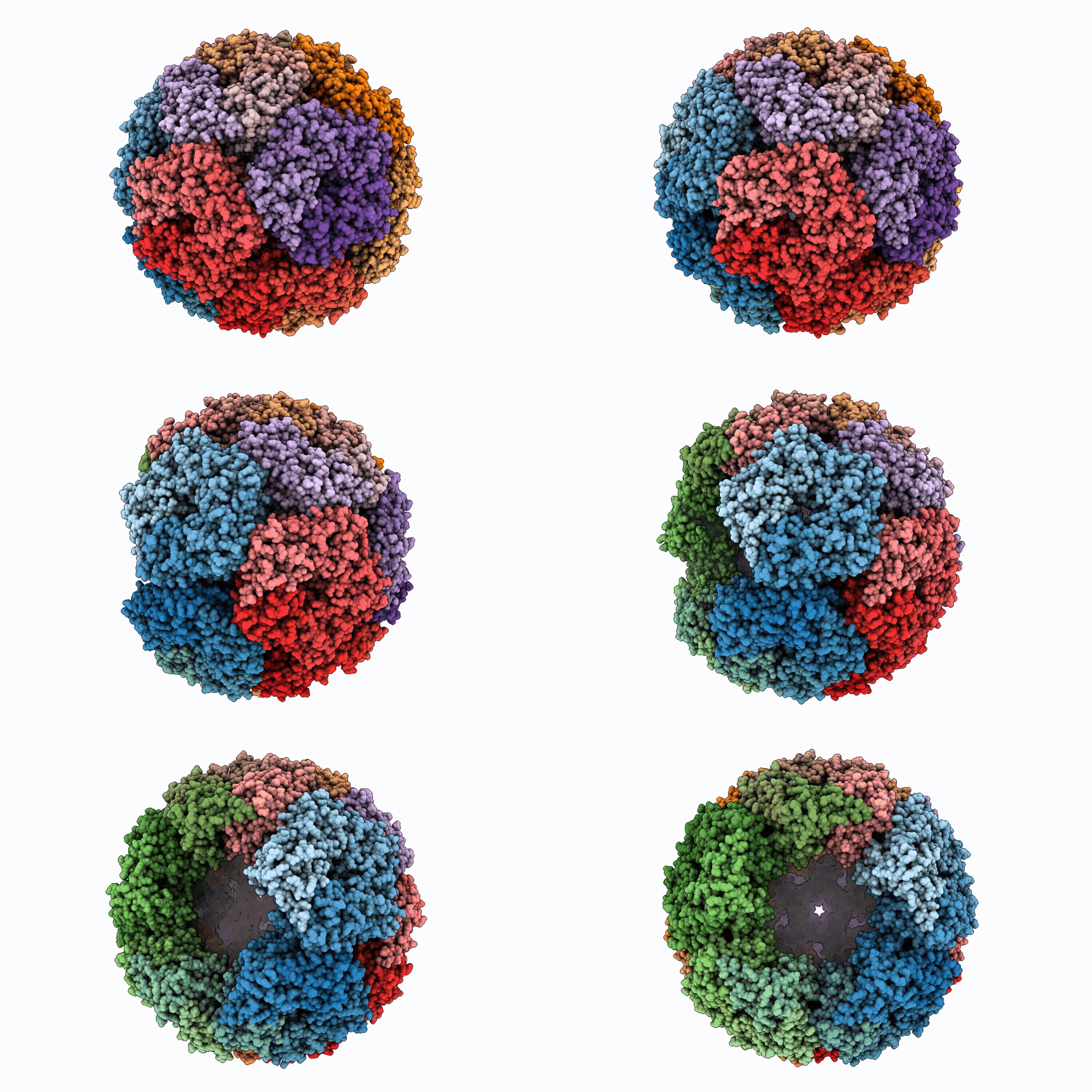
9RYQ image
Deposition Date 2025-07-15
Release Date 2026-05-27
Last Version Date 2026-05-27
Entry Detail
PDB ID:
9RYQ
Title:
Aquifex aeolicus lumazine synthase R29A mutant 11-pentamer cage
Biological Source:
Source Organism(s):
Expression System(s):
Method Details:
Experimental Method:
Resolution:
2.08 Å
Aggregation State:
PARTICLE
Reconstruction Method:
SINGLE PARTICLE
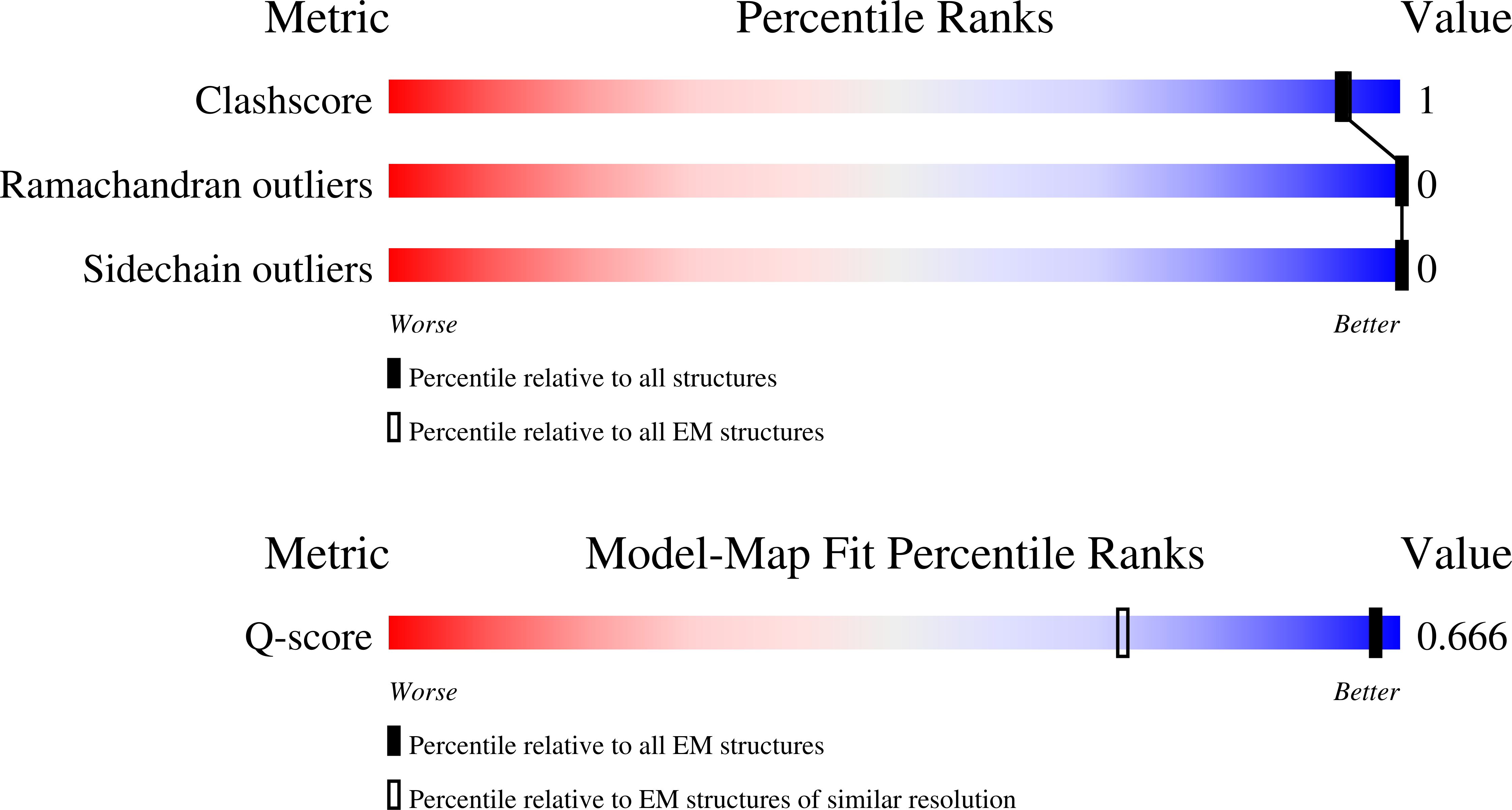
Macromolecular Entities
Structures with similar UniProt ID
Protein Blast
Polymer Type:polypeptide(L)
Molecule:6,7-dimethyl-8-ribityllumazin
Gene (Uniprot):ribH
Chain IDs:A (auth: A1), B (auth: A2), C (auth: A3), D (auth: A4), E (auth: A5), F (auth: B1), G (auth: B2), H (auth: B3), I (auth: B4), J (auth: B5), K (auth: C1), L (auth: C2), M (auth: C3), N (auth: C4), O (auth: C5), P (auth: D1), Q (auth: D2), R (auth: D3), S (auth: D4), T (auth: D5), U (auth: E1), V (auth: E2), W (auth: E3), X (auth: E4), Y (auth: E5), Z (auth: F1), AA (auth: F2), BA (auth: F3), CA (auth: F4), DA (auth: F5), EA (auth: G1), FA (auth: G2), GA (auth: G3), HA (auth: G4), IA (auth: G5), JA (auth: H1), KA (auth: H2), LA (auth: H3), MA (auth: H4), NA (auth: H5), OA (auth: I1), PA (auth: I2), QA (auth: I3), RA (auth: I4), SA (auth: I5), TA (auth: J1), UA (auth: J2), VA (auth: J3), WA (auth: J4), XA (auth: J5), YA (auth: K1), ZA (auth: K2), AB (auth: K3), BB (auth: K4), CB (auth: K5)
Chain Length:166
Number of Molecules:55
Biological Source:Aquifex aeolicus VF5
Ligand Molecules
Primary Citation
A molecular basis for stoichiometric enzyme encapsulation in the vitamin B2 biosynthesis compartment.
Nat Commun ? ? ? (2026)
PMID: 42143052 DOI: 10.1038/s41467-026-73260-4

Abstact

Encapsulating metabolic enzymes within protein cages enhances catalytic efficiency through substrate channeling. The vitamin B2 biosynthesis system, in which a dodecahedral lumazine synthase (LS) cage encapsulates a homotrimeric riboflavin synthase (RS), exemplifies this strategy, yet the molecular basis for this stoichiometric enzyme encapsulation has remained elusive. Here, cryogenic electron microscopy structures reveal a hierarchical assembly mechanism that ensures the defined host-guest ratio. RS C-terminal cage-localization signal peptides anchor at LS pentamer-pentamer interfaces early during assembly, stabilizing open intermediates that, together with delayed later-stage cage closure, extend the loading window until guest incorporation is complete. RS spatial occupancy avoids overloading, while a molecular lock upon final closure prevents disassembly. The elucidated anchoring mechanism enabled structure-based phylogenetic analysis across diverse organisms, suggesting multiple independent evolutionary origins of this modular encapsulation strategy. This naturally occurring architecture provides design principles for engineering synthetic catalytic compartments with programmable stoichiometric control.

Legend

Protein

Chemical

Disease

Primary Citation of related structures
Feedback Form
Name
Email
Institute
Feedback