

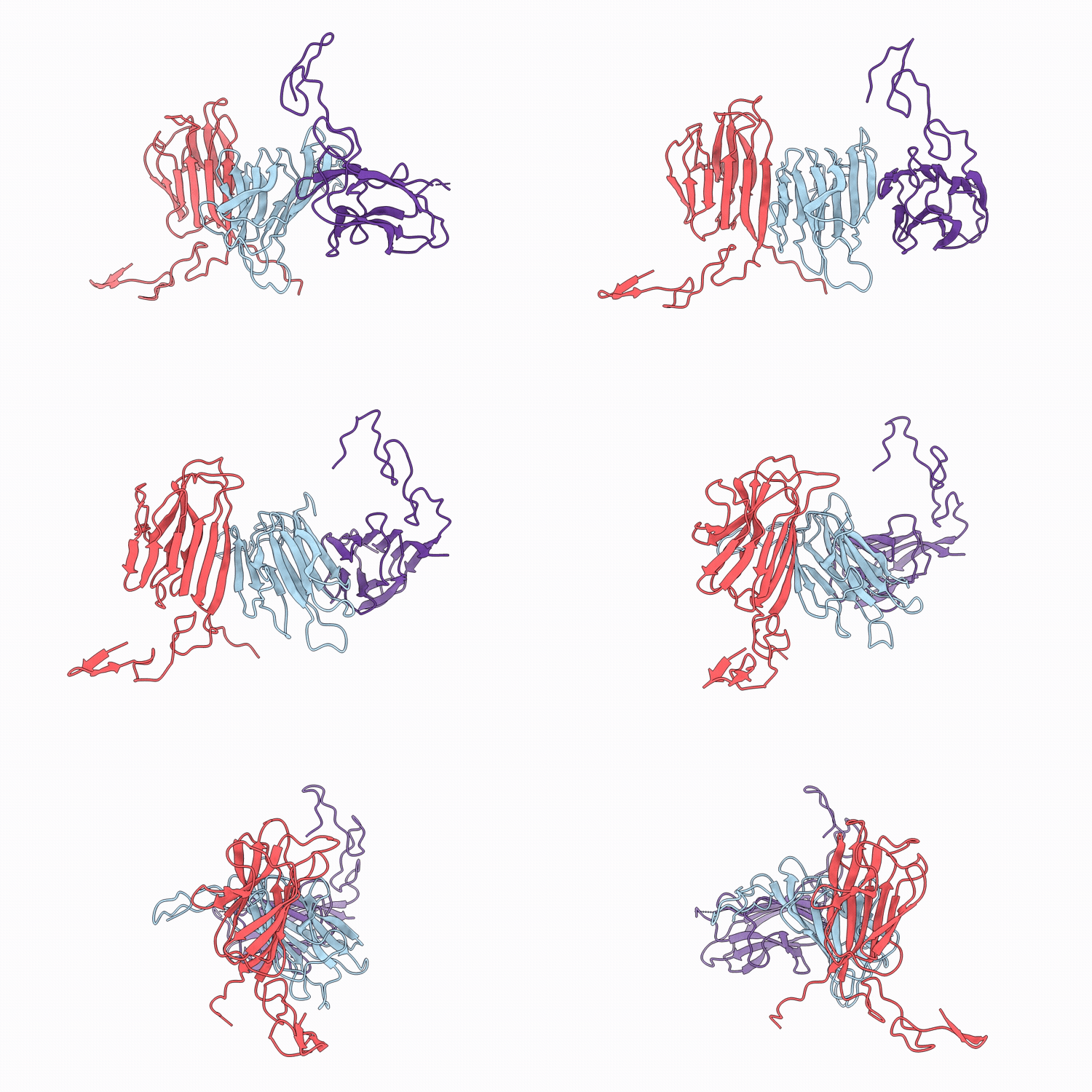
9RWM image
Deposition Date 2025-07-09
Release Date 2026-05-20
Last Version Date 2026-05-20
Entry Detail
PDB ID:
9RWM
Keywords:
Title:
Crystal structure of human ADAMTS-5 Cb and Spacer domains
Biological Source:
Source Organism(s):
Homo sapiens (Taxon ID: 9606)
Expression System(s):
Method Details:
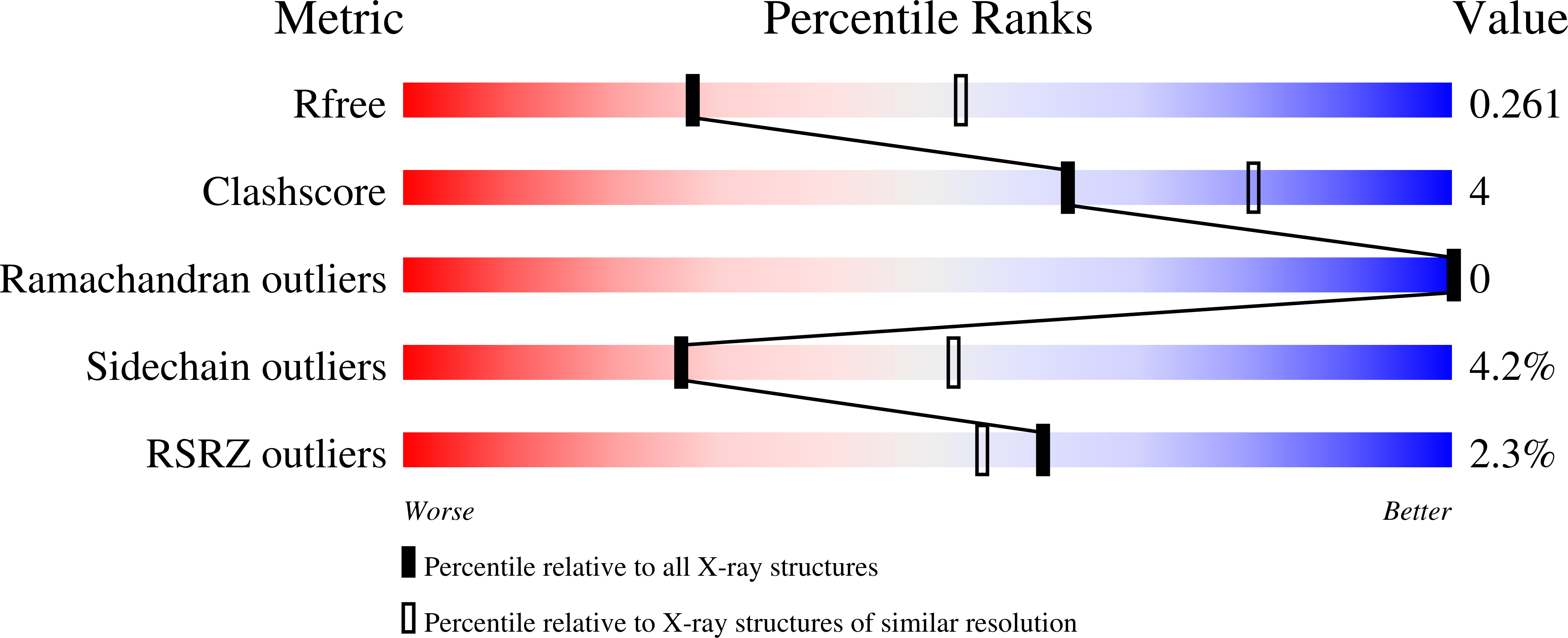
Experimental Method:
Resolution:
2.60 Å
R-Value Free:
0.25
R-Value Work:
0.19
Space Group:
P 1 21 1
Macromolecular Entities
Structures with similar UniProt ID
Protein Blast
Polymer Type:polypeptide(L)
Molecule:A disintegrin and metalloprot
Gene (Uniprot):ADAMTS5
Chain IDs:A, B, C
Chain Length:194
Number of Molecules:3
Biological Source:Homo sapiens
Primary Citation
Structure, substrate recognition and therapeutic targeting of the human ADAMTS-5 spacer domain.
Acta Crystallogr D Struct Biol 82 53 61 (2026)
PMID: 41334750 DOI: 10.1107/S2059798325010290

Abstact

The ADAMTS (a disintegrin-like and metalloproteinase domain with thrombospondin type 1 motifs) family of secreted metalloproteinases plays essential roles in extracellular matrix remodeling. ADAMTS-5 contributes to cartilage degradation, cleaving proteoglycans such as aggrecan and versican, and being involved in both physiological tissue turnover and pathological processes such as osteoarthritis and atherosclerosis. Although structural insights into its catalytic domain have informed inhibitor development, the role of ancillary domains, particularly the spacer domain, in substrate recognition and specificity remains underexplored. Here, we report the crystal structure of a segment of human ADAMTS-5 encompassing the C-terminal portion of the cysteine-rich domain and the spacer domain (residues 694-876). This structure reveals critical features of the spacer domain, including the hypervariable loops that function as exosites essential for the binding of aggrecan and versican. Our findings provide new structural insights into the molecular determinants of the substrate specificity of ADAMTS-5 and underscore the spacer domain as a promising target for the development of selective inhibitors.

Legend

Protein

Chemical

Disease

Primary Citation of related structures
Feedback Form
Name
Email
Institute
Feedback