

9RUJ image
Deposition Date 2025-07-04
Release Date 2026-06-10
Last Version Date 2026-07-01
Entry Detail
PDB ID:
9RUJ
Keywords:
Title:
Streptococcus pneumoniae StkP catalytic domain T167E/T169E double mutant in complex with AMP-PNP and Mn2+
Biological Source:
Source Organism(s):
Expression System(s):
Method Details:
Experimental Method:
Resolution:
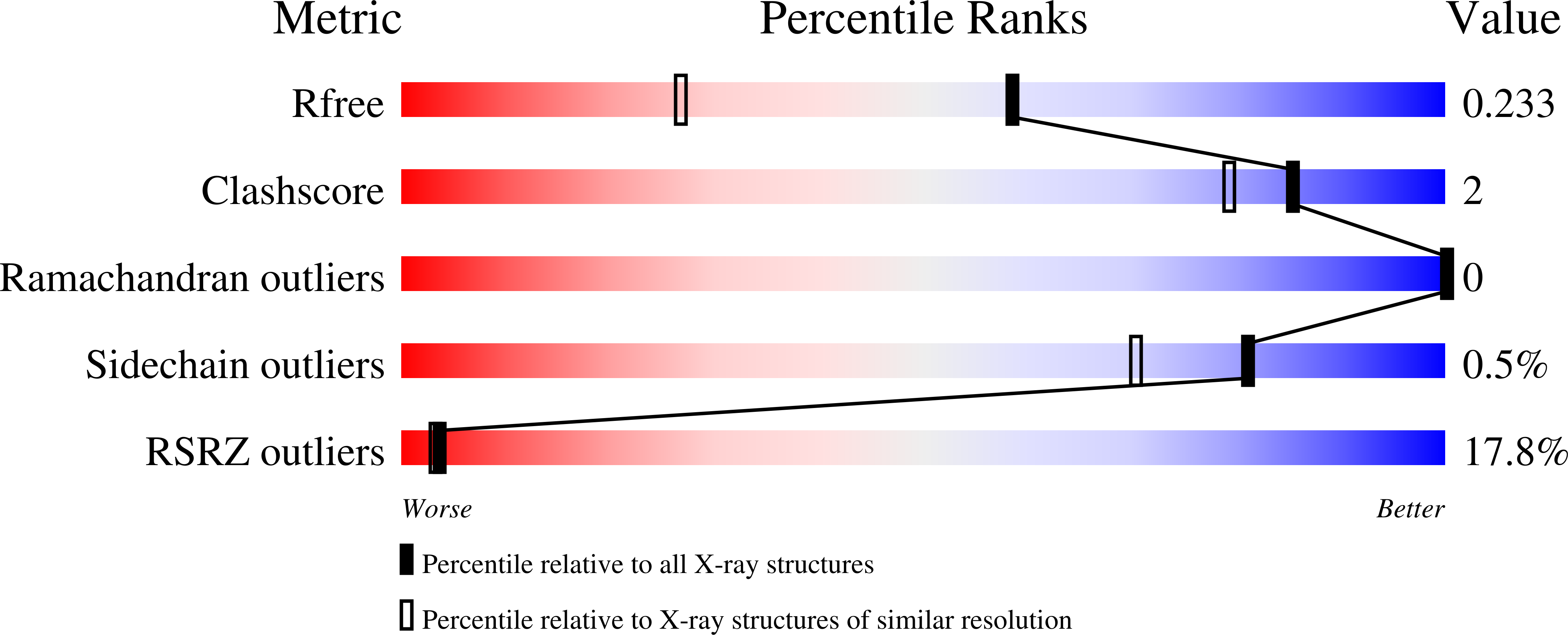
1.60 Å
R-Value Free:
0.23
R-Value Work:
0.20
R-Value Observed:
0.20
Space Group:
P 1 21 1
Macromolecular Entities
Polymer Type:polypeptide(L)
Molecule:Serine/threonine-protein kina
Gene (Uniprot):stkP
Chain IDs:A, B
Chain Length:309
Number of Molecules:2
Biological Source:Streptococcus pneumoniae R6
Primary Citation
Structural dissection of the catalytic domain of the serine threonine kinase StkP of Streptococcus pneumoniae.
Nat Commun ? ? ? (2026)
PMID: 42310301 DOI: 10.1038/s41467-026-74470-6

Abstact

Serine/threonine kinases of the Hanks family are key regulators of bacterial physiology. Among them, membrane-associated PASTA-Hanks kinases govern bacterial cytokinesis and morphogenesis, yet their activation mechanism remains unclear. Here, we report crystal structures of the catalytic domain of the PASTA-Hanks kinase StkP of the human pathogen Streptococcus pneumoniae, carrying phosphoablative or phosphomimetic mutations in its activation loop. These structures demonstrate that phosphorylation of two threonine residues modulates the activation loop's organization and dynamics and reveal an alternative mode of dimerization of the catalytic domain. Analytical ultracentrifugation, SAXS and cell imaging allow to propose a model postulating that the local concentration of StkP at the division septum promotes an inactive dimeric state in which the activation loop hampers substrate binding. The reorganization into active dimers would activate StkP and allow endogenous substrate phosphorylation. This work thus provides a mechanistic framework of the regulation of PASTA Hanks kinase for the regulation of bacterial cell division.

Legend

Protein

Chemical

Disease

Primary Citation of related structures
Feedback Form
Name
Email
Institute
Feedback