

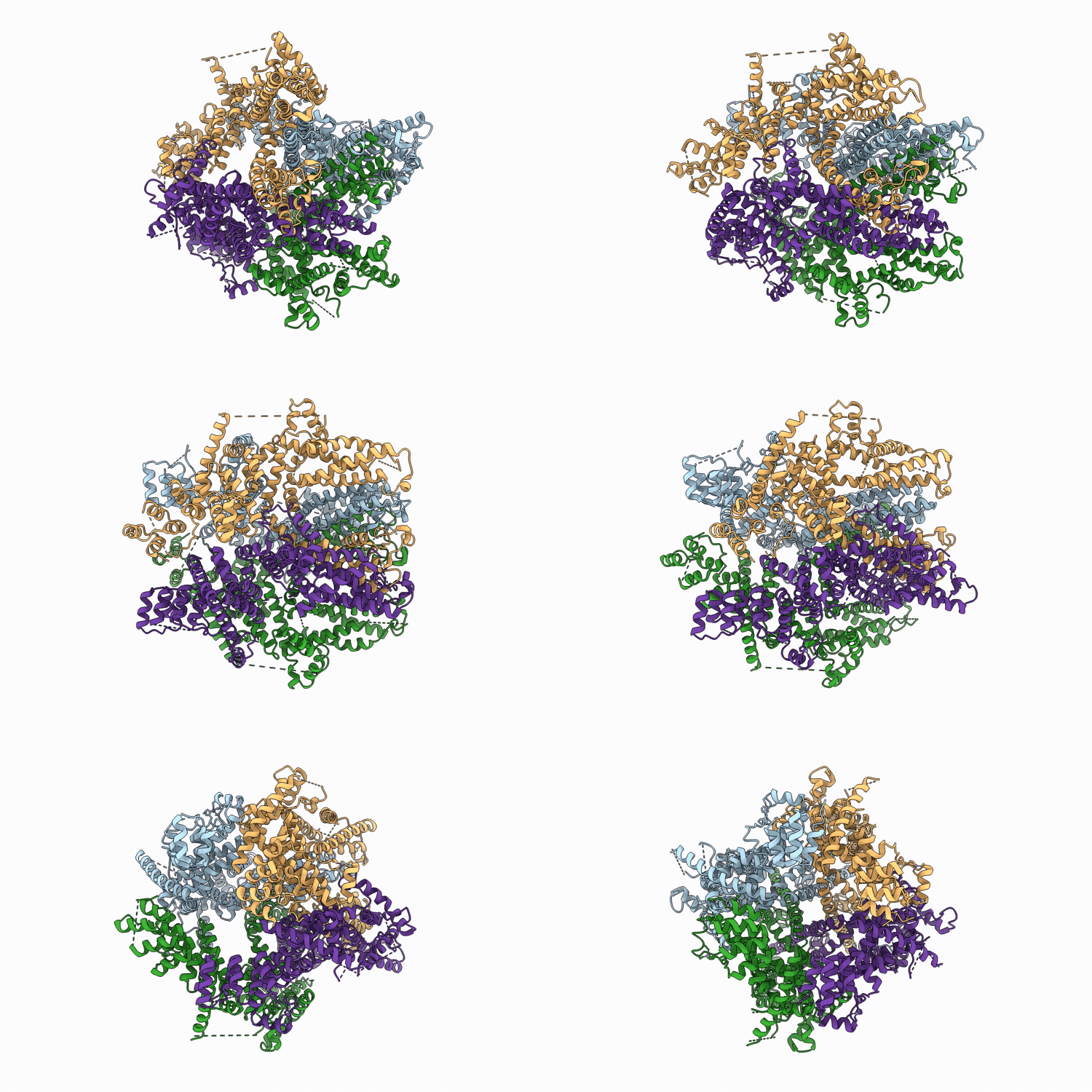
9RSG image
Deposition Date 2025-07-01
Release Date 2026-05-13
Last Version Date 2026-06-24
Entry Detail
PDB ID:
9RSG
Title:
Human TRPC5 in complex with (-) englerin A, mixed occupancy_2, state 2
Biological Source:
Source Organism(s):
Homo sapiens (Taxon ID: 9606)
Expression System(s):
Method Details:
Experimental Method:
Resolution:
3.20 Å
Aggregation State:
PARTICLE
Reconstruction Method:
SINGLE PARTICLE
Macromolecular Entities
Structures with similar UniProt ID
Protein Blast
Polymer Type:polypeptide(L)
Molecule:Short transient receptor pote
Gene (Uniprot):TRPC5
Chain IDs:A, B, C, D
Chain Length:765
Number of Molecules:4
Biological Source:Homo sapiens
Ligand Molecules
Primary Citation
(-)-Englerin A binding to human TRPC5 exposes an aromatic interaction network in channel activation.
Nat Commun 17 ? ? (2026)
PMID: 42056091 DOI: 10.1038/s41467-026-71840-y

Abstact

TRPC4/5 cation channels are polymodal cellular sensors and emerging drug targets in various human pathologies. The plant natural product (-)-englerin A (EA) is a potent, selective TRPC4/5 agonist that has transformed TRPC4/5 research. However, the structural basis of EA-mediated TRPC4/5 activation has remained elusive, limiting our ability to understand and exploit EA's pharmacology. Here, we present nine high-resolution cryo-EM structures of human TRPC5, representing different states and ligand occupancies, which show that EA occupies a conserved lipid binding site between channel subunits. Conformational changes of residues surrounding this binding site - most notably in the aromatic interaction network around Phe520 - result in rearrangement of the pore helices into a pre-open state. Our structural models are consistent with the effects of mutagenesis on EA's potency, efficacy and activation kinetics, and allow us to rationalise competitive inhibition by other TRPC4/5 modulators as well as EA's selectivity profile within the TRPC family. Our structural insights into the mode-of-action of a widely used TRPC4/5 agonist will underpin fundamental TRPC4/5 research and ongoing drug discovery programmes.

Legend

Protein

Chemical

Disease

Primary Citation of related structures
Feedback Form
Name
Email
Institute
Feedback