

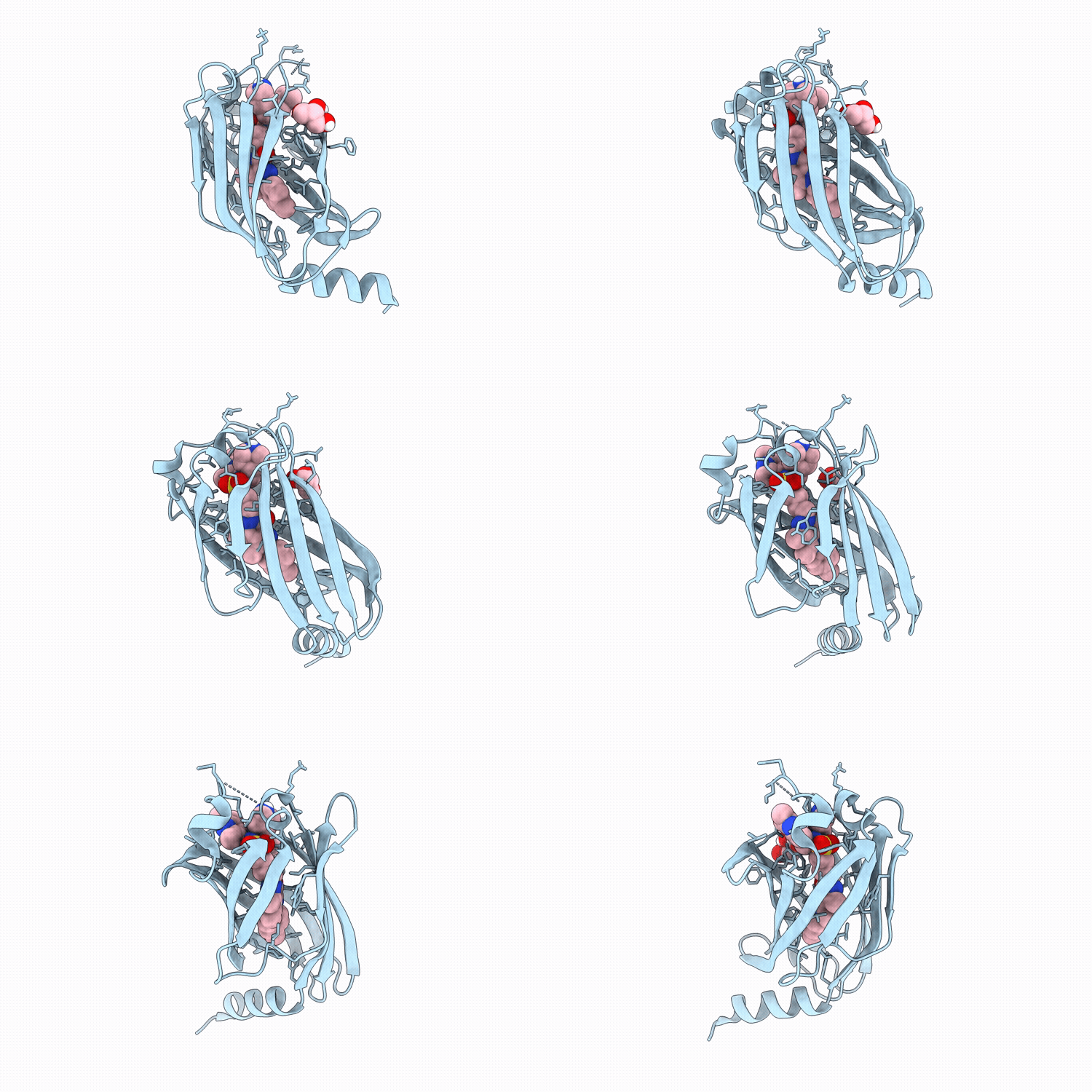
9RP6 image
Deposition Date 2025-06-23
Release Date 2026-04-29
Last Version Date 2026-04-29
Entry Detail
PDB ID:
9RP6
Keywords:
Title:
Crystal structure of covalent PDE6delta adduct modified by compound 13b
Biological Source:
Source Organism(s):
Homo sapiens (Taxon ID: 9606)
Expression System(s):
Method Details:
Experimental Method:
Resolution:
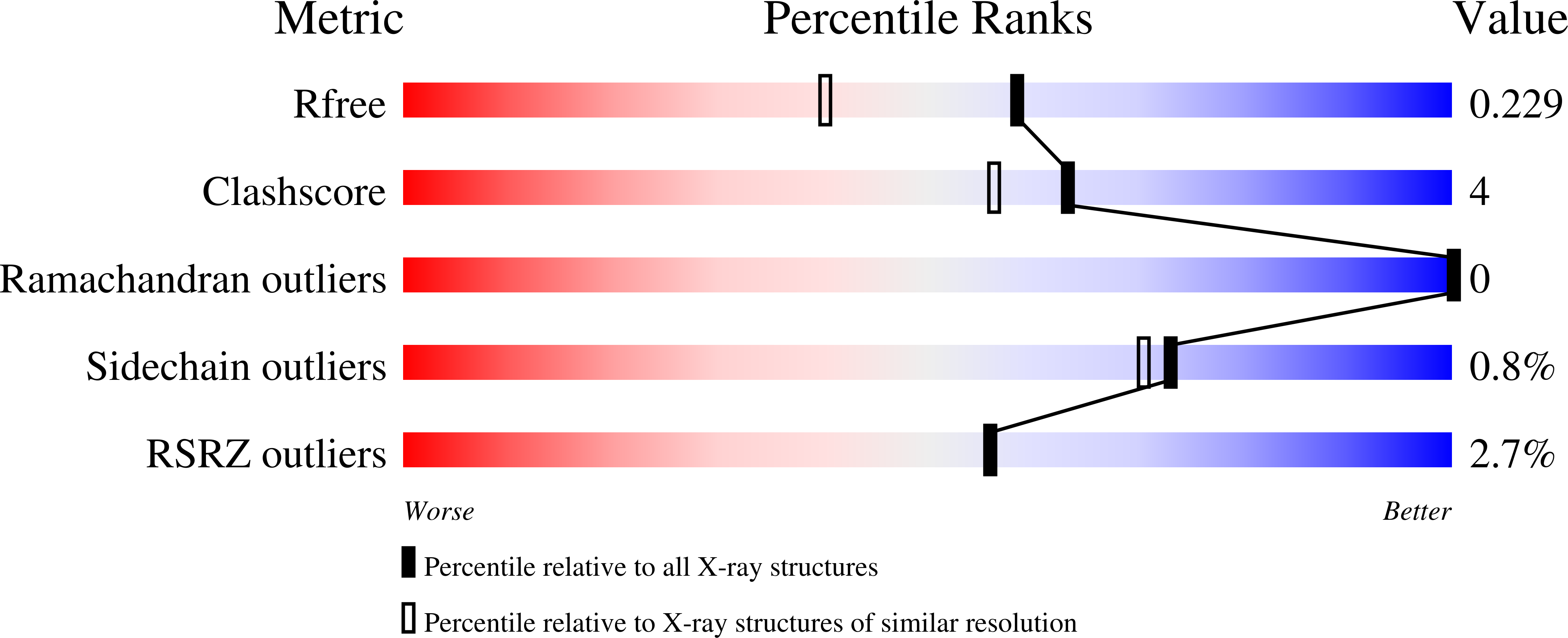
1.80 Å
R-Value Free:
0.22
R-Value Work:
0.20
R-Value Observed:
0.20
Space Group:
P 32 2 1
Macromolecular Entities
Structures with similar UniProt ID
Protein Blast
Polymer Type:polypeptide(L)
Molecule:Retinal rod rhodopsin-sensiti
Gene (Uniprot):PDE6D
Chain IDs:A
Chain Length:156
Number of Molecules:1
Biological Source:Homo sapiens
Primary Citation
Targeting a Glutamic Acid in PDE delta with Fluoromethyl-Aryl Electrophiles Impairs K-Ras Signaling.
J.Med.Chem. 69 964 981 (2026)
PMID: 41499451 DOI: 10.1021/acs.jmedchem.5c02082

Abstact

For targeted covalent modification at low-reactivity carboxylates with biocompatible electrophiles, new approaches are in high demand. Engineering of the HaloTag protein facilitates such a covalent reaction between chloroalkanes and an aspartate residue. We demonstrate that conversely, engineering stable ligands can also enable covalent targeting of an acid residue in a protein binding site. Using the chaperone PDEdelta, which shuttles lipidated oncoproteins and thereby mediates their signaling activity, we show that equipping noncovalent inhibitors with a benzyl fluoride-based electrophile leads to covalent modification of a specific glutamate p.E88 in the ligand binding site. The best inhibitor, Deltafluorine, embodies a 3-fluoromethyl-pyridyl group and is stable to nucleophiles like glutathione, phosphate, acetate, and citrate. In cells, Deltafluorine combines noncovalent and covalent reactivity to demonstrate distinct cellular profiles and inhibits signaling through the MAP-kinase and Akt-mTOR pathways. In an autochthonous mouse model of highly aggressive Kras(G12D)-driven lung adenocarcinoma, Deltafluorine treatment significantly reduces tumor volume.

Legend

Protein

Chemical

Disease

Primary Citation of related structures
Feedback Form
Name
Email
Institute
Feedback