

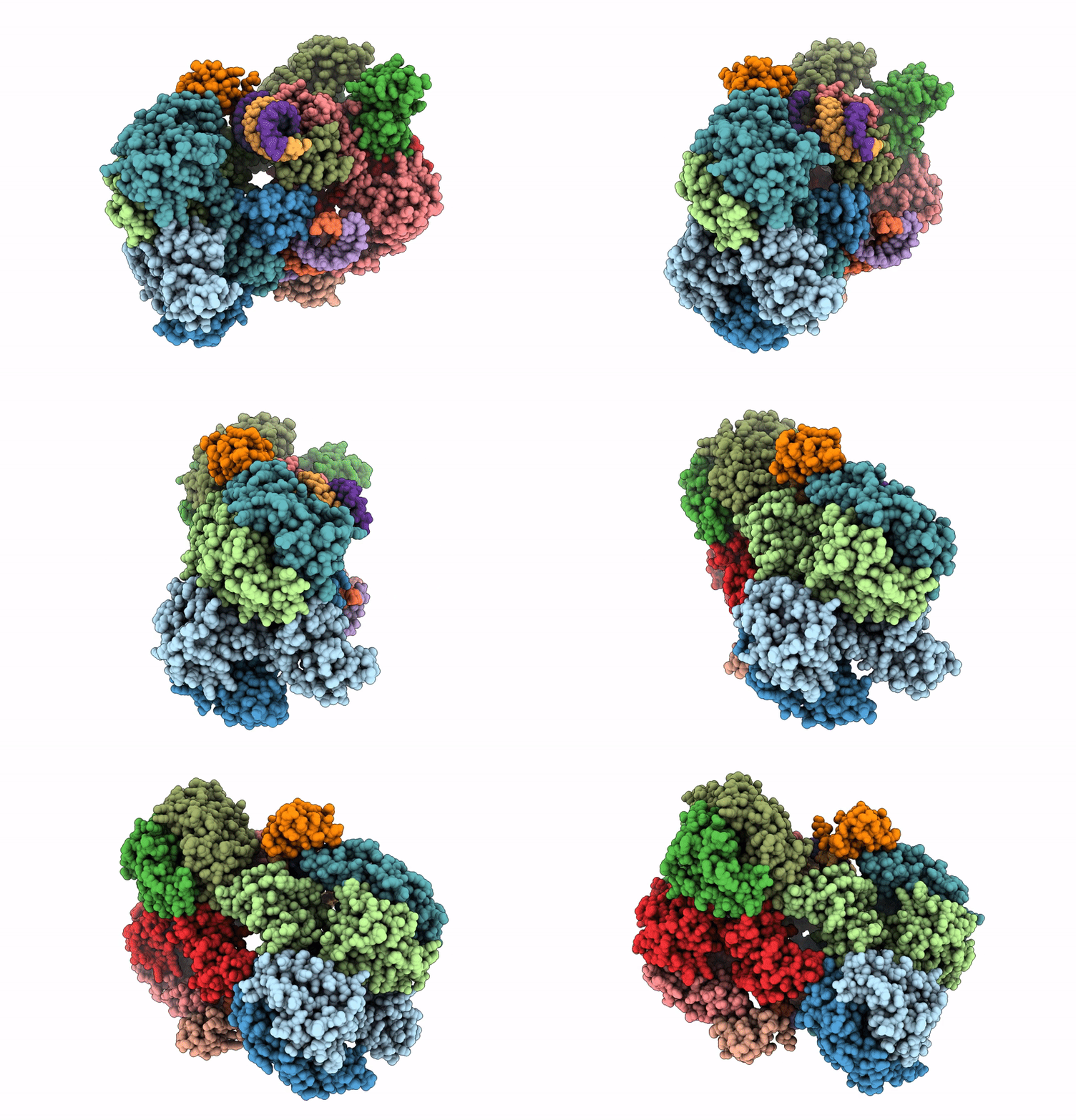
9RMU image
Deposition Date 2025-06-18
Release Date 2025-12-10
Last Version Date 2026-05-06
Entry Detail
PDB ID:
9RMU
Keywords:
Title:
SIVtal integrase in complex with RNA stem-loop (focused refinement of the filament repeat unit)
Biological Source:
Source Organism(s):
Expression System(s):
Method Details:
Experimental Method:
Resolution:
3.30 Å
Aggregation State:
PARTICLE
Reconstruction Method:
SINGLE PARTICLE
Macromolecular Entities
Structures with similar UniProt ID
Protein Blast
Polymer Type:polypeptide(L)
Molecule:Pol protein
Gene (Uniprot):POL
Chain IDs:A, B, C, D, F (auth: b), G (auth: E), H (auth: F), I (auth: G), J (auth: H), L (auth: f)
Chain Length:296
Number of Molecules:10
Biological Source:Simian immunodeficiency virus
Polymer Type:polyribonucleotide
Molecule:RNA
Chain IDs:E (auth: J), K (auth: I), M (auth: j), N (auth: i)
Chain Length:57
Number of Molecules:4
Biological Source:synthetic construct
Ligand Molecules
Primary Citation
Integrase anchors viral RNA to the HIV-1 capsid interior.
Nature 652 1068 1075 (2026)
PMID: 41708858 DOI: 10.1038/s41586-026-10154-x

Abstact

HIV-1 integrase (IN) promotes encapsulation of viral genomic RNA into mature viral cores, and this function is a target for ongoing antiretroviral drug development efforts(1-3). Here we determined the cryogenic electron microscopy (cryo-EM) structure of a primate lentiviral IN in a complex with RNA, revealing a linear filament made of IN octamer repeat units, each comprising a pair of asymmetric homotetramers. The assembly is stabilized through IN-RNA interactions involving mainly the IN C-terminal domains and RNA backbone. The spacing and orientation of the IN filament repeat units closely matched those of consecutive capsid (CA) hexamers within the mature CA lattice. Using cryo-EM images of native purified HIV-1 cores, we refined the structure of the IN filament as it propagates along the luminal side of the CA lattice. Each IN tetramer within the filament nestled in a CA hexamer, engaging closely with the major homology regions. Substitutions of residues involved in IN-CA contacts yielded eccentric virions with RNA nucleoids located outside of the cores. Collectively, our results establish the structural basis for the HIV-1 IN-RNA interaction and reveal that IN forms an RNA-binding module on the luminal side of the mature CA lattice.

Legend

Protein

Chemical

Disease

Primary Citation of related structures
Feedback Form
Name
Email
Institute
Feedback