

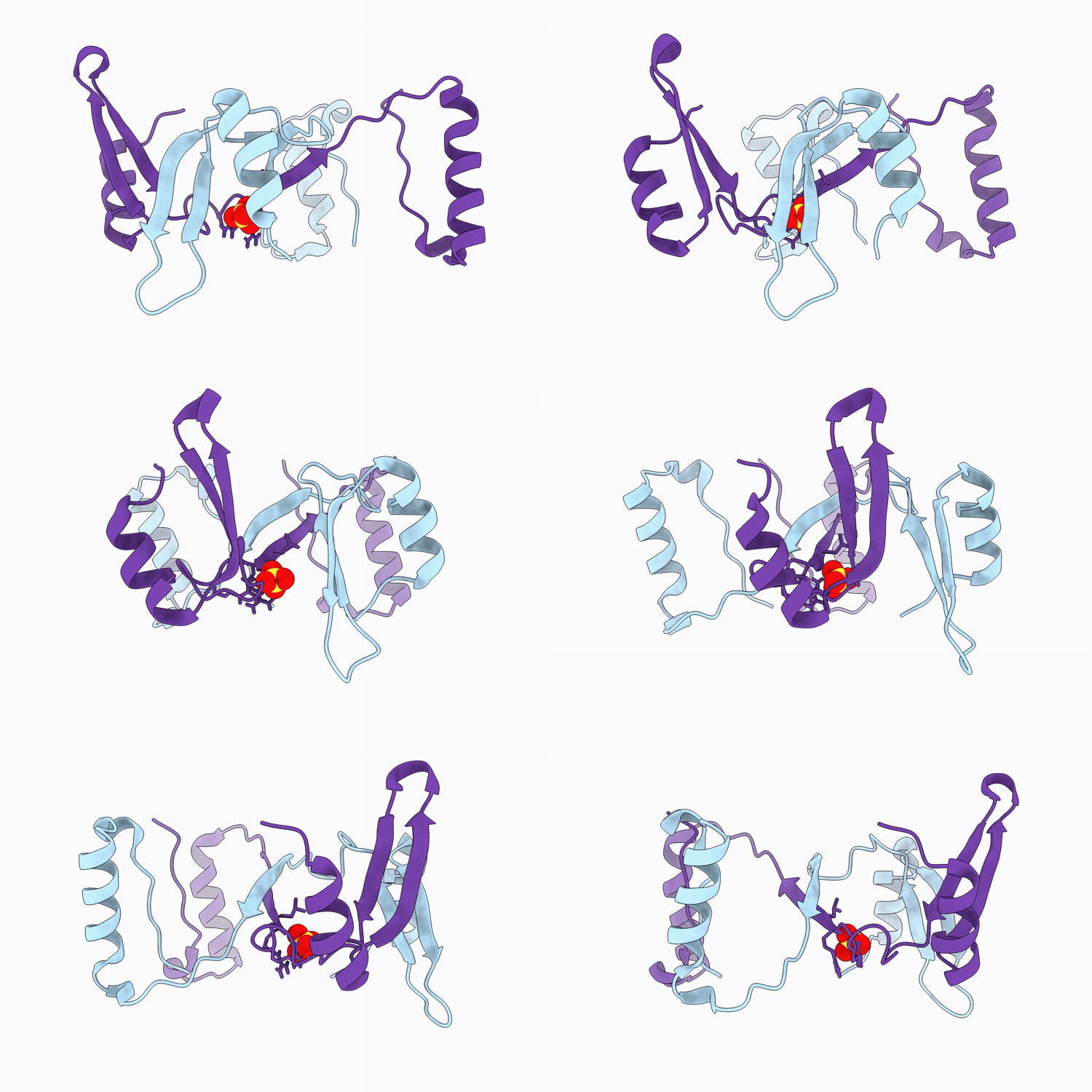
9RK6 image
Deposition Date 2025-06-13
Release Date 2026-06-24
Last Version Date 2026-08-19
Entry Detail
PDB ID:
9RK6
Keywords:
Title:
Paraplegin N-terminal domain
Biological Source:
Source Organism(s):
Homo sapiens (Taxon ID: 9606)
Expression System(s):
Method Details:
Experimental Method:
Resolution:
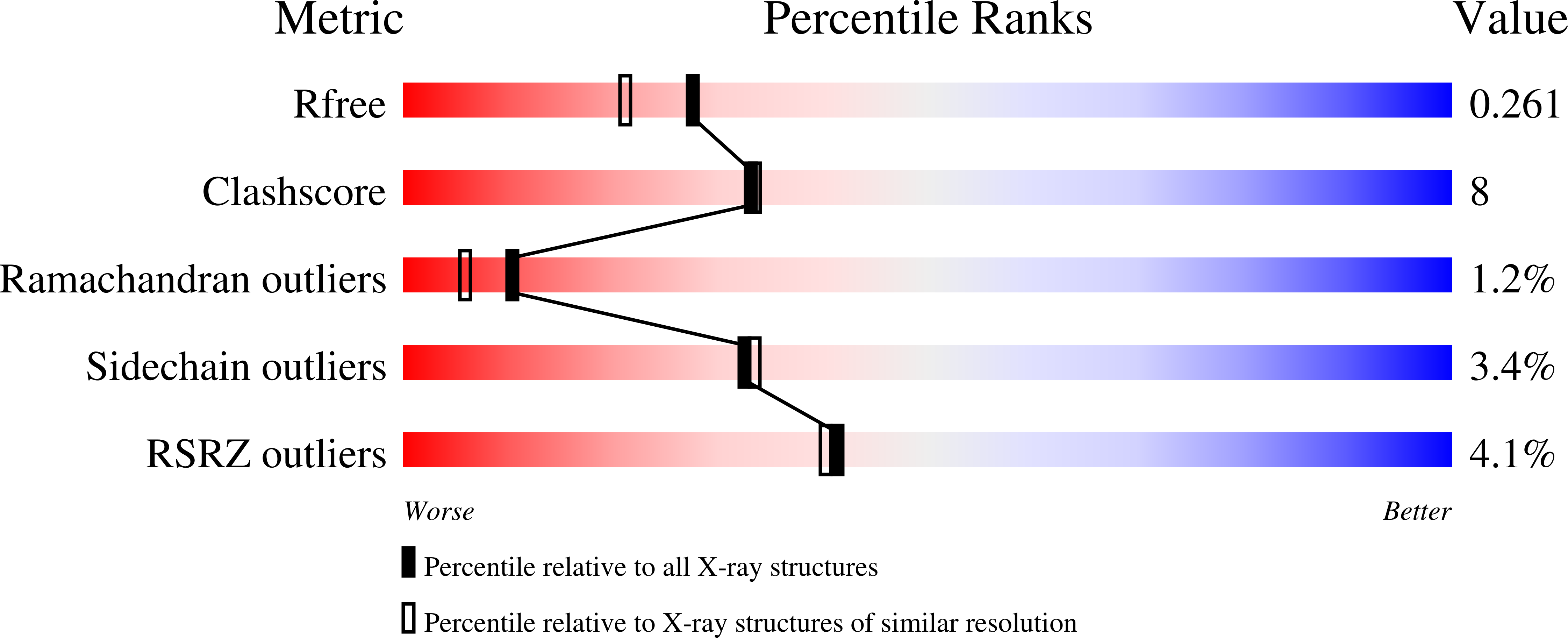
1.99 Å
R-Value Free:
0.29
R-Value Work:
0.23
Space Group:
C 2 2 21
Macromolecular Entities
Polymer Type:polypeptide(L)
Molecule:Mitochondrial inner membrane
Gene (Uniprot):SPG7
Chain IDs:A (auth: B), B (auth: A)
Chain Length:0
Number of Molecules:2
Biological Source:Homo sapiens
Ligand Molecules
Primary Citation
Structural divergence in N-terminal domains of AAA proteases paraplegin (SPG7) and FtsH indicates a key structural function in complex formation.
J.Struct.Biol. 218 108353 108353 (2026)
PMID: 42546997 DOI: 10.1016/j.jsb.2026.108353

Abstact

AAA proteases are hexameric ATP-dependent metallopeptidases that perform crucial proteolytic activities within prokaryotic and eukaryotic membranes. Structurally, protomers are comprised of catalytically active C-terminal domains that are anchored to the membrane by an N-terminal autonomous folding unit. In this study, we determined the fold, stability, and oligomeric state of the N-terminal intermembrane domains of human spastic paraplegia type 7 (SPG7)/ paraplegin protein and its bacterial orthologue FtsH using circular dichroism (CD), small-angle X-ray scattering (SAXS), small-angle neutron scattering (SANS) and X-ray crystallography. Solution-state analysis revealed that the N-terminal domain of paraplegin is a monomer in solution whereas FtsH predominantly forms a dimer. Unexpectedly, the N-terminal domain of paraplegin presents as a domain-swapped homodimer in our crystal structure that involves the first helix and first two beta-strands from one monomer and beta-strand 3, helix 2 and beta-strand 4 from another symmetry-related molecule. However, together they form an assembly which is similar to protomers observed for the N-terminal regions of FtsH and AFG3L2. Drawing from our structural data, we postulate that domain-swapping interactions of the N-terminal regions contribute to stability of the AAA protease hexamer containing paraplegin, demonstrating the extensive flexibility of the N-terminal portion of this protein and its role in achieving the appropriate molecular architecture required for function.

Legend

Protein

Chemical

Disease

Primary Citation of related structures
Feedback Form
Name
Email
Institute
Feedback