

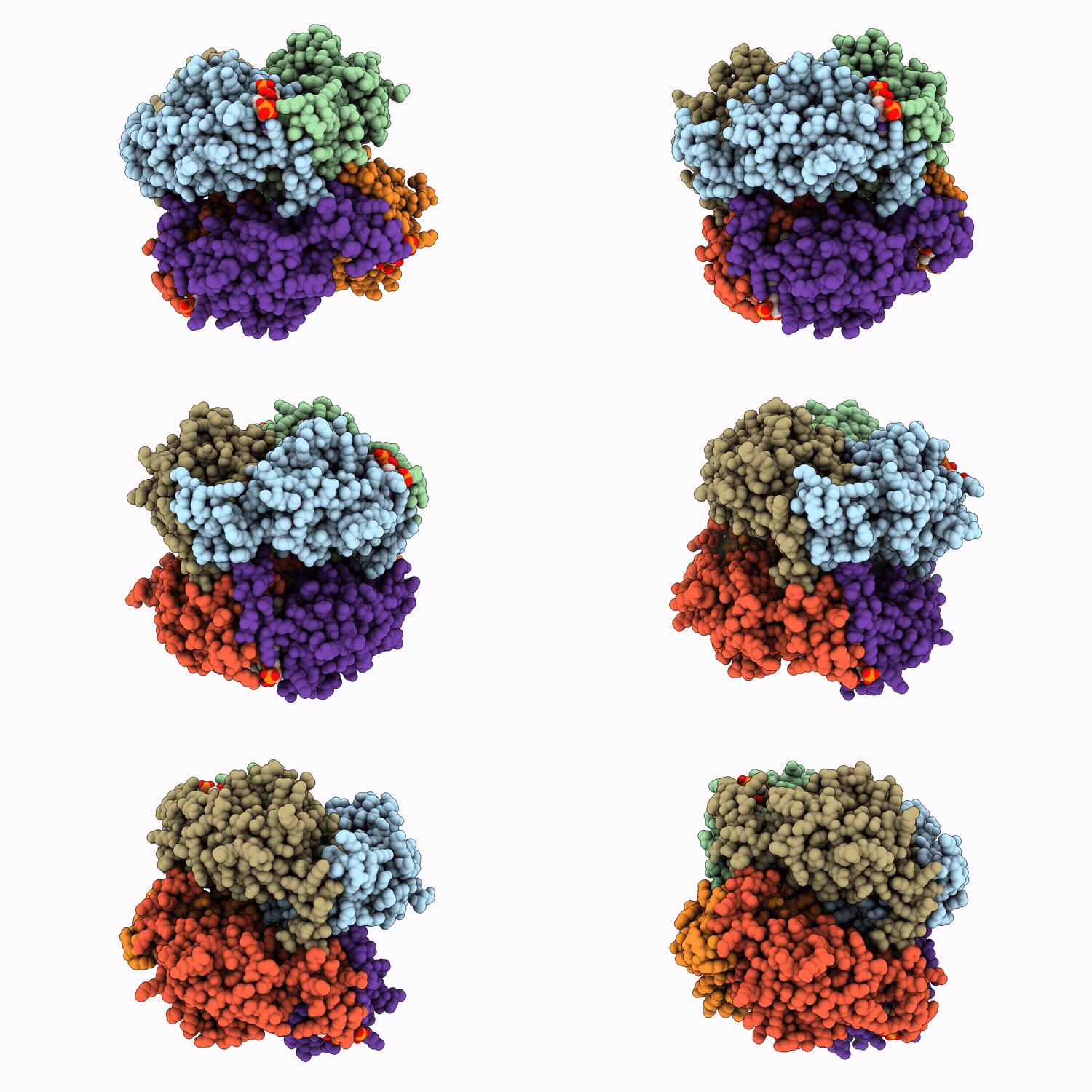
9RGU image
Deposition Date 2025-06-07
Release Date 2026-05-13
Last Version Date 2026-05-13
Entry Detail
PDB ID:
9RGU
Keywords:
Title:
Crystal Structure of Rattus norvegicus Enoyl-CoA Hydratase in complex with 3S hydroxyhexanoyl-PAN and 3',5', diphosphate adenosine
Biological Source:
Source Organism(s):
Expression System(s):
Method Details:
Experimental Method:
Resolution:
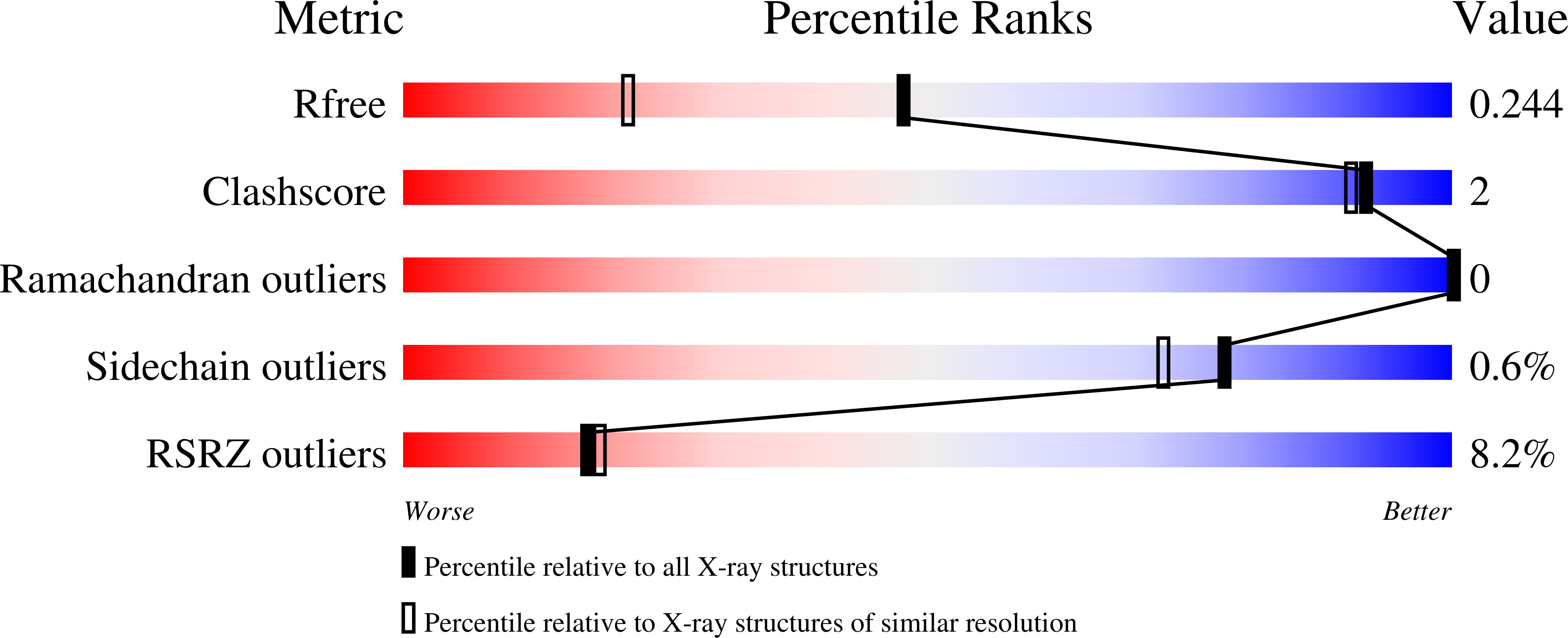
1.70 Å
R-Value Free:
0.24
R-Value Work:
0.21
Space Group:
P 21 21 21
Macromolecular Entities
Structures with similar UniProt ID
Protein Blast
Polymer Type:polypeptide(L)
Molecule:Enoyl-CoA hydratase, mitochon
Gene (Uniprot):Echs1
Chain IDs:A, F
Chain Length:290
Number of Molecules:2
Biological Source:Rattus norvegicus
Structures with similar UniProt ID
Protein Blast
Polymer Type:polypeptide(L)
Molecule:Enoyl-CoA hydratase, mitochon
Gene (Uniprot):Echs1
Chain IDs:B, C
Chain Length:290
Number of Molecules:2
Biological Source:Rattus norvegicus
Structures with similar UniProt ID
Protein Blast
Polymer Type:polypeptide(L)
Molecule:Enoyl-CoA hydratase, mitochon
Gene (Uniprot):Echs1
Chain IDs:D
Chain Length:290
Number of Molecules:1
Biological Source:Rattus norvegicus
Structures with similar UniProt ID
Protein Blast
Polymer Type:polypeptide(L)
Molecule:Enoyl-CoA hydratase, mitochon
Gene (Uniprot):Echs1
Chain IDs:E
Chain Length:290
Number of Molecules:1
Biological Source:Rattus norvegicus
Modified Residue
Compound ID Chain ID Parent Comp ID Details 2D Image
CSD D CYS modified residue
CSO A CYS modified residue
Primary Citation
Enantioselective Hydration of Non-CoA Enoyl-Thioesters by Enoyl-CoA Hydratase (ECH): Activation of the Active Site Oxyanion Hole with 3',5'-Adenosine-Diphosphate Enables Competent Catalysis.
Jacs Au 6 2464 2472 (2026)
PMID: 42063829 DOI: 10.1021/jacsau.6c00054

Abstact

Thioester chemistry is exploited in Nature by many CoA-dependent enzymes. However, the covalent nature of CoA attachment largely prevents the use of these enzymes in many applications. Replacing the CoA moiety with simpler, truncated fragments, such as its pantetheine (PAN) moiety, is also hampered by the lack of understanding of the function of the CoA moiety in enzymatic conversions. Herein, we describe the utilization of the enzyme (2E)-enoyl-CoA hydratase (ECH) using PAN thioesters and an activator, 3',5'-ADP (PAP). ECH catalyzes the hydration of the carbon-carbon double bond of (2E)-enoyl-CoA substrates in the beta-oxidation lipid-degrading pathway. The hydration reaction is very challenging to carry out by traditional chemical synthesis, as no selective catalysts are available. Structural enzymology of ECH and its complexes with (3S)-hydroxyacyl-CoA products show that hydrogen bonds between the adenine 6-amino group of the ADP moiety of CoA and loop-2 induce a small structural change in this active site loop, tightening the NN distance between the hydrogen bond donors of the oxyanion hole from 5.2 A (unliganded) to 4.0 A and forming a competent oxyanion hole at the catalytic site. A structurally similar and catalytically competent oxyanion hole is observed in the complex with (3S)-hydroxyhexanoyl PAN and the activator 3',5'-ADP, both bound at the active site. The use of 3',5'-ADP as the activator enables the synthetic use of ECH for the hydration of a wide range of (2E)-enoyl-PAN substrates with different steric demands and functionalities. The products, 3-hydroxyacyl-PAN thioesters, were obtained in good isolated yields and excellent stereoselectivities (typically >99:<1 3S:3R). Even for acyl chains that contain reactive groups such as bromide or methyl ester functionalities at C7, no side products resulting from potentially competing cyclization could be detected in the enzymatic hydration protocol.

Legend

Protein

Chemical

Disease

Primary Citation of related structures
Feedback Form
Name
Email
Institute
Feedback