

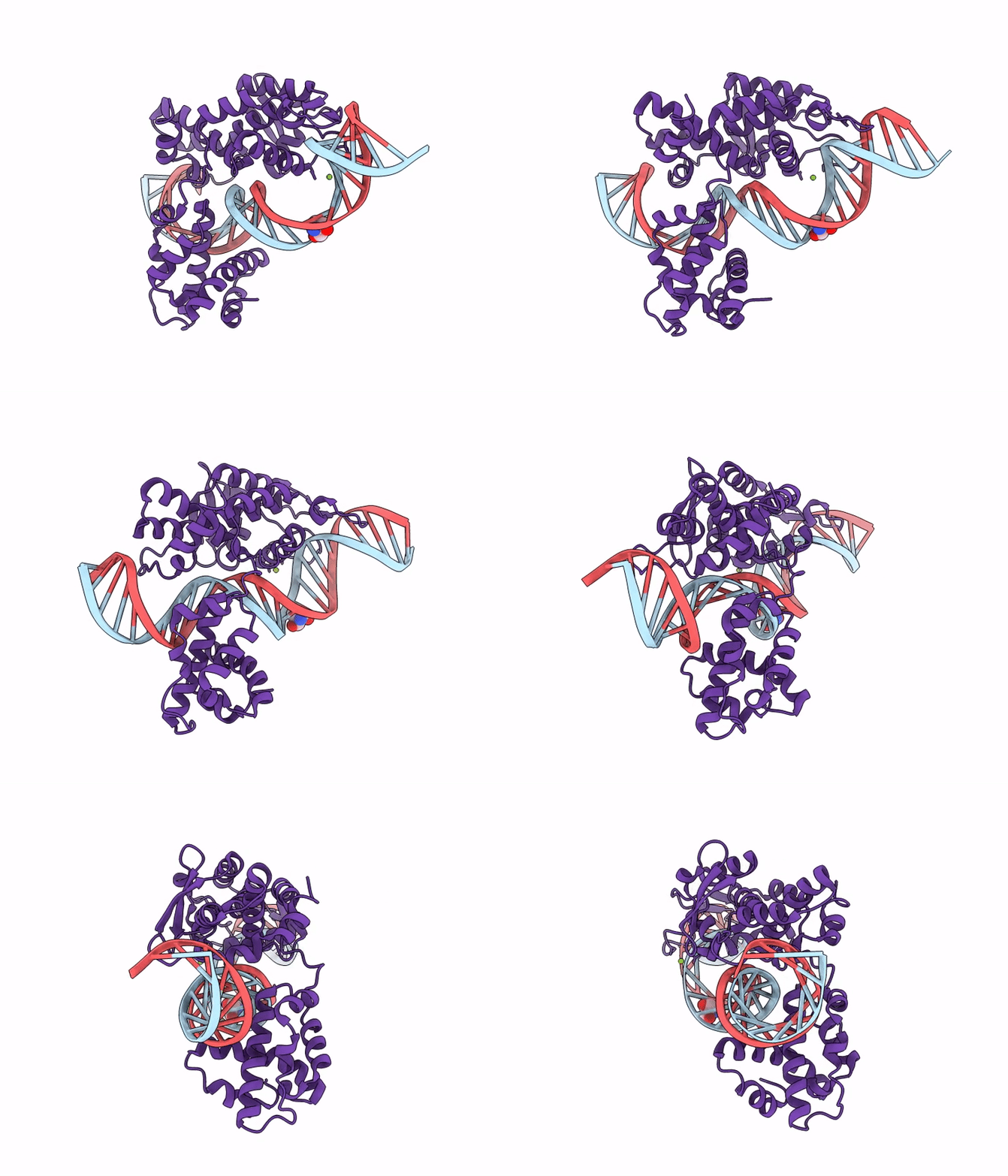
9RD5 image
Deposition Date 2025-06-01
Release Date 2026-01-14
Last Version Date 2026-04-22
Entry Detail
PDB ID:
9RD5
Title:
Phi3T SroF bound to DNA
Biological Source:
Source Organism(s):
Expression System(s):
Method Details:
Experimental Method:
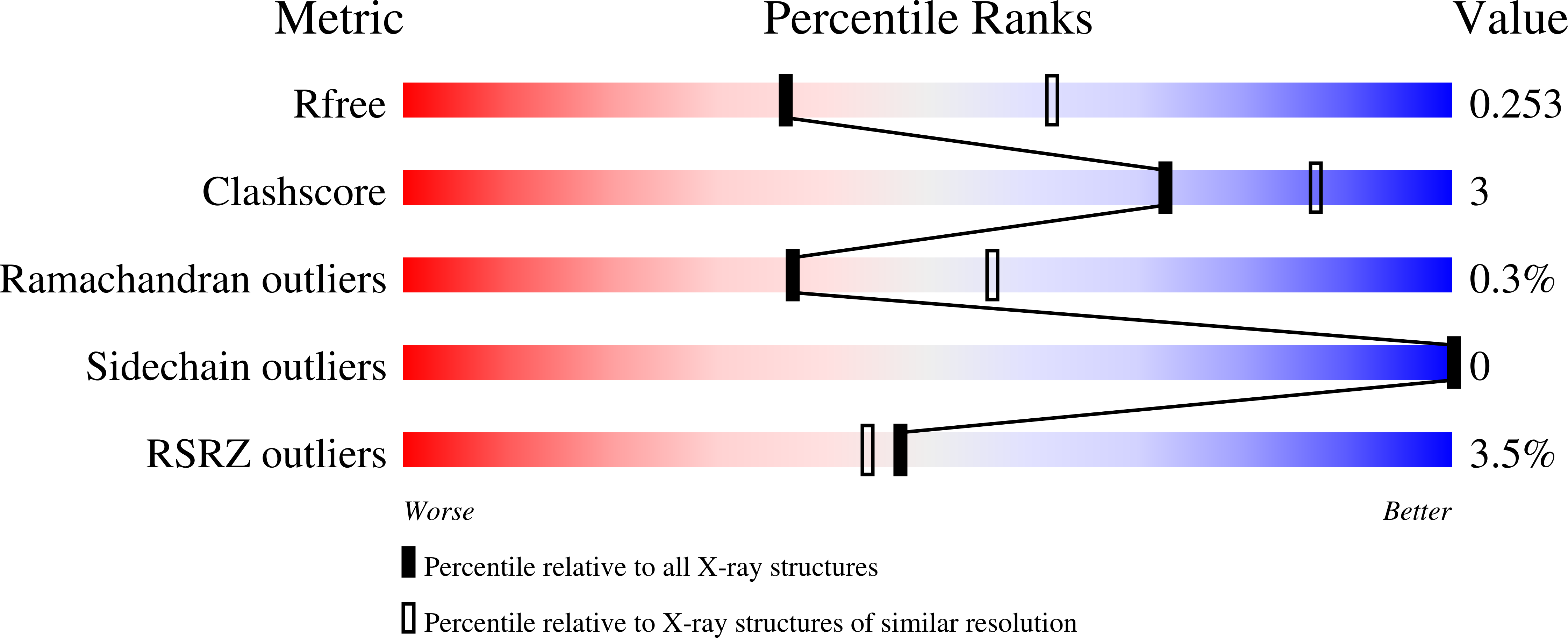
Resolution:
2.50 Å
R-Value Free:
0.25
R-Value Work:
0.20
R-Value Observed:
0.20
Space Group:
C 2 2 21
Macromolecular Entities
Polymer Type:polydeoxyribonucleotide
Molecule:DNA (26-MER)
Chain IDs:A
Chain Length:26
Number of Molecules:1
Biological Source:Bacillus phage phi3T
Polymer Type:polydeoxyribonucleotide
Molecule:DNA (26-MER)
Chain IDs:B
Chain Length:26
Number of Molecules:1
Biological Source:Bacillus phage phi3T
Structures with similar UniProt ID
Protein Blast
Polymer Type:polypeptide(L)
Molecule:Core-binding (CB) domain-cont
Chain IDs:C (auth: H)
Chain Length:325
Number of Molecules:1
Biological Source:Bacillus phage phi3T
Primary Citation
A DNA recognition-mimicry switch governs induction in arbitrium phages.
Cell Host Microbe 34 291 303.e10 (2026)
PMID: 41619736 DOI: 10.1016/j.chom.2026.01.012

Abstact

Temperate phages integrate multiple information sources to regulate lysis-lysogeny transitions. SPbeta-like phages use arbitrium signaling and DNA damage to control repressor activity during lytic induction, but how the repressor functions and is inactivated by the SOS response remains unclear. Here, we show that SroF, the SPbeta-like phage repressor, binds DNA via a mechanism involving its integrase-like fold, enabling stable prophage repression. Upon DNA damage, the host SOS response triggers derepression of an antirepressor, Sar. Sar binds SroF by mimicking the DNA structure recognized by the repressor, thereby inactivating its function and inducing phage. This mechanism is conserved across SPbeta-like phages, which encode multiple, specific SroF-Sar pairs. Surprisingly, repressor inactivation alone is insufficient for efficient induction when arbitrium levels are high. Our results uncover the mechanism underlying a double layer of control that ensures phage induction occurs only under SOS conditions and in the absence of neighboring prophages.

Legend

Protein

Chemical

Disease

Primary Citation of related structures
Feedback Form
Name
Email
Institute
Feedback