

9RCU image
Deposition Date 2025-05-29
Release Date 2026-04-08
Last Version Date 2026-05-20
Entry Detail
PDB ID:
9RCU
Keywords:
Title:
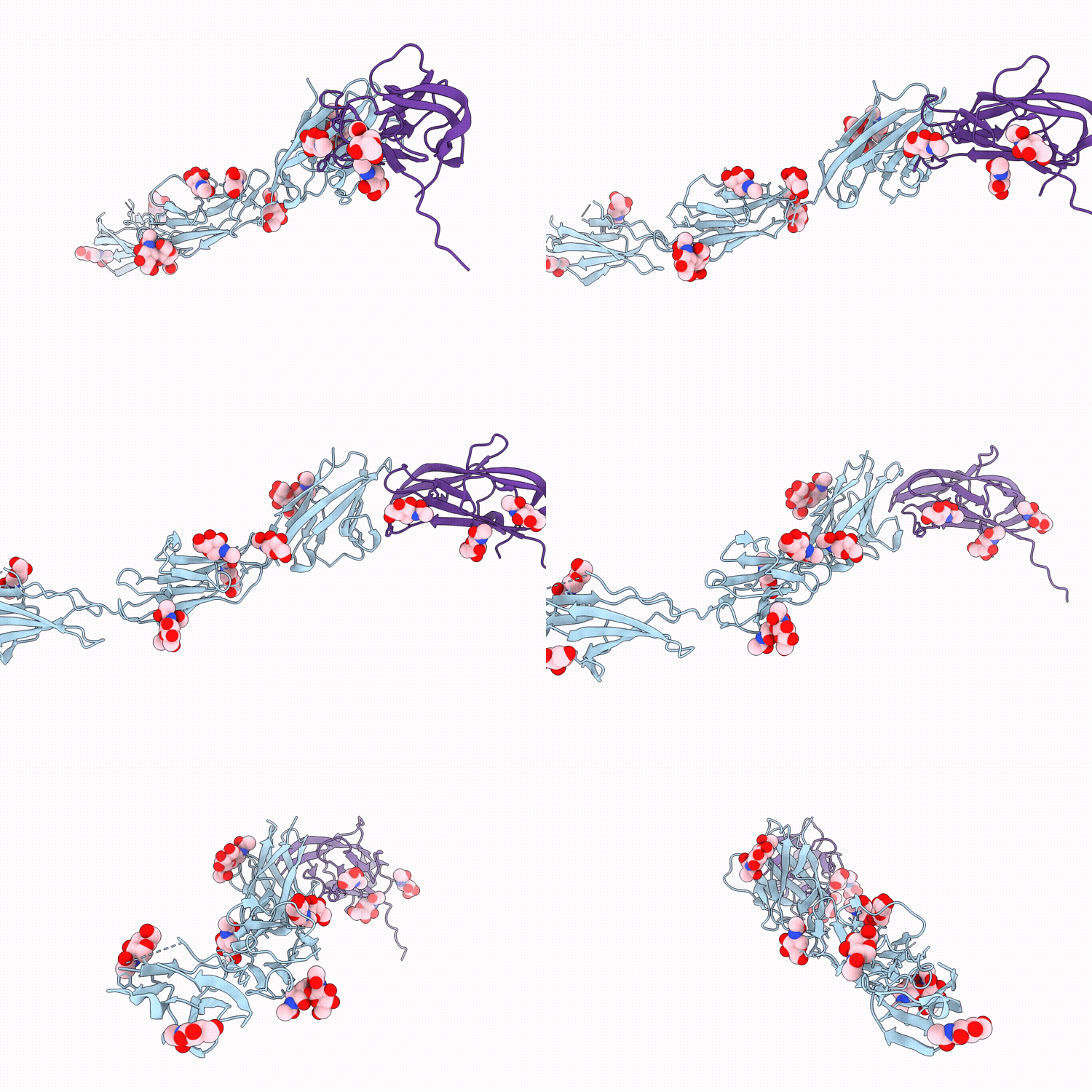
Cardioderma bat coronavirus 2B receptor binding domain in complex with human CEACAM6
Biological Source:
Source Organism(s):
Expression System(s):
Method Details:
Experimental Method:
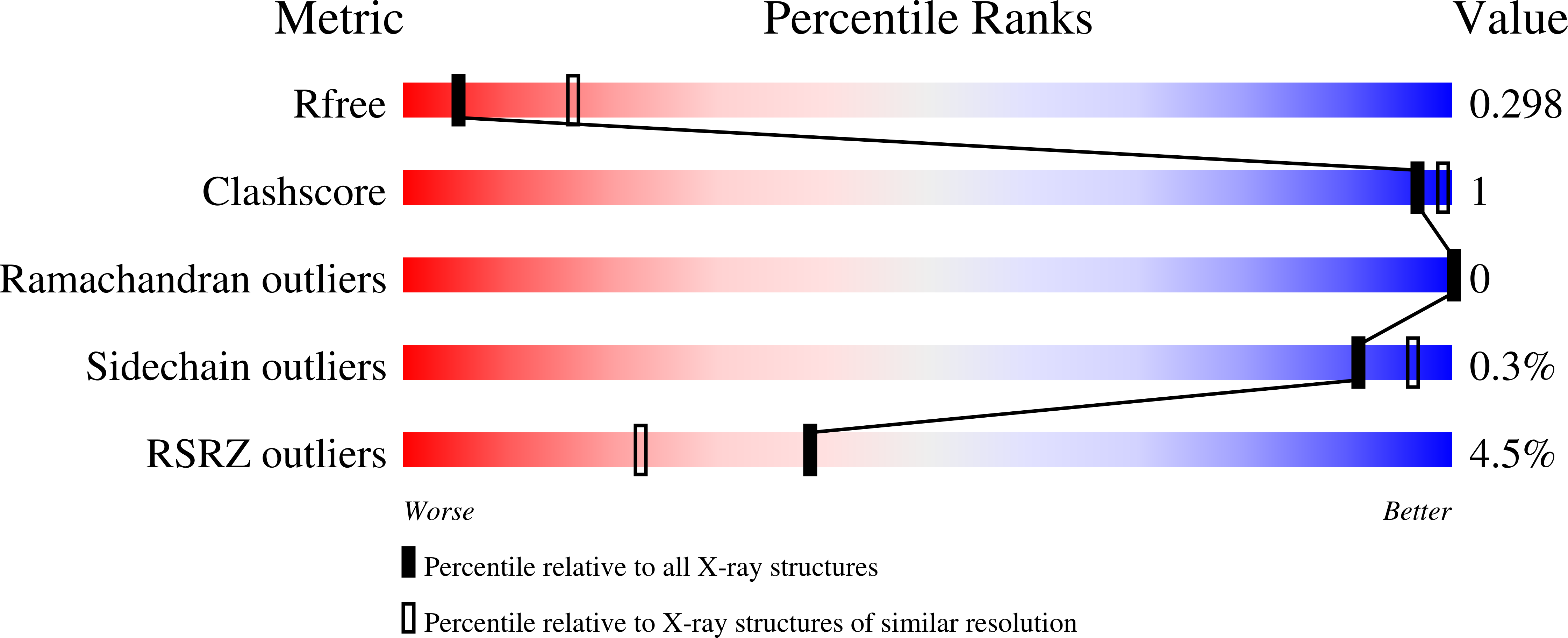
Resolution:
2.99 Å
R-Value Free:
0.29
R-Value Work:
0.25
R-Value Observed:
0.25
Space Group:
P 21 21 21
Macromolecular Entities
Structures with similar UniProt ID
Protein Blast
Polymer Type:polypeptide(L)
Molecule:Cell adhesion molecule CEACAM
Gene (Uniprot):CEACAM6
Chain IDs:A
Chain Length:299
Number of Molecules:1
Biological Source:Homo sapiens
Structures with similar UniProt ID
Protein Blast
Polymer Type:polypeptide(L)
Molecule:Spike protein
Chain IDs:B
Chain Length:150
Number of Molecules:1
Biological Source:Cardioderma bat coronavirus
Ligand Molecules
Primary Citation
Heart-nosed bat alphacoronaviruses use human CEACAM6 to enter cells.
Nature 653 180 189 (2026)
PMID: 42020746 DOI: 10.1038/s41586-026-10394-x

Abstact

Identifying viruses with zoonotic potential on the basis of their ability to enter human cells is a critical component of pandemic prediction, prevention and preparedness. Here using a computational approach that retains maximum phylogenetic diversity, we selected an optimal subset of alphacoronavirus spike proteins to screen against broad coronavirus receptor libraries. Most of the selected spike proteins did not use any of the established coronavirus receptors. However, the pseudotyped spike protein of Cardioderma cor (heart-nosed bat) coronavirus KY43 (CcCoV-KY43) could enter human cells. Using a recombinant CcCoV receptor-binding domain (RBD) and a human receptor screening platform, we identified direct interactions with the human CEACAM proteins CEACAM3, CEACAM5 and CEACAM6. Overexpression of human CEACAM6-a protein widely expressed in the human lung-conferred permissivity to otherwise refractory human cells. A crystal structure showed that the RBD binds the amino-terminal IgV-like domain of human CEACAM6. Immune surveillance studies using sera of individuals from the Taveta region of Kenya, where CcCoV-KY43 was identified, did not show significant evidence of recent spillover. Wider characterization of alphacoronaviruses related to CcCoV-KY43 showed that human CEACAM6 is used by two other CcCoVs collected in Kenya. Moreover, there was more restricted nonhuman CEACAM6 tropism for viruses isolated from Rhinolophus bats from Russia and China. Thus, alphacoronaviruses that use CEACAM6 are probably geographically widespread, and viruses from East Africa show potential for transmission to humans.

Legend

Protein

Chemical

Disease

Primary Citation of related structures
Feedback Form
Name
Email
Institute
Feedback