

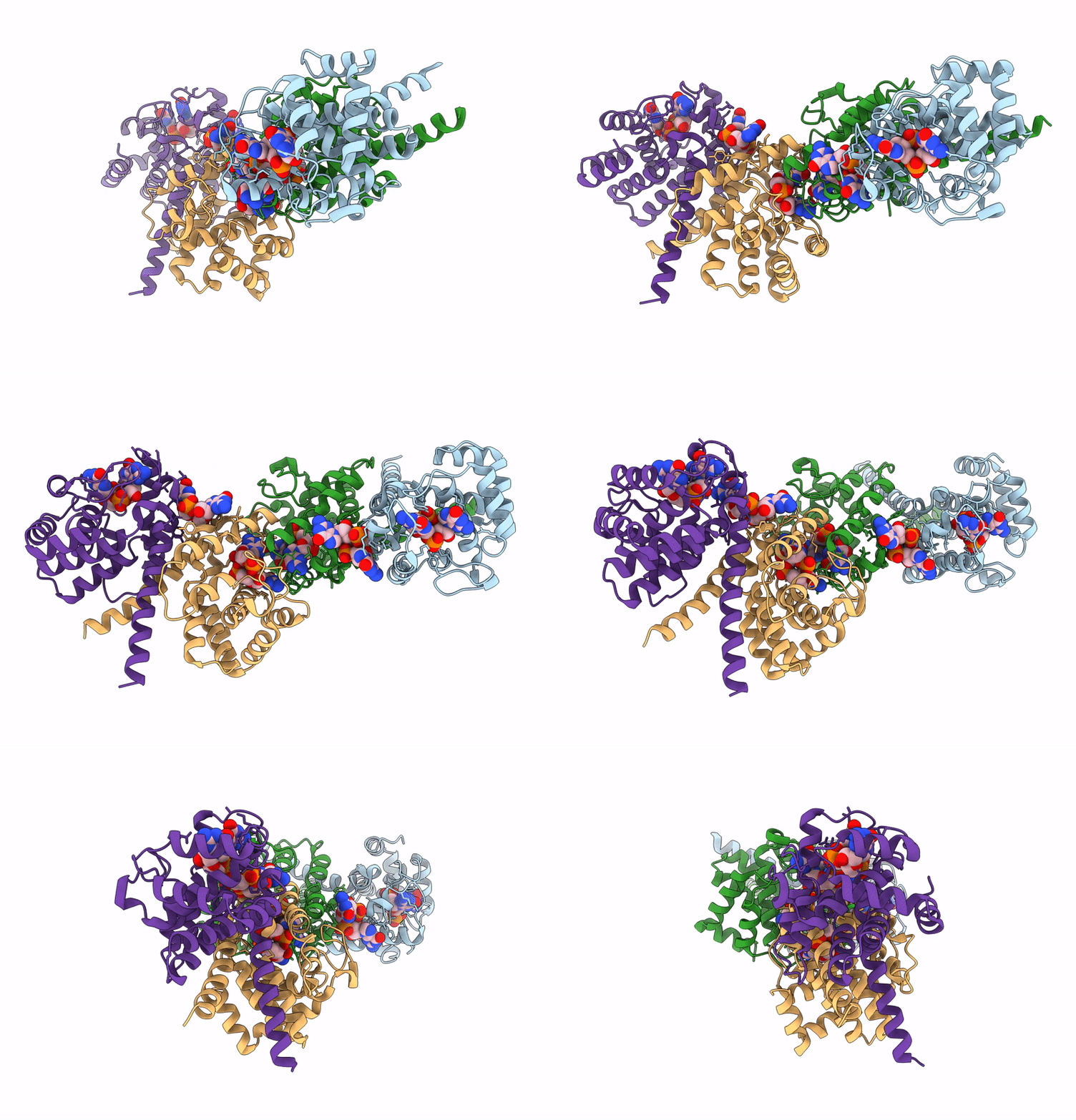
9RBZ image
Deposition Date 2025-05-27
Release Date 2026-03-04
Last Version Date 2026-04-29
Entry Detail
PDB ID:
9RBZ
Title:
DvhD, HD-GYP domain, c-di-GMP-bound
Biological Source:
Expression System(s):
Method Details:
Experimental Method:
Resolution:
1.80 Å
R-Value Free:
0.22
R-Value Work:
0.19
R-Value Observed:
0.19
Space Group:
P 1

Macromolecular Entities
Structures with similar UniProt ID
Protein Blast
Polymer Type:polypeptide(L)
Molecule:HD domain/sensory box protein
Chain IDs:A, B, C, D
Chain Length:211
Number of Molecules:4
Biological Source:Nitratidesulfovibrio vulgaris str. Hildenborough
Ligand Molecules
Primary Citation
Structural analyses uncover protease-adhesin interactions and c-di-GMP receptor regulation in sulfate-reducing bacteria.
Nat Commun 17 ? ? (2026)
PMID: 41998003 DOI: 10.1038/s41467-026-71936-5

Abstact

Desulfovibrio vulgaris is a sulfate-reducing organism with biofim-forming capacity relevant for bioremediation and microbe-induced corrosion. Biofilm formation of D. vulgaris depends on two large adhesins that are regulated by proteins encoded in the Dvh operon, which resembles the gammaproteobacterial Lap system in composition but differs in the sequence and domain organization of its regulatory proteins, DvhG and DvhD. We show that DvhG is a calcium-dependent protease that targets the periplasmic domains of both adhesins via extensive interactions. Additionally, structures of DvhD establish this HD-GYP domain-containing protein as a c-di-GMP-dependent switch with a periplasmic dCache domain. Our data support a model in which DvhD controls DvhG activity through a c-di-GMP-dependent mechanism that is molecularly distinct, but functionally analogous to LapD. Together, our results reveal how conserved regulatory logic can be implemented through distinct molecular architectures, highlighting the evolutionary flexibility of c-di-GMP signaling networks in controlling surface attachment across diverse bacterial lineages.

Legend

Protein

Chemical

Disease

Primary Citation of related structures
Feedback Form
Name
Email
Institute
Feedback