

9RBN image
Deposition Date 2025-05-27
Release Date 2026-05-27
Last Version Date 2026-05-27
Entry Detail
PDB ID:
9RBN
Keywords:
Title:
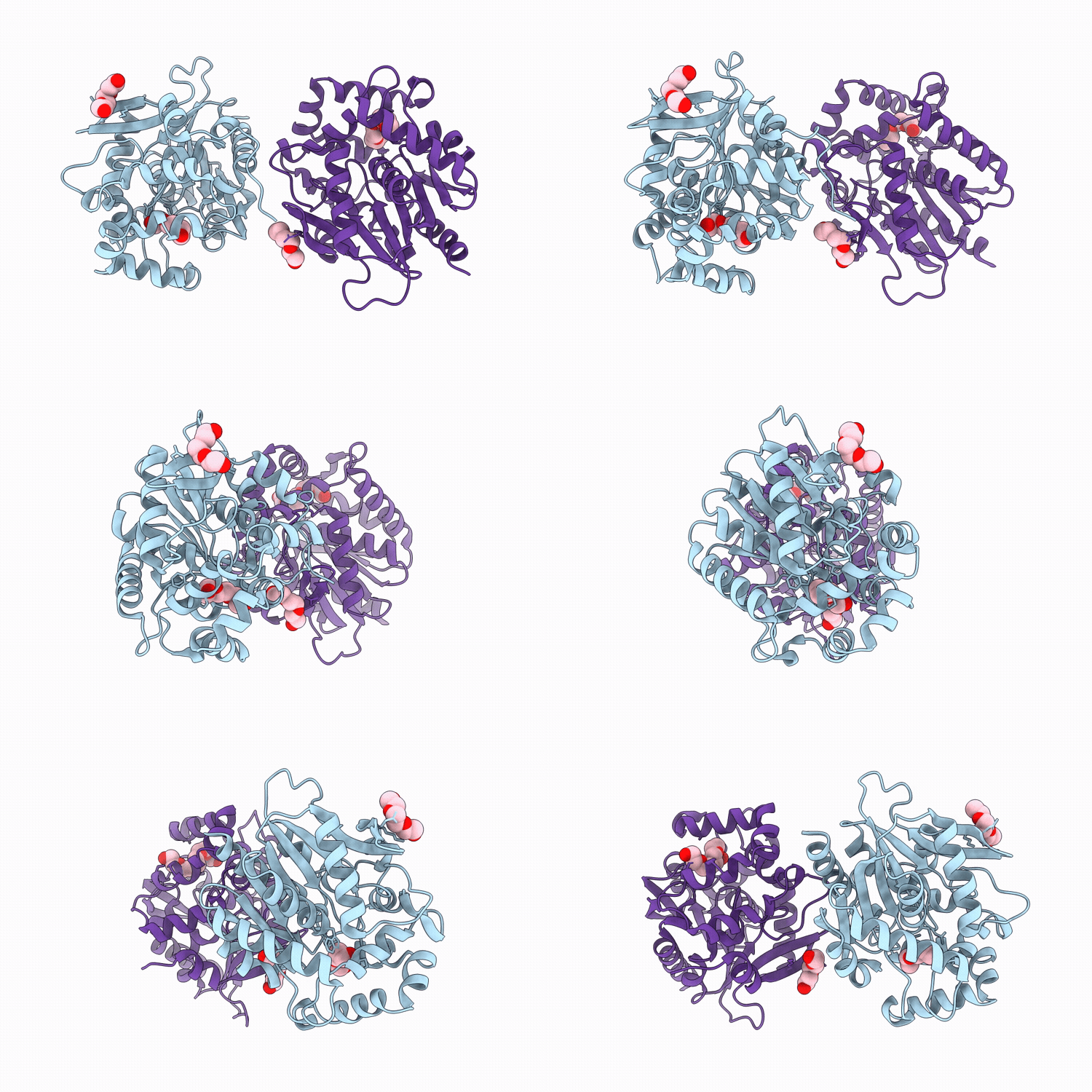
Structure of an ancestral bifunctional dehalogenase-luciferase enzyme Anc238Loc, space group C121
Biological Source:
Source Organism(s):
Expression System(s):
Method Details:
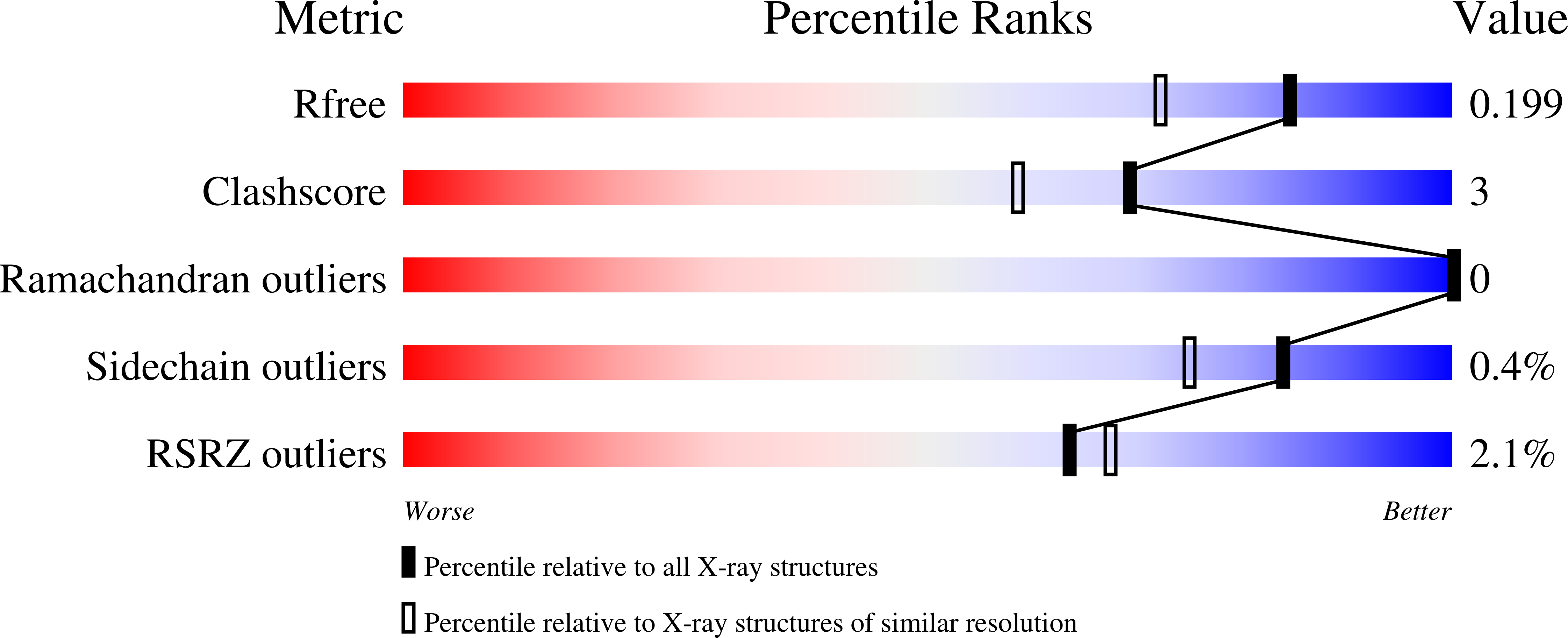
Experimental Method:
Resolution:
1.60 Å
R-Value Free:
0.19
R-Value Work:
0.15
R-Value Observed:
0.16
Space Group:
C 1 2 1
Macromolecular Entities
Protein Blast
Polymer Type:polypeptide(L)
Molecule:Ancestral bifunctional dehalo
Chain IDs:A, B
Chain Length:318
Number of Molecules:2
Biological Source:synthetic construct
Primary Citation
Structural insights into the evolution of alpha/beta-hydrolase fold luciferases.
Int.J.Biol.Macromol. 361 151870 151870 (2026)
PMID: 41951082 DOI: 10.1016/j.ijbiomac.2026.151870

Abstact

The alpha/beta-hydrolase (ABH) superfamily is a widespread and functionally versatile protein fold recognized for its ability to adapt to diverse molecular functions across all three domains of life. One such spectacular example of evolutionary adaptation at the ABH fold is an acquisition of oxygenolytic luciferase reaction that occurred within the hydrolytic haloalkane dehalogenase family. The molecular details of this evolution remain puzzling. In this work, we determine crystal structures and explore dynamical behaviour of a bifunctional ancestral ABH-fold enzyme, highlighting molecular features associated with the transition from hydrolytic to oxygenolytic catalysis at this fold. Structures showed a canonical alphabetaalpha-sandwich shielded with a helical cap domain. The catalytic pocket is voluminous enough to accommodate a bulky substrate. Molecular dynamics simulations demonstrated that coelenterazine entry does not present a major energetic barrier and identified a preferred binding orientation important for oxygenolytic catalysis. Comparisons between ancestral and extant enzymes highlighted specific amino acids and sequence motifs characteristic for oxygenolytic luciferases. Collectively, our results provide an expanded view of the evolutionary transition in which ABH-fold enzymes, originally using water to cleave chemical bonds, adapted to utilize dioxygen for bioluminescence.

Legend

Protein

Chemical

Disease

Primary Citation of related structures
Feedback Form
Name
Email
Institute
Feedback