

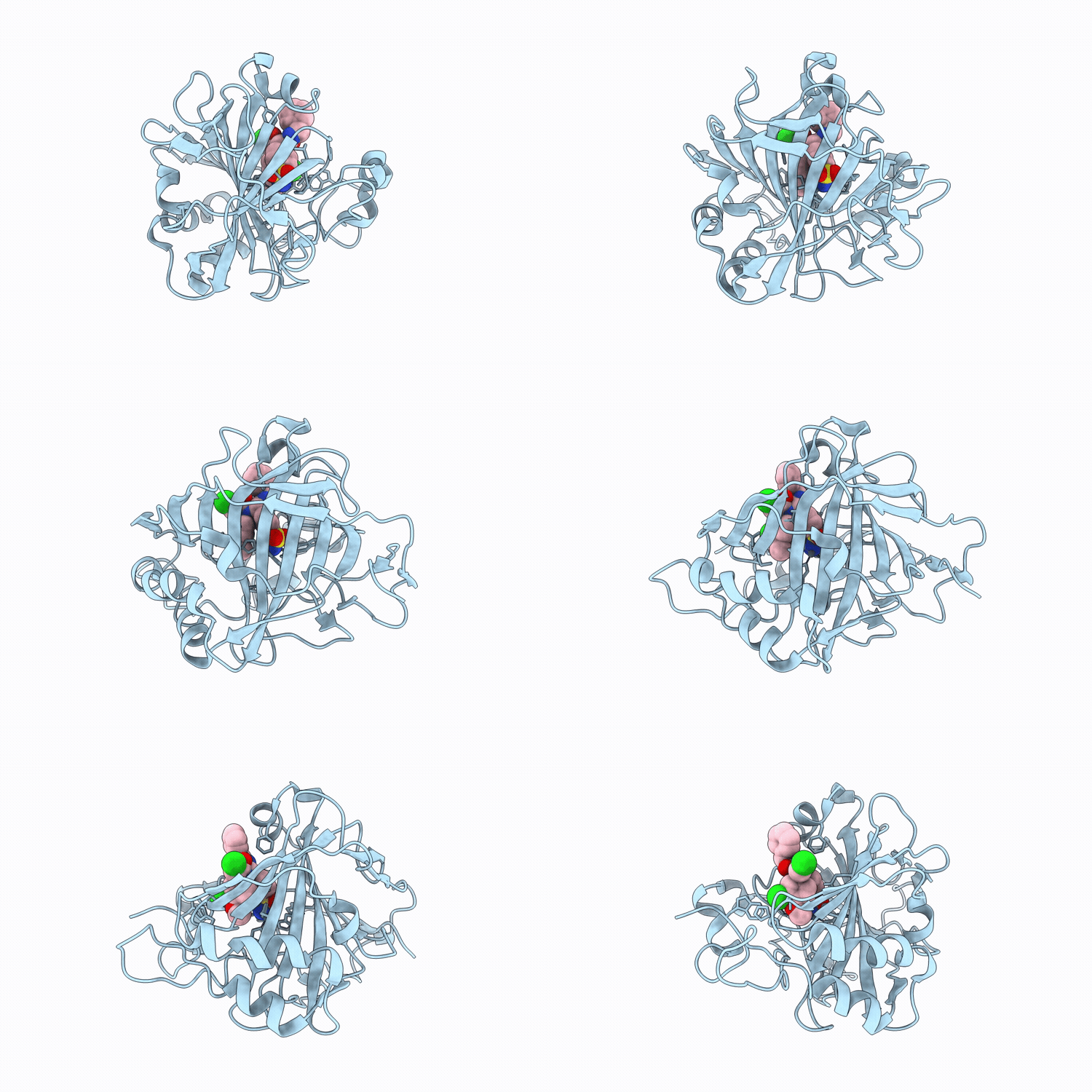
9RAY image
Deposition Date 2025-05-21
Release Date 2026-04-01
Last Version Date 2026-04-01
Entry Detail
PDB ID:
9RAY
Keywords:
Title:
Crystal structure of human carbonic anhydrase I in complex with N-benzyl-2-(2-chloro-N-(3-chloro-4-methoxyphenyl)acetamido)-2-(4-sulfamoylphenyl)acetamide
Biological Source:
Source Organism(s):
Homo sapiens (Taxon ID: 9606)
Expression System(s):
Method Details:
Experimental Method:
Resolution:
1.31 Å
R-Value Free:
0.22
R-Value Work:
0.19
Space Group:
P 1 21 1

Macromolecular Entities
Structures with similar UniProt ID
Protein Blast
Polymer Type:polypeptide(L)
Molecule:Carbonic anhydrase 2
Gene (Uniprot):CA2
Chain IDs:A (auth: AAA)
Chain Length:260
Number of Molecules:1
Biological Source:Homo sapiens
Primary Citation
Dual inhibition of carbonic anhydrase IX and glutathione peroxidase 4 as a novel strategy for ferroptosis-induced tumor cell death.
Eur J Med Chem 300 118107 118107 (2025)
PMID: 40929808 DOI: 10.1016/j.ejmech.2025.118107

Abstact

In this study, we explored a dual-target strategy combining the inhibition of human carbonic anhydrase IX (hCA IX), a tumor-associated isoform, and glutathione peroxidase 4 (GPX4), a key regulator of ferroptosis. We demonstrated that the simultaneous inhibition of hCA IX and GPX4 disrupts redox and iron homeostasis, thereby enhancing cell death via ferroptosis. Three series of compounds were rationally designed and synthesized based on the ML162 scaffold using an integrated structural approach and their enzymatic inhibition was evaluated in vitro. Several dual-target compounds exhibited significant antitumor activity, with 18a-c, 22abab and 22abcb inducing dose-dependent cell death. In vivo, intratumoral administration of the lead active compound, 22abcb, significantly prevented the growth of CA IX-expressing human breast cancer xenografts, compared to inactive 22abbb. The effect on tumour growth was significantly reversed by the ferroptosis inhibitor, Fer-1, confirming ferroptosis as the underlying mechanism. These findings highlight the synergistic potential of dual-target inhibitors in disrupting tumor-specific metabolic pathways and position them as a promising therapeutic strategy for solid tumors.

Legend

Protein

Chemical

Disease

Primary Citation of related structures
Feedback Form
Name
Email
Institute
Feedback