

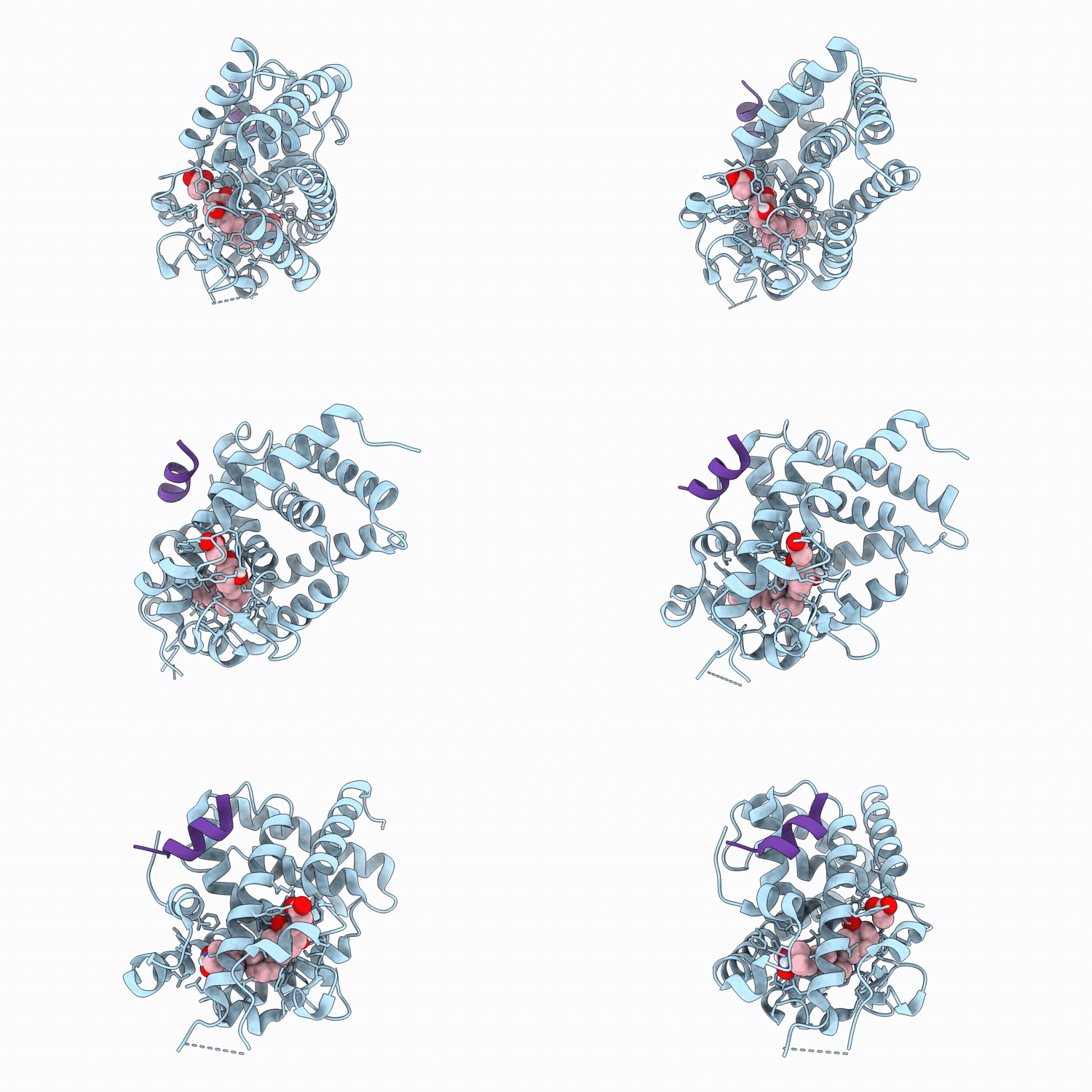
9RAP image
Deposition Date 2025-05-21
Release Date 2026-04-08
Last Version Date 2026-04-08
Entry Detail
PDB ID:
9RAP
Keywords:
Title:
VDR complex with UG-635
Biological Source:
Source Organism(s):
Danio rerio (Taxon ID: 7955)
Homo sapiens (Taxon ID: 9606)
Expression System(s):
Method Details:
Experimental Method:
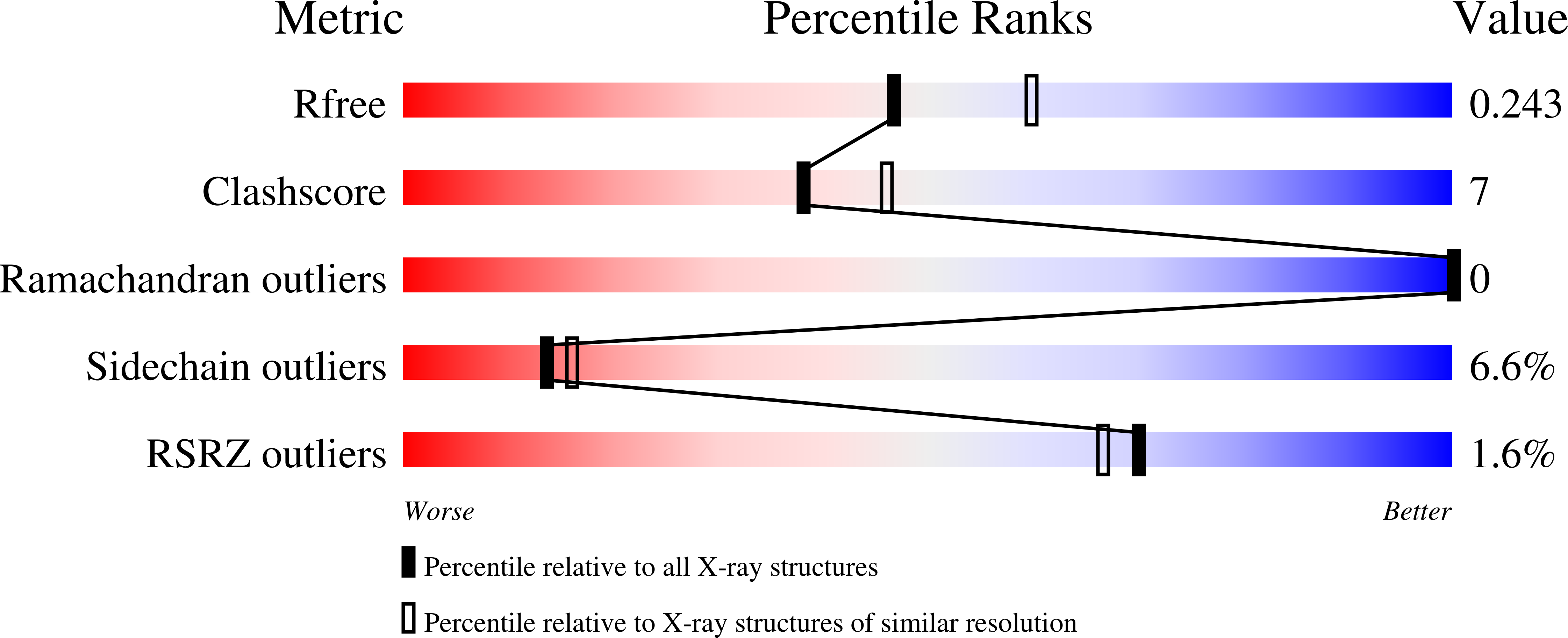
Resolution:
2.20 Å
R-Value Free:
0.24
R-Value Work:
0.19
R-Value Observed:
0.20
Space Group:
P 65 2 2
Macromolecular Entities
Structures with similar UniProt ID
Protein Blast
Polymer Type:polypeptide(L)
Molecule:Vitamin D3 receptor A
Gene (Uniprot):vdra
Chain IDs:A
Chain Length:302
Number of Molecules:1
Biological Source:Danio rerio
Structures with similar UniProt ID
Protein Blast
Polymer Type:polypeptide(L)
Molecule:Nuclear receptor coactivator
Gene (Uniprot):NCOA2
Chain IDs:B
Chain Length:13
Number of Molecules:1
Biological Source:Homo sapiens
Primary Citation
25-nitro-20-epi-vitamin D analogue with anti-proliferative and cytoprotective properties: Biological and pharmacological evaluation.
Exp Mol Pathol 145 105036 105036 (2026)
PMID: 41734645 DOI: 10.1016/j.yexmp.2026.105036

Abstact

We report the synthesis and pharmacological evaluation of UG-635, a novel 25-nitro vitamin D analogue bearing a 20-epimeric configuration. Cytotoxicity studies in SH-SY5Y neuroblastoma and HepG2 hepatocarcinoma cells showed that UG-635 is well tolerated at low concentrations but reduces viability at higher doses. Importantly, UG-635 demonstrated protective effects against oxidative stress in neuronal cells and exhibited anti-proliferative activity in breast cancer (MCF7) and osteoblast (MC3T3-E1) models, with efficacy comparable to calcitriol. Structural and crystallographic analyses revealed efficient binding to the vitamin D receptor (VDR), stabilizing its active conformation through favorable interactions with anchoring histidines. These findings highlight UG-635 as a promising vitamin D analogue with potential pharmacological relevance in cancer and neurodegenerative disease contexts, combining anti-proliferative and cytoprotective properties.

Legend

Protein

Chemical

Disease

Primary Citation of related structures
Feedback Form
Name
Email
Institute
Feedback