

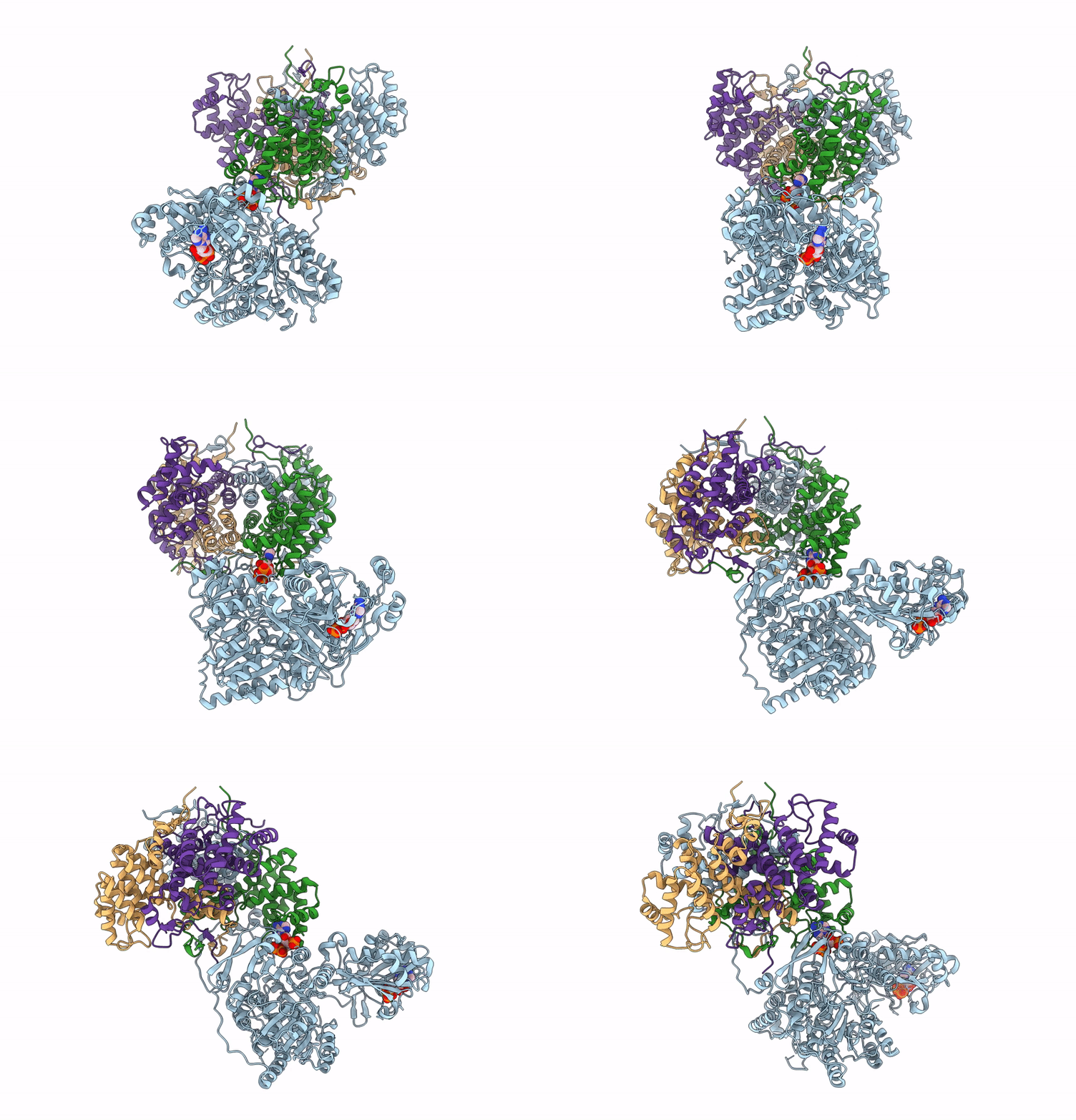
9R90 image
Deposition Date 2025-05-18
Release Date 2026-03-04
Last Version Date 2026-03-04
Entry Detail
PDB ID:
9R90
Keywords:
Title:
Cryo-EM structure of human ATP citrate lyase in complex with inhibitor EVT0185-CoA
Biological Source:
Source Organism(s):
Homo sapiens (Taxon ID: 9606)
Expression System(s):
Method Details:
Experimental Method:
Resolution:
3.25 Å
Aggregation State:
PARTICLE
Reconstruction Method:
SINGLE PARTICLE
Macromolecular Entities
Structures with similar UniProt ID
Protein Blast
Polymer Type:polypeptide(L)
Molecule:Isoform 2 of ATP-citrate synt
Gene (Uniprot):ACLY
Chain IDs:A, B, C, D
Chain Length:1120
Number of Molecules:4
Biological Source:Homo sapiens
Primary Citation

Abstact

Immunosuppressive tumour microenvironments are common in cancers such as metabolic dysfunction-associated steatohepatitis (MASH)-driven hepatocellular carcinoma (HCC) (MASH-HCC)(1-3). Although immune cell metabolism influences effector function, the effect of tumour metabolism on immunogenicity is less understood(4). ATP citrate lyase (ACLY) links substrate availability and mitochondrial metabolism with lipid biosynthesis and gene regulation(5-7). Although ACLY inhibition shows antiproliferative effects in various tumours, clinical translation has been limited by challenges in inhibitor development and compensatory metabolic pathways(8-12). Here, using a mouse model of MASH-HCC that mirrors human disease, genetic inhibition of ACLY in hepatocytes and tumours reduced neoplastic lesions by over 70%. To evaluate the therapeutic potential of this pathway, a novel small-molecule ACLY inhibitor, EVT0185 (6-[4-(5-carboxy-5-methyl-hexyl)-phenyl]-2,2-dimethylhexanoic acid), was identified via phenotypic screening. EVT0185 is converted to a CoA thioester in the liver by SLC27A2 and structural analysis by cryo-electron microscopy reveals that EVT0185-CoA directly interacts with the CoA-binding site of ACLY. Oral delivery of EVT0185 in three mouse models of MASH-HCC dramatically reduces tumour burden as monotherapy and enhances efficacy of current standards of care including tyrosine kinase inhibitors and immunotherapies. Transcriptomic and spatial profiling in mice and humans linked reduced tumour ACLY with increases in the chemokine CXCL13, tumour-infiltrating B cells and tertiary lymphoid structures. The depletion of B cells blocked the antitumour effects of ACLY inhibition. Together, these findings illustrate how targeting tumour metabolism can rewire immune function and suppress cancer progression in MASH-HCC.

Legend

Protein

Chemical

Disease

Primary Citation of related structures
Feedback Form
Name
Email
Institute
Feedback