

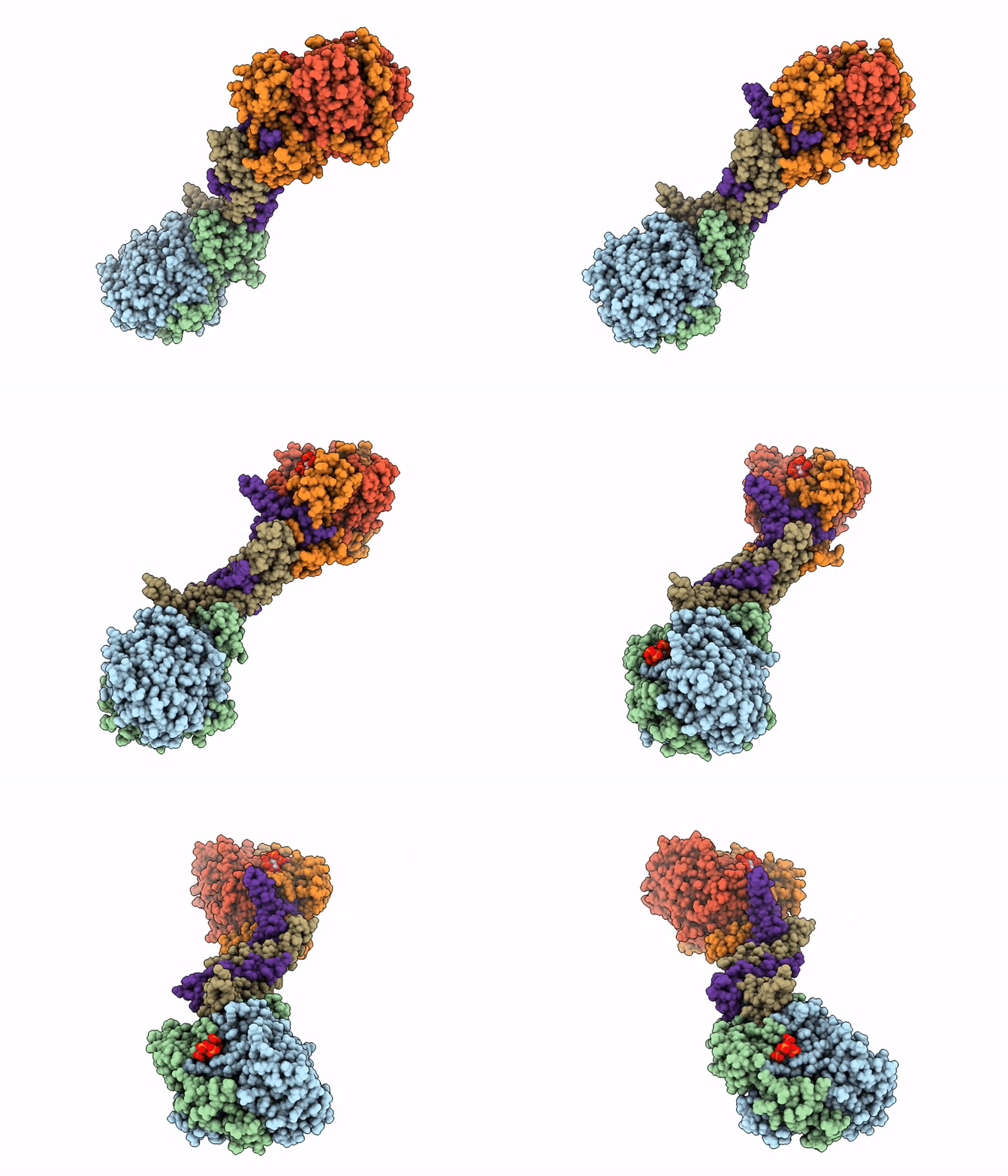
9R4I image
Deposition Date 2025-05-07
Release Date 2026-02-25
Last Version Date 2026-02-25
Entry Detail
PDB ID:
9R4I
Keywords:
Title:
An auto inhibitory loop in the MiDAC histone deacetylase complex
Biological Source:
Source Organism(s):
Homo sapiens (Taxon ID: 9606)
Expression System(s):
Method Details:
Experimental Method:
Resolution:
2.92 Å
Aggregation State:
PARTICLE
Reconstruction Method:
SINGLE PARTICLE

Macromolecular Entities
Polymer Type:polypeptide(L)
Molecule:Histone deacetylase 1
Gene (Uniprot):HDAC1
Chain IDs:A, D
Chain Length:482
Number of Molecules:2
Biological Source:Homo sapiens
Polymer Type:polypeptide(L)
Molecule:Mitotic deacetylase-associate
Gene (Uniprot):MIDEAS
Chain IDs:B, E
Chain Length:260
Number of Molecules:2
Biological Source:Homo sapiens
Polymer Type:polypeptide(L)
Molecule:Deoxynucleotidyltransferase t
Gene (Uniprot):DNTTIP1
Chain IDs:C, F
Chain Length:329
Number of Molecules:2
Biological Source:Homo sapiens
Primary Citation
A de novo missense variant in MIDEAS results in increased deacetylase activity of the MiDAC HDAC complex causing a neurodevelopmental syndrome.
Nat Commun 16 10472 10472 (2025)
PMID: 41290615 DOI: 10.1038/s41467-025-65472-x

Abstact

MIDEAS is a scaffold protein that, together with DNTTIP1, mediates assembly of the MiDAC histone deacetylase complex. Mice lacking MiDAC die before birth suggesting a key developmental function. Here, we report two unrelated individuals, with a multisystem disorder characterised by delayed speech development, joint contractures, dysmorphic features and dysmotility of the gut. Both individuals have the same de novo heterozygous missense variant in MIDEAS (p.Tyr654Ser). A cryoEM structure of the MiDAC complex reveals that this amino acid is located in a conserved auto-inhibitory loop that covers the active site of the deacetylase enzyme. We suggest that the variant results in loop displacement leading to elevated deacetylase activity. In support, we observe reciprocal gene expression changes in patient fibroblasts compared with a cell line following rapid MiDAC degradation. Our results establish MIDEAS as a dominant monogenic disease gene and that hyperactivity of the MiDAC complex results in a characteristic multisystem disorder.

Legend

Protein

Chemical

Disease

Primary Citation of related structures
Feedback Form
Name
Email
Institute
Feedback