

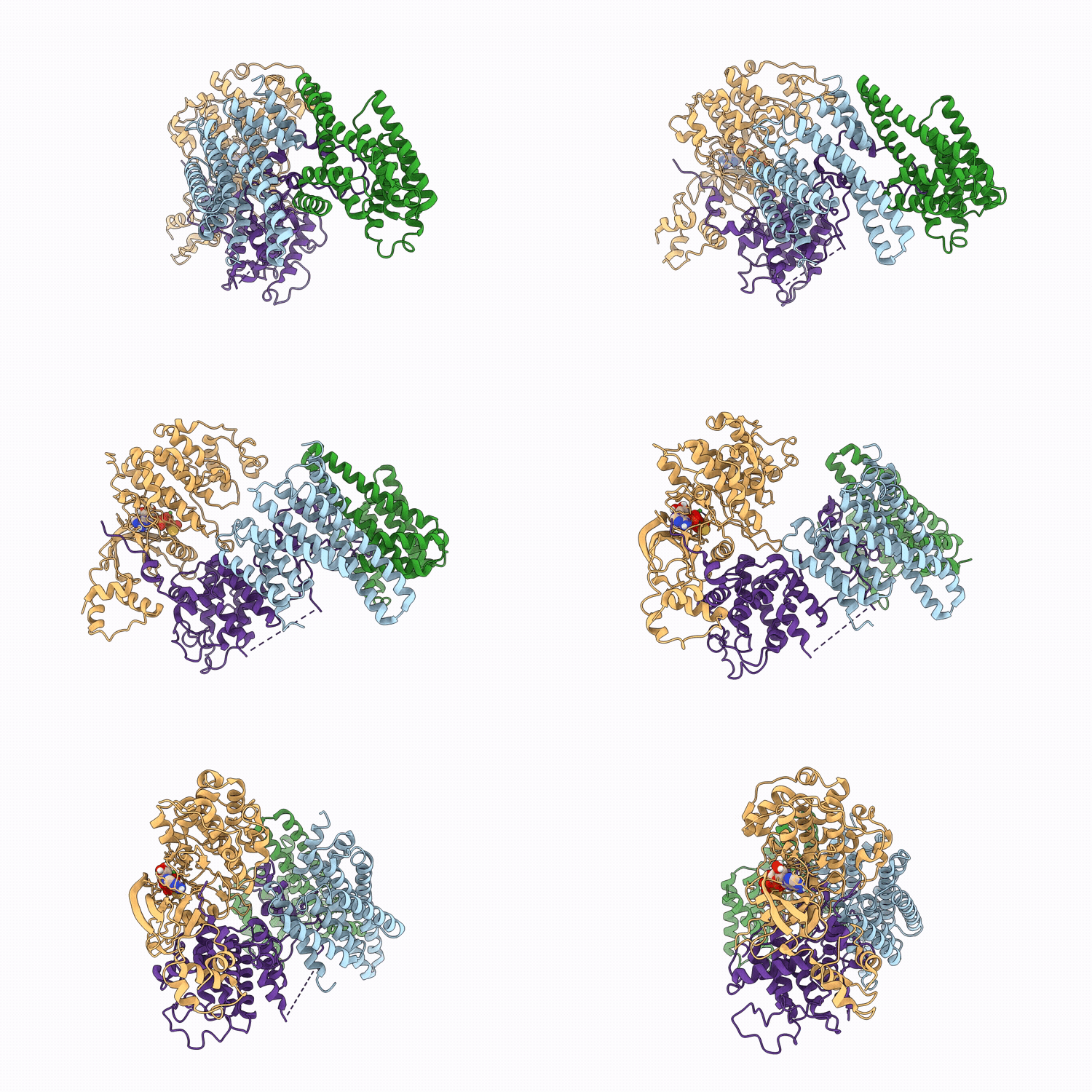
9R2I image
Deposition Date 2025-04-30
Release Date 2026-03-25
Last Version Date 2026-05-27
Entry Detail
PDB ID:
9R2I
Title:
Cryo-EM structure of the complex CDK16:CCNY:14-3-3
Biological Source:
Source Organism(s):
Homo sapiens (Taxon ID: 9606)
Expression System(s):
Method Details:
Experimental Method:
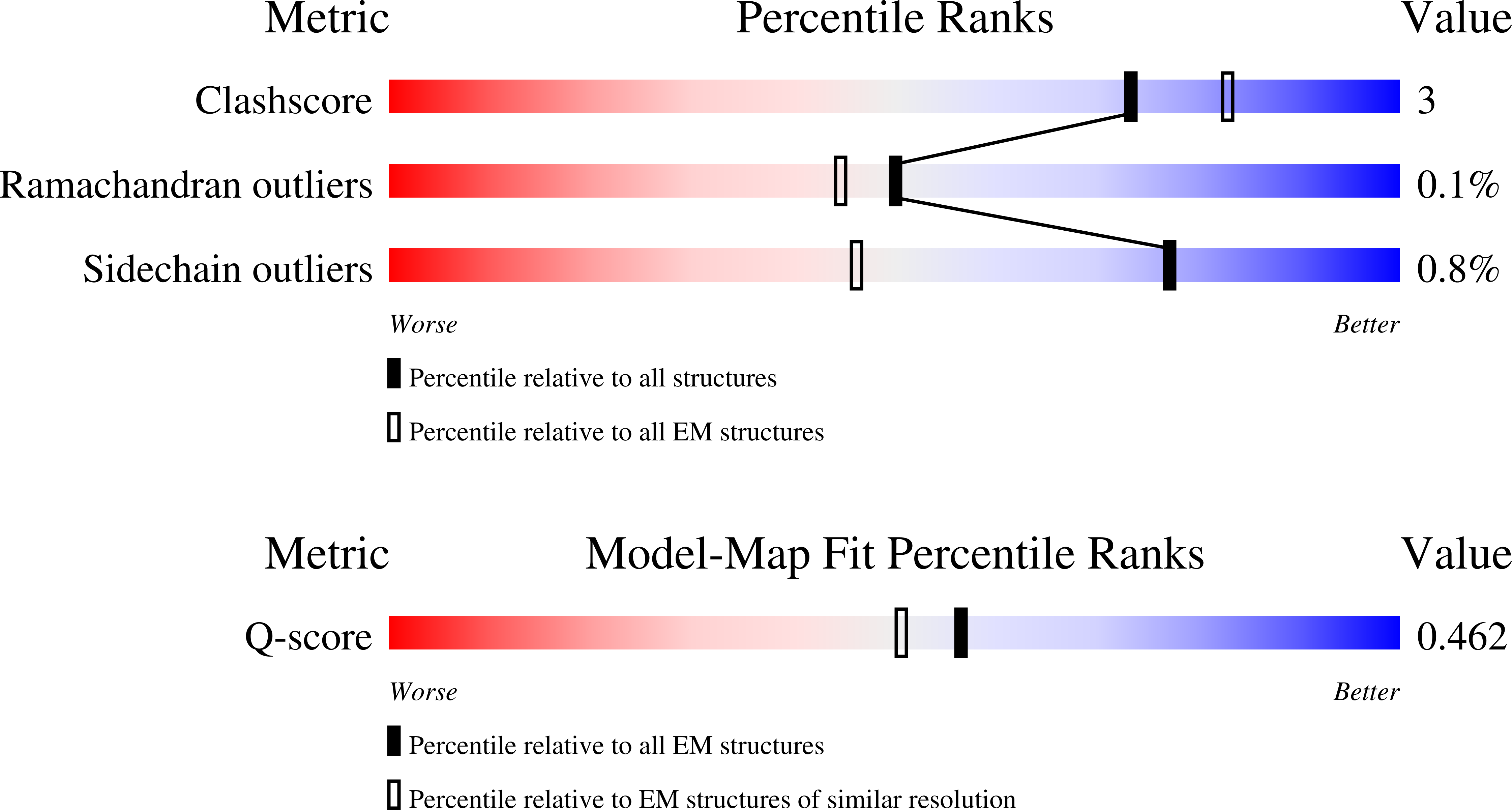
Resolution:
3.30 Å
Aggregation State:
PARTICLE
Reconstruction Method:
SINGLE PARTICLE
Macromolecular Entities
Structures with similar UniProt ID
Protein Blast
Polymer Type:polypeptide(L)
Molecule:14-3-3 protein eta
Gene (Uniprot):YWHAH
Chain IDs:A, B
Chain Length:248
Number of Molecules:2
Biological Source:Homo sapiens
Structures with similar UniProt ID
Protein Blast
Polymer Type:polypeptide(L)
Molecule:Cyclin-dependent kinase 16
Gene (Uniprot):CDK16
Chain IDs:C
Chain Length:395
Number of Molecules:1
Biological Source:Homo sapiens
Structures with similar UniProt ID
Protein Blast
Polymer Type:polypeptide(L)
Molecule:Cyclin-Y
Gene (Uniprot):CCNY
Chain IDs:D
Chain Length:346
Number of Molecules:1
Biological Source:Homo sapiens
Modified Residue
Compound ID Chain ID Parent Comp ID Details 2D Image
SEP D SER modified residue
Primary Citation
Structural basis of the cyclin Y/14-3-3 protein-mediated activation of CDK16.
Nat Commun 17 ? ? (2026)
PMID: 41857027 DOI: 10.1038/s41467-026-70778-5

Abstact

Cyclin-dependent protein kinase 16 (CDK16) regulates both physiological and pathological processes, including autophagy, spermatogenesis and cancer. Unlike other CDKs, CDK16 is regulated by an unclear mechanism involving phosphorylated cyclin Y (CCNY) in complex with 14-3-3 proteins rather than CCNY alone. The present study aims at elucidating this mechanism by structurally characterizing CDK16 in complex with CCNY and 14-3-3 using several biophysical techniques. As shown by cryo-EM analysis and hydrogen/deuterium exchange coupled to mass spectrometry, 14-3-3 binding modulates the conformation of a key moiety of the CDK binding surface of CCNY, thereby enabling CDK16 activation. CDK16 interacts with the cyclin box of CCNY, while 14-3-3 provides additional contacts, including with the activation segment of CDK16. CDK16 activation also requires interactions of CCNY with the N-terminal extension of CDK16. These findings not only clarify the role of CCNY and 14-3-3 in CDK16 activation but also highlight the potential of targeting CDK16 protein-protein interactions for cancer therapy.

Legend

Protein

Chemical

Disease

Primary Citation of related structures
Feedback Form
Name
Email
Institute
Feedback