

9QXQ image
Deposition Date 2025-04-16
Release Date 2026-02-11
Last Version Date 2026-05-20
Entry Detail
PDB ID:
9QXQ
Keywords:
Title:
native structure of full-length pesticidal protein Cry1Ca18 at pH9, from crystals formed in vivo
Biological Source:
Source Organism(s):
Method Details:
Experimental Method:
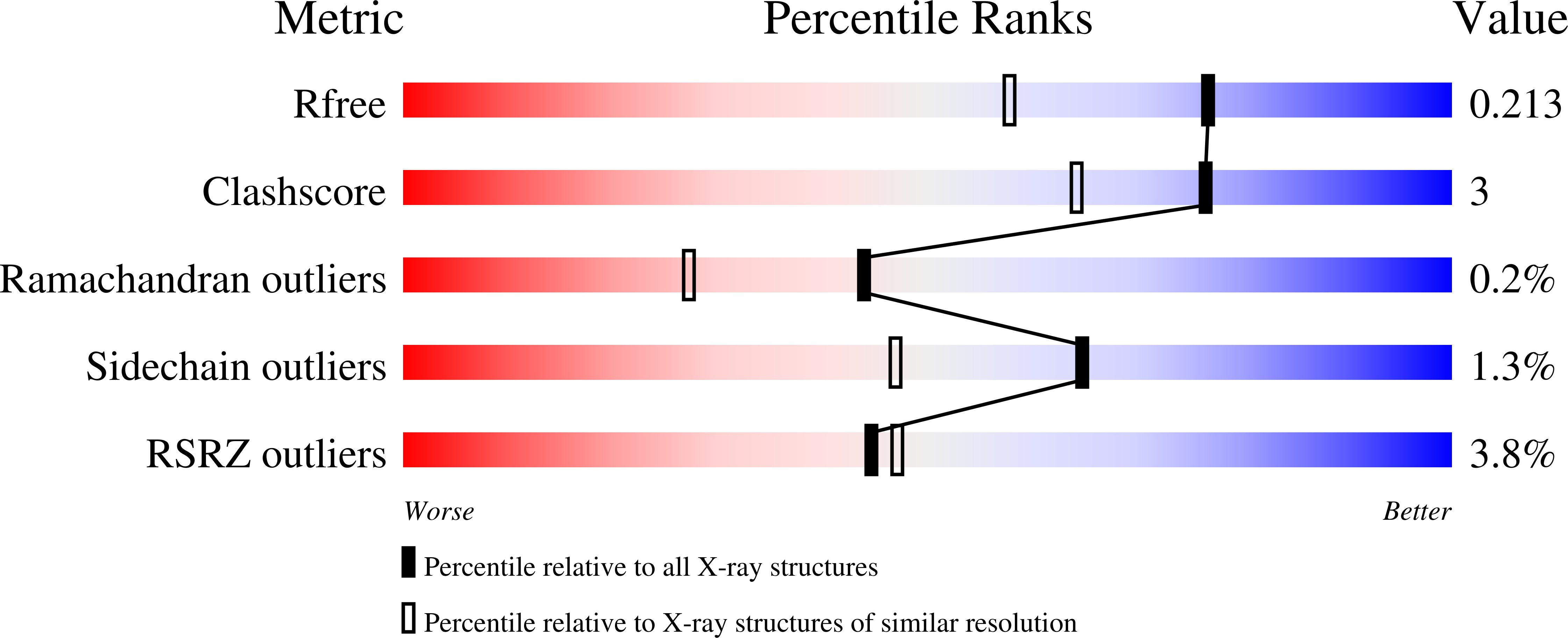
Resolution:
1.65 Å
R-Value Free:
0.20
R-Value Work:
0.17
R-Value Observed:
0.17
Space Group:
P 41 21 2
Macromolecular Entities
Structures with similar UniProt ID
Protein Blast
Polymer Type:polypeptide(L)
Molecule:Crystaline entomocidal protox
Gene (Uniprot):cry1Ca6
Chain IDs:A
Chain Length:1189
Number of Molecules:1
Biological Source:Bacillus thuringiensis
Modified Residue
Compound ID Chain ID Parent Comp ID Details 2D Image
CSO A CYS modified residue
Primary Citation

Abstact

Bacillus thuringiensis (Bt) strains naturally produce pesticidal proteins as nanocrystalline inclusions that are extraordinarily stable in aqueous environments, but which dissolve selectively at specific pH conditions. These proteins have been used in agriculture for >50 years and are critical to global food security. The majority of previously determined Bt Cry protein structures lack the extended C-terminal "crystallization domain," which is thought to stabilize crystal packing and control selective solubility in insect targets, often via manipulation of disulfide bridges. It has also recently been shown to influence toxicity and target specificity. Here, we use serial femtosecond crystallography (SFX) to determine high-resolution full-length native structures of Cry1Ca18 (1.65 A) and Cry8Ba2 (2.27 A) in their natural nanocrystalline state. Differences in cysteine content (19 versus 4 residues) reveal distinct in vivo crystal-stabilization strategies. Understanding Bt toxin domain architecture and natural crystal formation is essential for improving biopesticide design and advancing agricultural genetic engineering.

Legend

Protein

Chemical

Disease

Primary Citation of related structures
Feedback Form
Name
Email
Institute
Feedback