

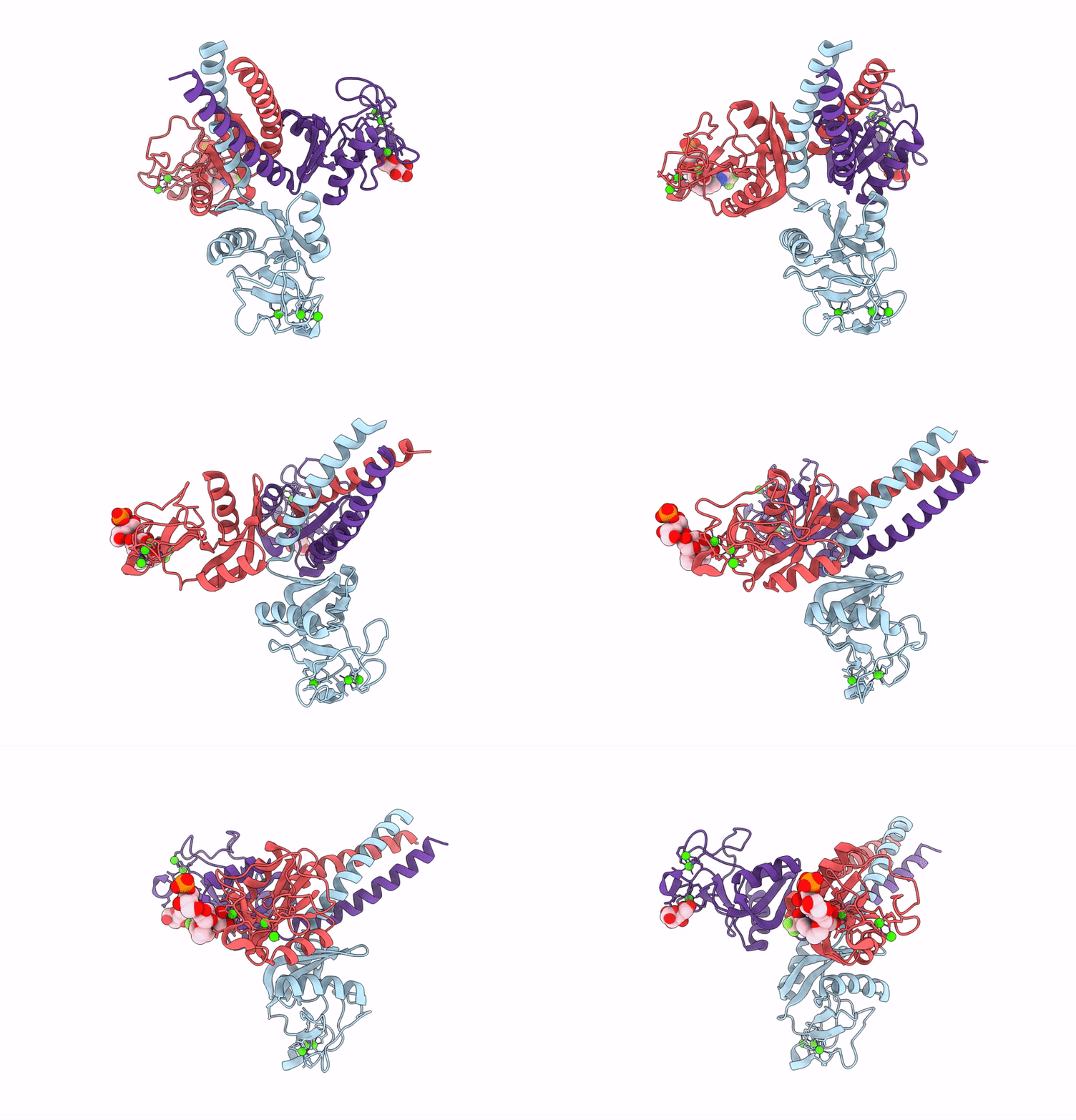
9QW4 image
Deposition Date 2025-04-14
Release Date 2026-03-04
Last Version Date 2026-04-01
Entry Detail
PDB ID:
9QW4
Title:
Crystal structure of human lung surfactant protein D trimeric fragment with bound synthetic PhosII-HepII-HepI ligand
Biological Source:
Source Organism(s):
Homo sapiens (Taxon ID: 9606)
Expression System(s):
Method Details:
Experimental Method:
Resolution:
1.85 Å
R-Value Free:
0.20
R-Value Work:
0.17
Space Group:
P 1 21 1

Macromolecular Entities
Structures with similar UniProt ID
Protein Blast
Polymer Type:polypeptide(L)
Molecule:Pulmonary surfactant-associat
Gene (Uniprot):SFTPD
Chain IDs:A, B, C
Chain Length:177
Number of Molecules:3
Biological Source:Homo sapiens
Primary Citation
Phosphorylation of inner core heptose is a major determinant of bacterial surface lipopolysaccharide recognition by the innate immune protein hSP-D.
J. Biol. Chem. 302 111307 111307 (2026)
PMID: 41724382 DOI: 10.1016/j.jbc.2026.111307

Abstact

The innate immune protein human surfactant protein D (SP-D) recognizes pathogens in the lungs via binding to carbohydrate surface structures. SP-D targets gram-negative bacterial lipopolysaccharide via calcium-dependent binding, preferentially to the inner core heptose (HepI). To further investigate this recognition, we have determined the high-resolution crystal structures of a trimeric recombinant fragment of human SP-D complexed with synthetic di-saccharide and trisaccharides, HepI-Kdo, HepIII-HepII-HepI, and HepII-HepI phosphorylated at either HepI or HepII, inner core lipopolysaccharide motifs common to many gram-negative bacteria. In contrast to acid-hydrolyzed lipopolysaccharide used in several previous studies, these synthetic saccharides allow the presentation of both the innermost Kdo in its natural pyranose form and heptose phosphorylation. The structures confirm the flexibility of SP-D to adopt alternative binding modes when the preferred epitope is not available, reveal a preference for recognition of the reducing terminal heptose (HepI) via the glyceryl group, indicate that a single Kdo attached to HepI does not have a significant role in ligand recognition, and provide evidence that heptose phosphorylation is a major determinant of recognition. The disaccharide with HepII O4' phosphorylation binds via the preferred HepI glyceryl-hydroxyls, while HepI O4' phosphorylation reveals HepII binding via the pyranose ring O3' and O4' hydroxyls, which would not be possible with the usual HepII O3' link to the outer core. The ability of HepI O4' phosphorylation to prevent preferred HepI recognition suggests a role for heptose phosphorylation in shielding the bacterial LPS inner core from immune recognition.

Legend

Protein

Chemical

Disease

Primary Citation of related structures
Feedback Form
Name
Email
Institute
Feedback