

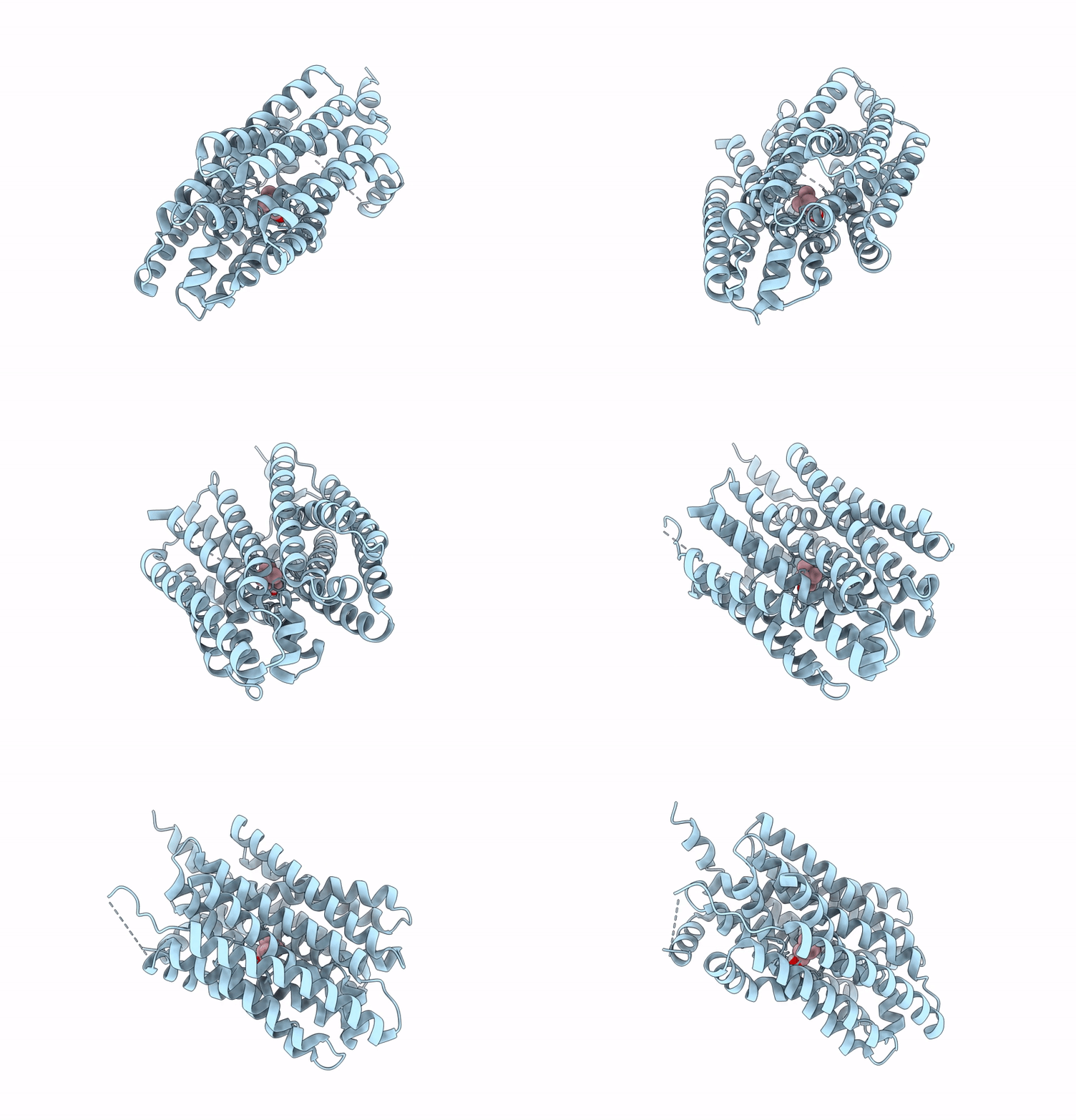
9QU4 image
Deposition Date 2025-04-10
Release Date 2025-06-11
Last Version Date 2026-05-27
Entry Detail
PDB ID:
9QU4
Title:
Cryo-EM structure of the inward-open choline-bound state of choline/ethanolamine transporter FLVCR2
Biological Source:
Source Organism(s):
Homo sapiens (Taxon ID: 9606)
Expression System(s):
Method Details:
Experimental Method:
Resolution:
3.39 Å
Aggregation State:
PARTICLE
Reconstruction Method:
SINGLE PARTICLE
Macromolecular Entities
Protein Blast
Polymer Type:polypeptide(L)
Molecule:Immunoglobulin G-binding prot
Gene (Uniprot):spa, FLVCR2
Chain IDs:A
Chain Length:597
Number of Molecules:1
Biological Source:Homo sapiens
Ligand Molecules
Primary Citation
Structural and biochemical comparison of the FLVCR and CTL membrane protein families in eukaryotes.
Life Sci Alliance 9 ? ? (2026)
PMID: 42114998 DOI: 10.26508/lsa.202503583

Abstact

The organic cation choline is essential for eukaryotic metabolism. Recently, the feline leukemia virus subgroup C receptor-related (FLVCR, SLC49) family was demonstrated as central for basal choline transport, questioning the role of the choline transporter-like (CTL, SLC44) family in this capacity. Here, we use Xenopus laevis oocytes to confirm that FLVCR1 (SLC49A1) and FLVCR2 (SLC49A2) proteins are choline transporters. CTL1 (SLC44A1) does not transport choline under the same conditions, supported by other CTL proteins, Arabidopsis thaliana CherI and Saccharomyces cerevisiae PNS1, which also display no choline transport activity. We present the atomic structures of FLVCR2, CTL1, and PNS1. The 3.4 A cryo-EM structure of FLVCR2 has choline in the binding pocket. The 3.3 A cryo-EM structure of CTL1 and the 2.7 A crystal structure of PNS1 reveal an unusual protein fold, weakly related to the mitochondrial carrier family (SLC25). The unusual fold appears incompatible with transmembrane transport and implies a different and, so far, unknown function for CTL proteins. Our results support FLVCR proteins as choline transporters and suggest a nontransport role for CTL proteins.

Legend

Protein

Chemical

Disease

Primary Citation of related structures
Feedback Form
Name
Email
Institute
Feedback