

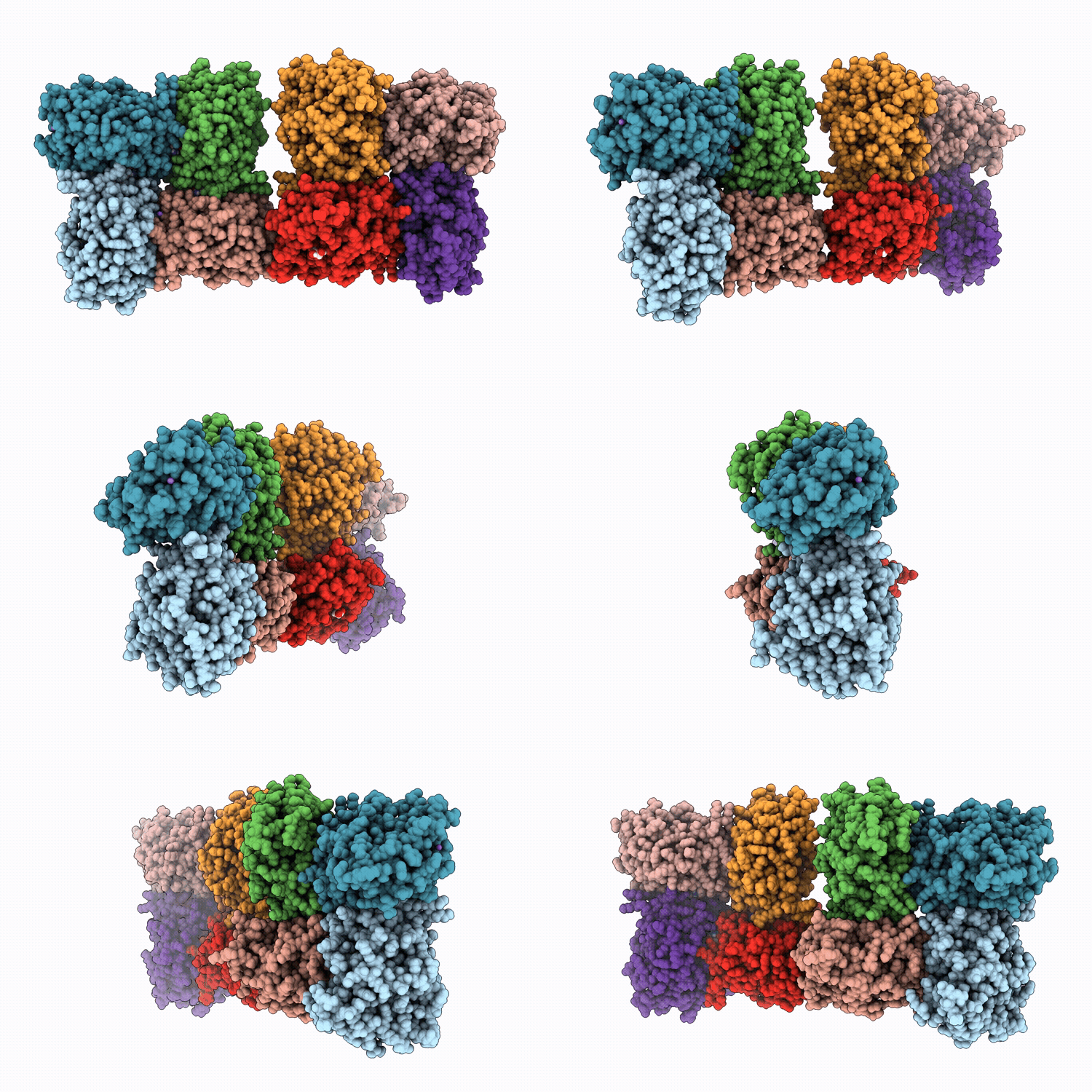
9QTF image
Deposition Date 2025-04-08
Release Date 2026-04-08
Last Version Date 2026-05-06
Entry Detail
PDB ID:
9QTF
Keywords:
Title:
Simkania negevensis CE-clan virulence factor SnCE1 C256A catalytically inactive mutant
Biological Source:
Source Organism(s):
Expression System(s):
Method Details:
Experimental Method:
Resolution:
2.21 Å
R-Value Free:
0.19
R-Value Work:
0.15
Space Group:
P 1 21 1

Macromolecular Entities
Structures with similar UniProt ID
Protein Blast
Polymer Type:polypeptide(L)
Molecule:Deubiquitinase and deneddylas
Gene (Uniprot):cdu2
Mutagens:C256A
Chain IDs:A, B, C, D, E, F, G, H
Chain Length:242
Number of Molecules:8
Biological Source:Simkania negevensis Z
Primary Citation

Abstact

Gram-negative bacteria use a plethora of virulence factors to infect eukaryotic cells. CE-clan protease-related virulence factors were reported to act as deubiquitinases/ubiquitin-like specific proteases. Some have an additional acetyl-transferase activity. The molecular mechanisms underlying this dual activity and the physiological consequences are only marginally understood. Here, we report crystal structures for the Simkania negevensis virulence factor SnCE1 in apo-states and in complex with SUMO1. We confirm SnCE1 acting as an efficient deSUMOylase and discover an intrinsic autoacetyltransferase activity. Acetylation impairs SnCE1 tetramer formation structurally being incompatible with SUMO1 binding. We provide a model for regulation of SnCE1-mediated virulence by lysine acetylation modulating autoproteolytic processing and its subcellular distribution in the host cell. SnCE1 localizes to the endoplasmic reticulum in human cells and increases fragmentation of mitochondria. Our data provide mechanistic insights into how lysine acetylation of virulence factors is used to reprogram virulence adjusting it to the host cells' metabolic state.

Legend

Protein

Chemical

Disease

Primary Citation of related structures
Feedback Form
Name
Email
Institute
Feedback