

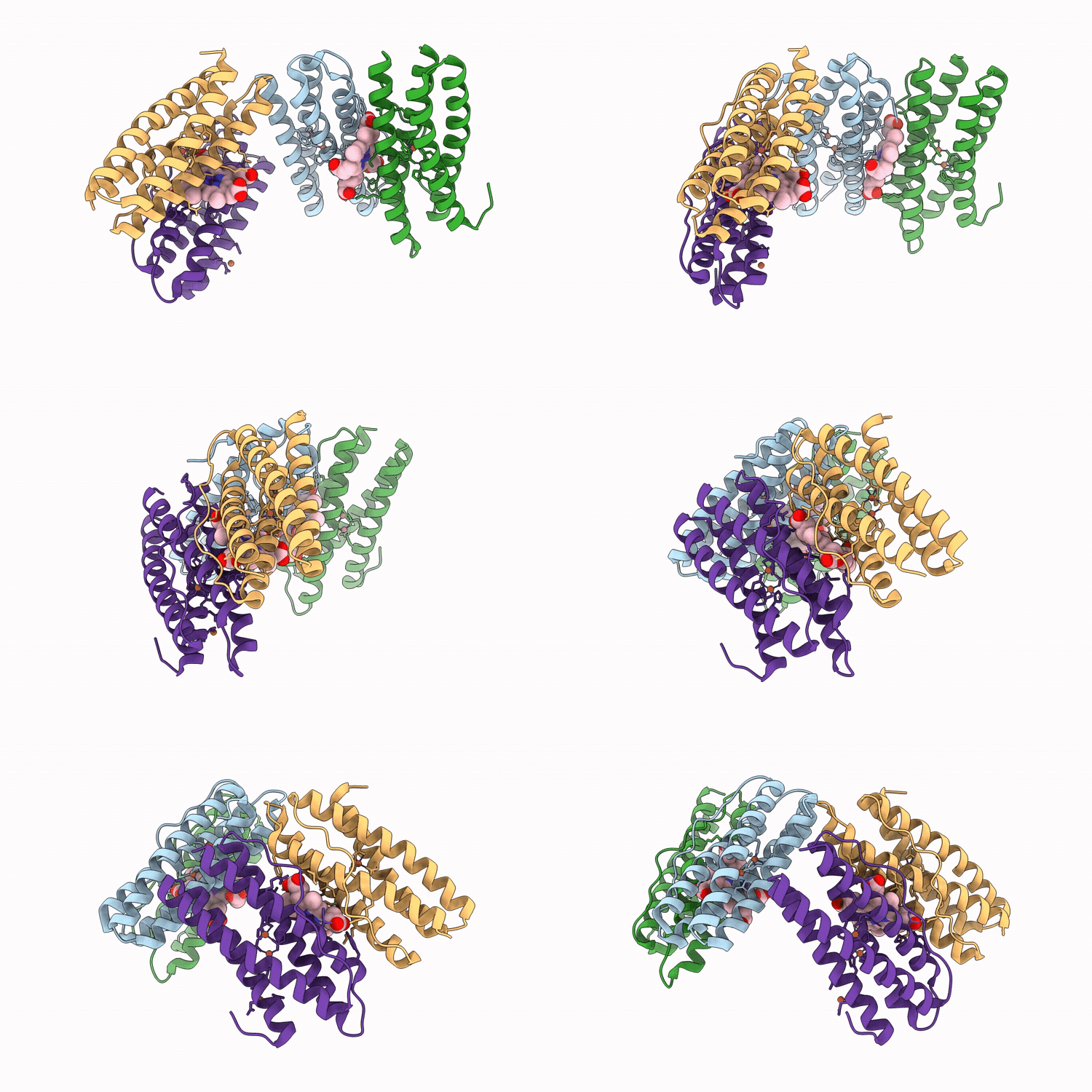
9QQH image
Deposition Date 2025-03-31
Release Date 2026-04-01
Last Version Date 2026-05-27
Entry Detail
PDB ID:
9QQH
Keywords:
Title:
Mini-bacterioferritin from Candidatus Methanoperedens species BLZ2 oxidized then chemically reduced
Biological Source:
Source Organism(s):
Method Details:
Experimental Method:
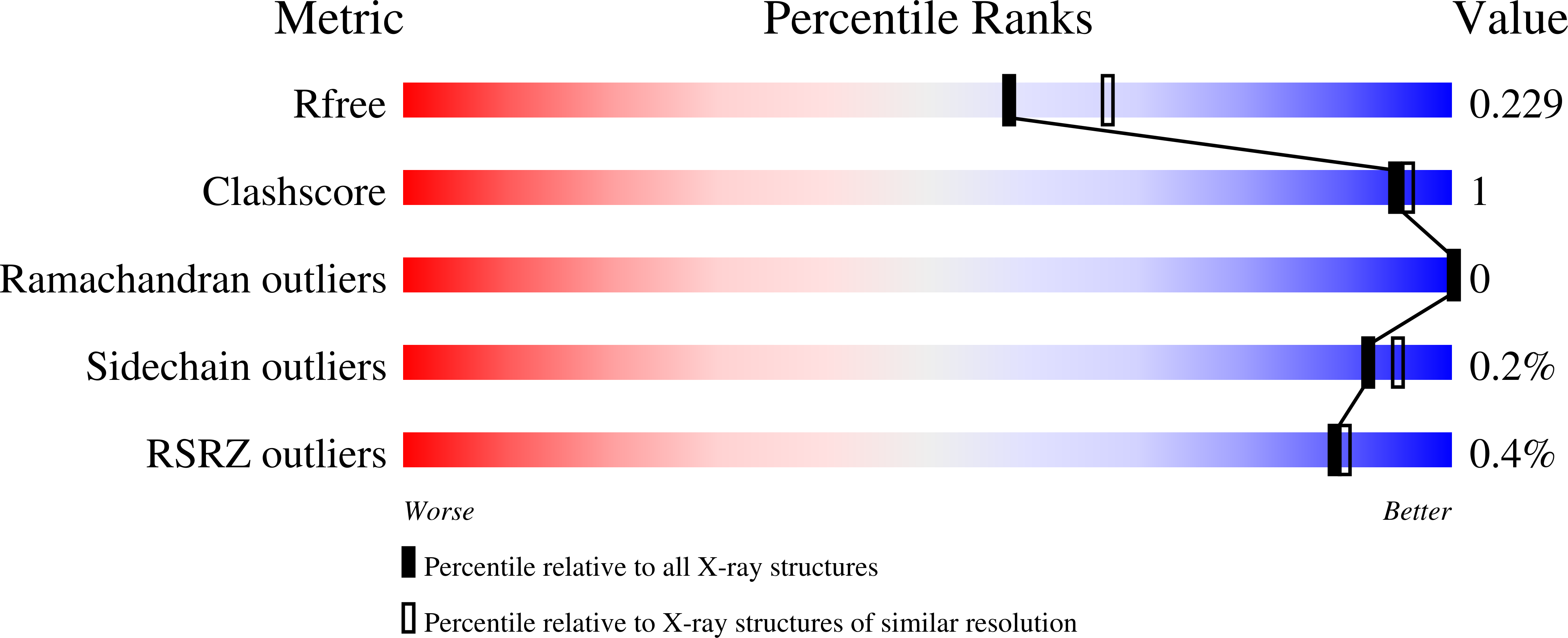
Resolution:
2.08 Å
R-Value Free:
0.22
R-Value Work:
0.19
R-Value Observed:
0.19
Space Group:
P 21 3
Macromolecular Entities
Protein Blast
Polymer Type:polypeptide(L)
Molecule:Bacterioferritin
Chain IDs:A, B, C, D
Chain Length:139
Number of Molecules:4
Biological Source:Candidatus Methanoperedens sp. BLZ2
Primary Citation
Mini-bacterioferritins: structural insight into a ferritin-like protein from the anaerobic methane-oxidising archaeon Candidatus Methanoperedens carboxydivorans.
Commun Biol 9 ? ? (2026)
PMID: 41865068 DOI: 10.1038/s42003-026-09796-4

Abstact

Ferritins are ubiquitous among life forms, as they are essential for iron homeostasis. Here, we unveiled a novel member of the ferritin family, baptised mini-bacterioferritin. The characterised mini-bacterioferritin was isolated from a microbial enrichment dominated by the methanotrophic archaeon 'Candidatus Methanoperedens carboxydivorans'. Its atomic resolution crystal structure reveals a 12-mer assembly with a diiron ferroxidase centre located within a four-helix bundle. Redox-cycling experiments on protein crystals reveal a shift in iron position at the active site, which follows the established ferritin catalytic cycle. The 12-mer sphere-like structure harboured six Fe-coproporphyrin III ligands, positioned at the interdimeric interface, a characteristic previously only found in 24-mer bacterioferritins. Phylogenetics, together with structure predictions of closely related proteins, revealed that mini-bacterioferritins form a distinct clade within the ferritin family that might conserve ancestral traits. Future research will need to investigate the physiological roles of these enzymes, which were unsuspectingly widely distributed among prokaryotes.

Legend

Protein

Chemical

Disease

Primary Citation of related structures
Feedback Form
Name
Email
Institute
Feedback